

‘Sri Lanka heading toward serious economic risk,’ warns Sajith Premadasa
May 26, 2026 11:59 am
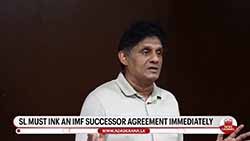
Opposition Leader Sajith Premadasa has warned that Sri Lanka is facing a serious economic risk, alleging that the government is misleading the public with “false statistics” instead of revealing the true state of the economy.
He made these remarks during a meeting with social media activists held at the headquarters of the Samagi Jana Balawegaya (SJB).
Premadasa claimed that the government, led by President Anura Kumara Dissanayake, continues to conceal the country’s economic vulnerabilities while increasing the prices of essential commodities such as fuel and milk powder.
He stated that rising fuel and milk powder prices are clear indicators of the prevailing economic crisis and stressed that the public must be made aware of the situation.
According to internationally accepted economic standards, foreign reserves should be sufficient to cover at least three months of imports, Premadasa stated.
He pointed out that although the President claims the country has USD 7 billion in reserves, Sri Lanka spends approximately USD 2 billion per month, meaning at least USD 6 billion is required to cover three months of imports.
Premadasa further emphasized that the depreciation of the rupee and rising fuel prices are reducing the country’s ability to maintain that level of reserves.
Premadasa also claimed that although the reserves include Chinese Yuan worth 1.2 billion, those funds are not readily usable, leaving only around USD 5.8 billion effectively available.
Referring to fuel prices, he stated that the price of Octane 95 petrol had reached Rs. 470 per liter in 2022, while it is currently being sold at around Rs. 410 per liter. He warned that any further increase in global oil prices could push the country toward bankruptcy.
The Opposition Leader further said that although foreign remittances have increased in recent months, the ongoing conflict in the Middle East could destabilize regional economies and result in job losses for migrant workers, thereby reducing remittance inflows.
He also warned that once Sri Lanka’s agreement with the International Monetary Fund (IMF) concludes in March 2027, the country will lose the stabilizing support provided by international financial institutions.
Premadasa cautioned that a decline in remittances, combined with rising oil prices and further depreciation of the rupee, could trigger a severe economic crisis.
He further noted that Sri Lanka’s foreign debt repayments are expected to increase from USD 1.5 billion to USD 3.5 billion annually from 2028 onward, emphasizing the urgent need to strengthen foreign reserves.
According to Premadasa, the IMF has recommended that Sri Lanka maintain reserves of around USD 13.4 to 14 billion, but the country currently holds only around 50% of that target.
He added that Sri Lanka would need to increase reserves by approximately USD 600 million per month to reach the target, while current monthly reserve growth stands at only around USD 60 million.