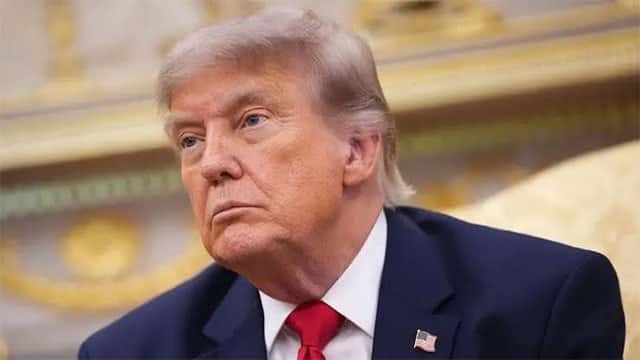









President Ranil Wickremesinghe cautioned that renegotiating with the International Monetary Fund (IMF), as suggested by some presidential candidates, could lead to the loss of economic gains and trigger another collapse of Sri Lanka’s economy.
The President made these remarks yesterday (21) during a meeting with professionals from the development and construction sectors at the Water’s Edge Hotel in Battaramulla.
The event, organized under the theme “Constructing the Nation’s Tomorrow,” featured a keynote address by Prof. Sirimal Abeyratne.
In his speech, President Wickremesinghe stressed the necessity of a stable economy for national progress. He emphasized that the government has already secured all possible concessions by reaching agreements with the IMF, the Asian Development Bank, the World Bank, the Exim Bank of China, and 17 other countries, making further government intervention unnecessary.
President Wickremasinghe also highlighted the critical role of the construction and development sector in the country’s economic recovery. Although the sector faced significant challenges due to the suspension of foreign-funded projects during the recent economic crisis, the government has taken steps to ease the burden on construction personnel by providing bank concessions and settling payments owed to contractors.
Looking ahead, President Wickremesinghe announced the launch of large-scale hotel development projects in Galle, Kandy, Colombo, and Trincomalee, alongside the establishment of new investment zones in Bingiriya, Jaffna, and Hambantota. He also updated the professionals on ongoing initiatives under the Megapolis Development Plan, which aims to transform Colombo, Galle, and Kandy into major urban centres.
President Wickremesinghe’s remarks reflect his administration’s focus on maintaining economic stability and leveraging the construction sector as a driving force for national growth.
Addressing the gathering the President elaborated;
“Friends, you have gathered here today representing a crucial part of our economy: those involved in construction and development, a sector that has been severely impacted by the crisis in Sri Lanka. It’s important to remember that we have faced not just one crisis, but two. First, we were hit by COVID-19, and then by the economic breakdown that followed. These events are interconnected, and separating them is difficult. The fiscal measures we took before COVID, such as tax reductions that contradicted our IMF agreements, compounded our challenges by reducing our revenue.
Unfortunately, few noticed the warning signs. In our UNP manifesto, we highlighted the looming issue: Sri Lanka needed USD 3 billion to avoid the economic crash. However, this warning was largely ignored, while others made unrealistic promises.
The global COVID crisis only worsened our situation, leading to a global economic downturn in 2020 and 2021 that we are still recovering from. As we discuss Sri Lanka’s situation, consider what’s happening globally. In China, real estate development plummeted due to COVID, impacting consumer spending. Even in the USA and Europe, consumer spending fluctuates, and economies are still stabilizing. This global backdrop only adds to our challenges.
When I assumed office, I was confident we could turn things around. I was already in touch with the IMF and had discussed the necessary steps with President Gotabaya Rajapaksa. As Professor Sirimal Abeyratne has explained, we have now stabilized the macroeconomy and our debt, ensuring we can service it. We’ve also committed to not printing money or borrowing from banks, meaning we must rely on our own revenue— hence the higher taxes many of us are paying.
The next challenge is to stimulate economic growth. We have a five-year plan, starting from 2022, to return to normalcy. I am hopeful we can achieve this by 2026. Our goal is a 5% annual growth rate by 2027, and this is now enshrined in law under the Economic Transformation Act. We’ve also passed other laws, such as the Central Bank Act and the Public Debt Management Act, which provide the foundation for our economic stabilization.
Moving forward, the construction and development sector has a vital role to play. Although the sector was hit hard, especially with the collapse of foreign-funded projects, we have taken steps to alleviate the burden, such as preventing banks from closing in on you and clearing backlog payments.
As we revive existing projects and attract new foreign and local investments, there will be plenty of opportunities for construction. We’re looking at high-rise hotel developments in Galle, Kandy, Colombo, and Trincomalee, and new zones in Bingiriya, Jaffna, and Hambantota. Additionally, the Megapolis Plan will involve significant construction in Colombo, Galle, and Kandy.
There’s also a lot of underutilized government land that will be opened up for development. It’s up to you to find investors and make the most of these opportunities. Rest assured, there will be ample work for everyone, whether in the state or private sector, and we are addressing concerns like the Payee tax.
Together, we must consider how these efforts align with the broader economy and the future of your sector.”
State Minister for Technology Kanaka Herath;
“The construction industry is a key driver of economic growth, contributing approximately 7% to our GDP. It also provides livelihood for around 5 million people directly and indirectly, making it one of the largest and the most vital industries in Sri Lanka, where we take the benefits to the grassroots of Sri Lankans. However, the past few years has been exceptionally challenging for the sector. The COVID-19 pandemic followed by the economic crisis struck at the heart of our operations, causing unprecedented destruction. Unlike some other industries, we felt a traumatic impact due to this crisis, leading to a sandstorm of many significant projects.
Yet, even in these times, the government has pushed the operations of the industry. Almost 400,000 people have been displaced, Rs. 450 billion worth of payments to contractors were stopped, and I am personally happy to see that the government has managed to clear at least around 400 billion thus far.
The economic stability we now experience is a direct result of the bold decisions and steady leadership of the President, Ranil Wickremesinghe. We cannot reset the clock and start all over again. To sustain this momentum, it is crucial that we go through the changes we have witnessed and maintain the political stability that has been so carefully restored. The continued leadership of President Wickremesinghe is the key to our success.”
Engineer D. Abeysiriwardena, Architect Hirante Welandawe, Veteran City Planner Dr. K. Locana Gunaratne, Senior Advisor to the President on Economic Affairs Dr. R. H. S. Samaratunga, and Chairman of the National Construction Association of Sri Lanka Mr. Darrington Paul, along with President Ranil Wickremesinghe, participated in a panel discussion. During the deliberations, the President provided proactive responses to the questions posed by the professionals in the development and construction industry. The following are the questions raised and the President’s answers:
Question:
Mr. President, with your two years of experience in negotiating with the IMF, we’re now hearing from your esteemed colleague Anura and your buddy Sajith, who claim that if they become president, they intend to renegotiate with the IMF. Could you clarify the potential repercussions our country might face if such a renegotiation were to take place?
Answer:
“Liquidate your company—that’s all. You need the economy. We’ve reached an agreement with the IMF, ADB, World Bank, Export-Import Bank of China, and 17 other countries. This framework, which you’ve discussed, is what we’re now negotiating with the sovereign bondholders. They’ve set benchmarks for us. The question is: what exactly are they going to renegotiate? Will they renegotiate the benchmarks, the timeline, or something else? It took us over a year to get this framework approved, so how will they now negotiate with all these countries, especially since China negotiates separately from the Paris Club?
We managed to bring India and others into the Paris Club while China coordinated separately, working with the OCC. But now that mechanism isn’t necessary anymore because the negotiations are complete. We’ve agreed on the relief they can provide. The relief from the Exim Bank differs from what the OCC offers. As for the sovereign bondholders, their relief varies—some reduce interest payments, others extend the repayment timeline.
If you look at it all together, it’s like a child with too much food from different places.
Will they go through this again? And who will handle it—Sunil Handunneththi or Harsha De Silva?” The event was attended by Minister of Transport, Highways, and Mass Media Bandula Gunawardena, Minister of State Lasantha Alagiyawanna, along with a group of engineers, contractors, and various professionals in the development and construction fields.