









Japanese-produced whisky, nihonshu (sake), and beer are popular around the world.
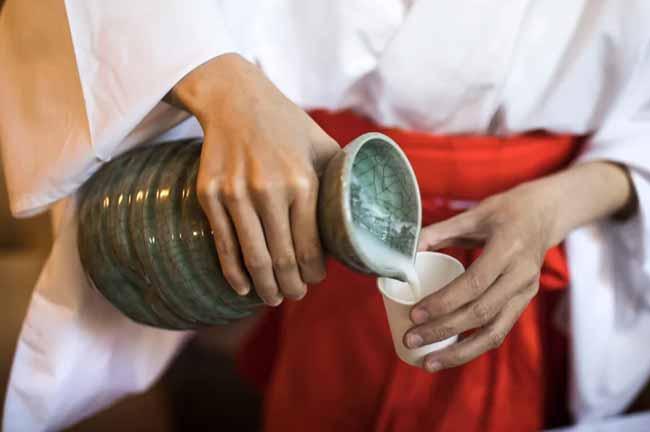
But one bar in Tokyo has been trying to reintroduce to locals and visitors alike a taste of doburoku, one of the oldest and most controversial drinks in Japanese history.
Heiwa Doburoku Kabutocho Brewery is in the Nihombashi neighborhood in eastern Tokyo. During the Edo period (1603 - 1868), this area flourished with activity due to boats carrying shipments of sake.
With that in mind, Heiwa Shuzou (Brewery), which since 1928 had been producing sake in Wakayama prefecture, chose to open this rare doburoku specialty bar in one of the city’s upscale neighborhoods.
Before venturing into the bar to try a glass, here’s what to know about this historic, controversial tipple.
What exactly is doburoku?
The history of doburoku is as murky as the drink itself.
Often considered to be the ancestor of today’s sake; it is no coincidence that the characters comprising the word, 濁酒, signify “cloudy,” or unrefined, liquor. To distinguish this type of turbid Japanese alcohol from that of the ubiquitous and transparent sake, there are two distinct if slightly misleading categories: seishu (清酒), or clear sake, and doburoku (濁酒).
Consequently, sake and doburoku have one key difference in their respective productions.
Typical sake calls for a yeast starter, called shubo, and adding three main ingredients –steamed rice, kouji (moldy rice fungus) and water – over a period of days.
However, when making doburoku, they are all simultaneously placed in with the yeast starter, causing the resulting mixture to be comparatively overflowing with sugars. The sugars then start to break down the yeast, which halts fermentation much earlier on. Ultimately, what remains is a sweeter liquid with a much lower alcohol content, formally known as doburoku.
Why has doburoku been considered controversial?
For nearly as long as rice has been cultivated in Japan, doburoku has existed. It was the brew of choice for farmers and Shinto priests alike. With a relatively simple recipe – i.e. throwing everything into the proverbial crucible at once – doburoku was a common sight throughout the countryside.
The open practice of homebrewing continued unabated for centuries.
According to Utsunomiya Hitoshi, director of the Japan Sake and Shochu Makers Association (JSS), in 1855 there were 459 doburoku producers in Edo (present-day Tokyo) alone.
Yet, as a result of the end of the Edo period (1603 CE - 1868 CE), all feudal lords were forced to abandon their regional domains in the name of the centralized Meiji government, based out of the new capital Tokyo. Borne out of the 180-degree shift in governance came highly structured institutions, including an empowered and regimented tax collecting body.
Realizing that licensed breweries and distilleries were a vital source of income for the new government, measures to limit homebrewing began to take effect.
Utsunomiya says that 1880 is when the quantity of homebrewed liquor started to be restricted, while in 1882 a licensing system was introduced. Then, in 1896, a liquor tax was imposed on all homebrewing, culminating in the complete prohibition of homebrewed liquors in 1899.
In essence, all doburoku made from then on came to be called mitsuzoushu (密造酒), “secretly produced alcohol,” or moonshine.
However, even during that prohibition, doburoku could still be found in Japan. Tellingly, Shinto shrines were able to carry on using the beverage for rituals. After World War II, due to a shortage of sake, the Korean beverage makgeolli, an unfiltered cousin of doburoku made of rice, wheat, malt and water, was a popular alternative.
In spite of the fact that homebrewing is still illegal, the Japanese government allowed for inns and restaurants in special deregulation zones, primarily in regions where economic growth had stagnated, to commercially sell doburoku in 2003.
As of 2021, there are 193 establishments around the country authorized to sell doburoku.
The state of doburoku today
Opened in 2015, Tokyo’s Sake Hotaru was the first legal spot to offer doburoku in Japan’s capital. But bar owners only started selling it to the public in late 2016.
Since then, more options have appeared. Most prominently, in June 2022, the previously mentioned Heiwa Doburoku Kabutocho Brewery opened a bar near Nihombashi.
Norimasa Yamamoto, President of Heiwa Shuzo, estimates that half the bar’s visitors are from overseas.
“We often receive questions about the difference between sake and doburoku, how many days it takes to make it, and how it’s produced,” he says of the bar patrons.
In addition to doburoku, the brewery’s own sake and beer labels are available. However, keep in mind that if you want to order anything, the brewery does not accept cash.
The flavor is intense, with samplers comparing it to both cheddar cheese and noni, a unique-tasting Polynesian fruit.
And travelers unable to make it to Japan can sample doboruku closer to home. In Brooklyn, Kato Sake Works sells small amounts of the drink.
However, owner Shinobu Kato says “the context doesn’t exist here,” as Americans are less likely to have heard of doboruku.
“Apart from a few sake shops that are very familiar with and interested in our doburoku,” Kato says, “most of the sales are at the taproom for both bottle to go and drink by the glass.”
Source: CNN
--Agencies