







On March 23, 2026, the World Meteorological Organization (WMO) delivered a stark warning: Earth’s climate has entered uncharted territory, with heat accumulating at record rates and the consequences expected to last for centuries, if not millennia.
According to BBC and other global news outlets, the WMO’s annual State of the Global Climate report paints a dire picture of a planet pushed far beyond its natural limits by human-induced greenhouse gas emissions, particularly carbon dioxide.
In a year marked by extreme weather and mounting climate anxiety, the numbers are unequivocal. The 11 hottest years ever recorded have all occurred between 2015 and 2025, with 2025 itself ranking as either the second or third warmest year since records began in 1850. The global average temperature last year was about 1.43°C higher than the pre-industrial baseline, a figure that underscores the relentless upward march of planetary warming.
But temperature alone doesn’t tell the whole story. The WMO’s report, as detailed by Agence France-Presse and other sources, introduces for the first time a comprehensive metric known as the planet’s “energy imbalance.” In a stable climate, the energy Earth receives from the Sun is roughly equal to the energy it radiates back into space. However, the rapid increase in atmospheric concentrations of carbon dioxide, methane, and nitrous oxide—now at their highest levels in at least 800,000 years—has upset this equilibrium. As a result, Earth is now absorbing more heat than it can emit, a phenomenon with profound implications for every aspect of life on the planet.
“The global climate is in a state of emergency. Planet Earth is being pushed beyond its limits. Every key climate indicator is flashing red,” declared UN Secretary-General António Guterres in a video address responding to the WMO’s findings. He added, “Humanity has just endured the 11 hottest years on record. When history repeats itself 11 times, it is no longer a coincidence. It is a call to act.”
This energy imbalance is not just a theoretical concept—it has tangible, and often devastating, consequences. More than 91% of the excess heat is absorbed by the world’s oceans. That heat content reached a new record high in 2025, with the rate of ocean warming more than doubling in the past two decades compared to the late 20th century. According to the WMO, this unprecedented ocean heating harms marine ecosystems, accelerates the loss of biodiversity, and reduces the ocean’s ability to absorb carbon dioxide. It also fuels more intense tropical and subtropical storms, while exacerbating the ongoing loss of sea ice in polar regions.
The evidence is visible from the poles to the equator. The Antarctic and Greenland ice sheets have both lost considerable mass, and the annual average extent of Arctic sea ice in 2025 was the lowest or second-lowest ever recorded in the satellite era. Sea levels are also rising at an alarming pace: the global mean sea level in 2025 was about 11 centimeters higher than in 1993, when satellite monitoring began. The WMO projects that both ocean warming and sea-level rise will continue for centuries, locking in long-term risks for coastal communities and low-lying nations.
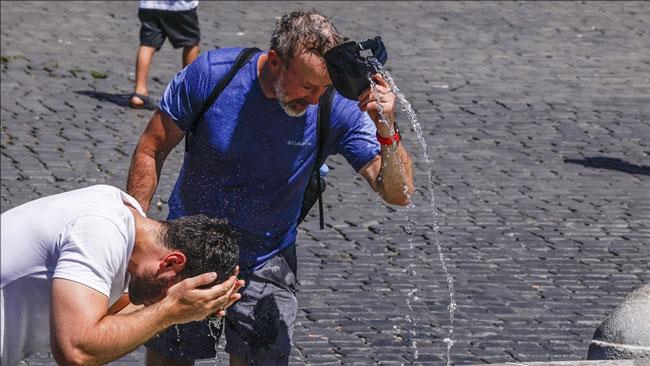
“Human activities are increasingly disrupting the natural equilibrium and we will live with these consequences for hundreds and thousands of years,” explained Prof. Celeste Saulo, secretary-general of the WMO, as quoted by BBC. The agency’s scientific officer, John Kennedy, added that recent rapid analyses show the intensity of recent heatwaves would have been “virtually impossible” without human-caused climate change.
Complicating matters further is the looming threat of El Niño, a naturally occurring climate phenomenon characterized by the warming of surface waters in the central and eastern Pacific Ocean. While the world is currently under the influence of La Niña—a pattern that typically brings cooler global temperatures—forecasts indicate a transition to neutral conditions by mid-2026, with a possible El Niño developing before the end of the year. If that happens, scientists warn, global temperatures could surge even higher in 2027, potentially setting new records and compounding the impacts of human-driven warming. “If we transition to El Niño, we will see an increase in global temperature again, and potentially to new records,” said Dr. John Kennedy of the WMO.
The WMO’s deputy chief, Ko Barrett, did not mince words about the gravity of the situation, describing the outlook as a “dire picture.” She emphasized the hope that clear scientific evidence will spur urgent action, but admitted, “There is no denying that these indicators are not moving in a direction that provides for a lot of hope.”
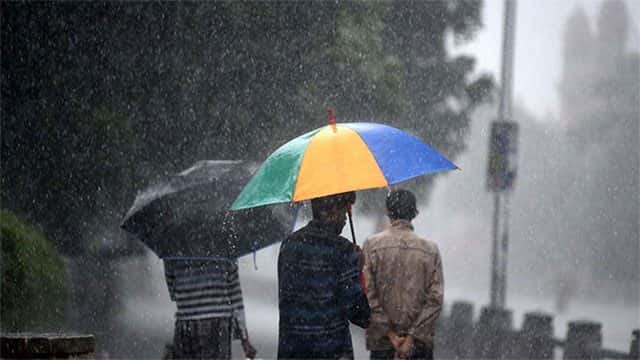
Meanwhile, the consequences of this warming are already being felt around the globe. Stronger storms, more intense heatwaves, accelerated glacier melt, and record-low sea ice levels are just some of the observable impacts. Rising sea levels threaten major cities and small island nations alike, while the degradation of marine ecosystems jeopardizes food security for millions who depend on the ocean for sustenance and livelihoods. The loss of biodiversity, both on land and in the sea, further undermines the planet’s resilience to future shocks.
In his remarks, Secretary-General Guterres linked the climate crisis to broader issues of global security, noting, “In this age of war, climate stress is also exposing another truth: our addiction to fossil fuels is destabilizing both the climate and global security.” He urged world leaders to accelerate the transition away from fossil fuels and toward renewable energy sources, calling it essential not just for climate stability but for energy and national security as well. “Today’s report should come with a warning label: climate chaos is accelerating and delay is deadly,” Guterres said, underscoring the urgency of immediate and coordinated global action.
Despite the bleak outlook, the WMO and the United Nations continue to stress the importance of evidence-based policymaking and international cooperation. The hope is that the mounting scientific consensus and the undeniable reality of climate impacts will galvanize governments, industries, and individuals to take the bold steps needed to avert even greater catastrophe. As Prof. Saulo put it, “Scientific advances have improved our understanding of the energy imbalance and its implications for the climate,” but knowledge alone is not enough—action must follow.
With the world at a crossroads, the message from the WMO and the UN is clear: the time for complacency has passed. Every fraction of a degree matters, and every delay in action increases the risks for current and future generations. The planet is flashing red, and the window for meaningful change is rapidly closing.
--Agencies