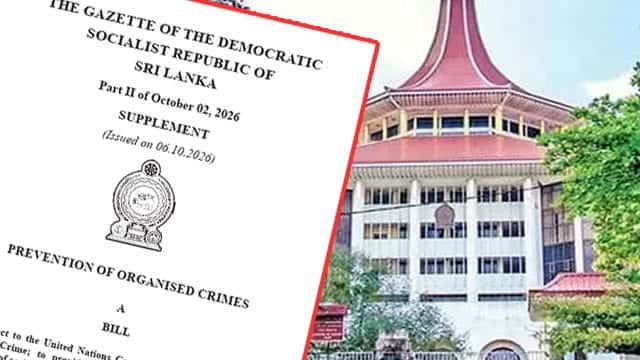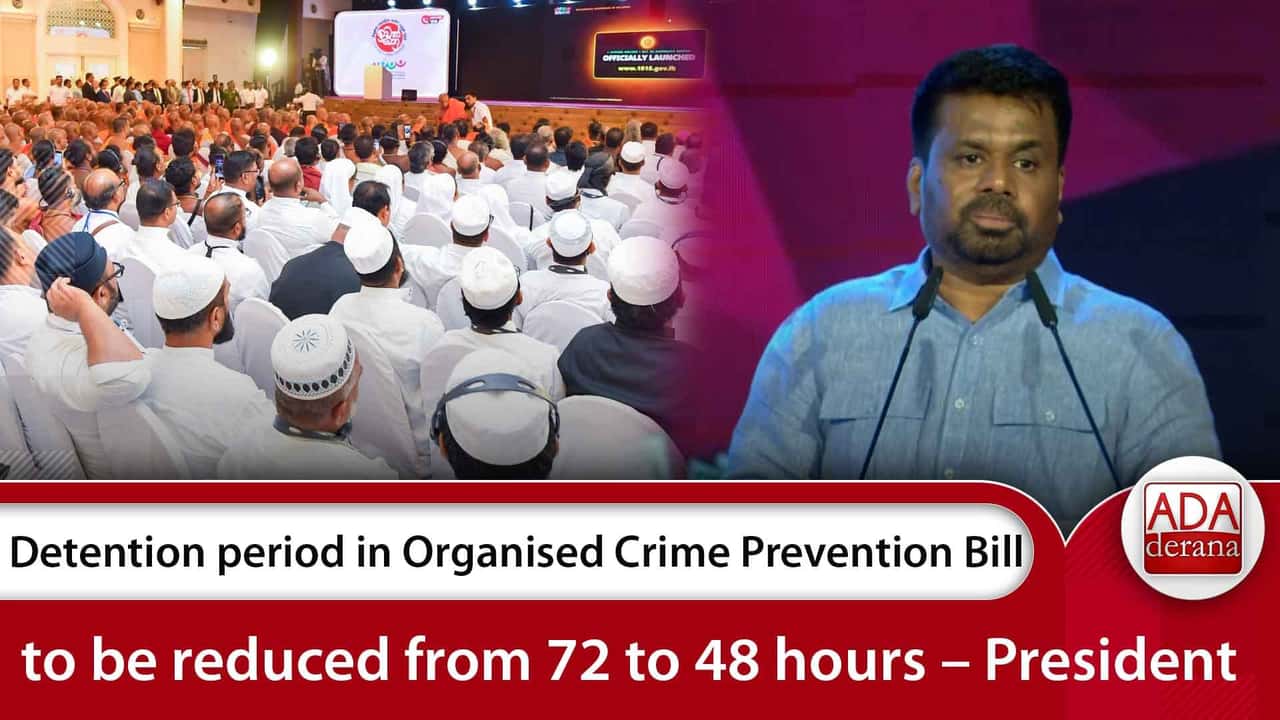








The government has proposed a series of amendments to the Prevention of Organised Crimes Bill currently before parliament, including a reduction in the maximum period of detention without being produced before a Magistrate from 72 hours to 48 hours.
Solicitor General Viraj Dayaratne, appearing on behalf of the Attorney General, informed the Supreme Court of the proposed amendments today (09), during the hearing of petitions challenging the constitutionality of the Bill.
He stated that the amendments would be introduced at the Committee Stage of the parliamentary process and submitted a document outlining the proposed changes to the Supreme Court.
The Solicitor General further informed court that the government had agreed to remove several provisions from the Bill, including offences relating to the Excise Ordinance and provisions concerning tattoos and markings. The proposed amendments would also exclude copyright-related offences under the intellectual property provisions.
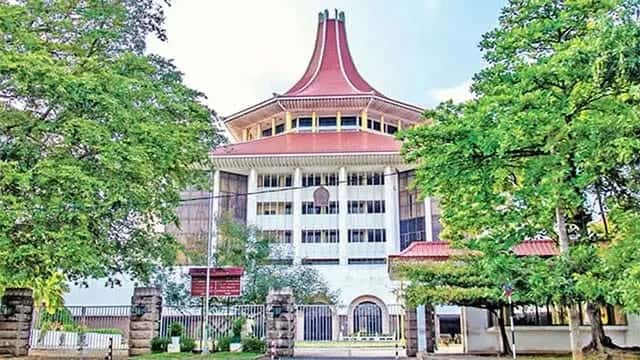
The Supreme Court commenced hearing 26 petitions challenging the constitutionality of the Bill on November 4, before a three-judge bench comprising Chief Justice Preethi Padman Surasena, Justice Achala Wengappuli and Justice Sampath Abeykoon.
Proposed Amendments to Arrest and Detention Provisions
Elaborating on the proposed amendments, the Solicitor General stated that Section 20 of the Bill, which permits a person to be detained for up to 72 hours following arrest, would be amended to reduce the period to 48 hours. The person concerned would thereafter be required to be produced before a Magistrate.
He further explained that, under Section 21, applications for detention orders would have to be submitted by the Inspector General of Police or an officer holding a rank not below that of Deputy Inspector General of Police.
The Secretary to the Ministry of Public Security would be authorised to issue detention orders for periods ranging from two months up to one year, subject to the presentation of sufficient grounds.
Any extension of a detention order beyond two months would require the Secretary to provide reasons and obtain approval from the High Court through an application submitted via the Attorney General.
The Solicitor General also stated that copies of detention orders would have to be furnished to the individuals concerned and that persons detained for a period of one year would be entitled to apply for bail before the High Court.
He maintained that these provisions would subject the processes of arrest and detention to judicial oversight.
Provision Requiring Court Approval for Media Reporting to Be Removed
During the proceedings, Chief Justice Preethi Padman Surasena sought clarification regarding Section 14 of the Bill, raising concerns over its potential implications for media freedom.
In response, the Solicitor General explained that the provision was intended to prevent the disclosure of the identities of victims of serious offences.
However, he confirmed that Section 14(3), which required prior court approval for the publication of information relating to cases involving serious offences, would be removed.
The Chief Justice also requested that consideration be given to the possibility of excluding certain offences from provisions permitting detention orders.
The Solicitor General additionally confirmed that the provision concerning tattoos and markings would be removed from the proposed legislation.
Government Outlines Rationale for Proposed Legislation
In defending the need for the legislation, the Solicitor General submitted that offences committed by organised criminal groups were considerably more complex than conventional criminal activities.
Referring to contract killings as an example, he explained that the individual who orders a murder may not personally know the person carrying out the shooting, while a separate individual may be responsible for supplying the firearm.
He emphasised that addressing such criminal networks required effective legal provisions, modern investigative procedures and advanced technological capabilities.
Representing the Bar Association of Sri Lanka, President's Counsel Saliya Peiris informed the Court that the President had also publicly acknowledged the need for amendments to the proposed legislation.
Concluding his submissions, the Solicitor General maintained that the proposed amendments would ensure judicial oversight over arrests, detention orders and bail procedures.
He further submitted that, in view of the proposed amendments, the Bill could be enacted without the approval of a special majority in Parliament or a public referendum.
Following the conclusion of the Attorney General's submissions, the Supreme Court directed that written submissions concerning the proposed amendments be filed before 4.00 p.m. on November 11.
The three-member bench also announced that its confidential determination on the constitutionality of the Bill would be communicated to the Speaker of Parliament and the President.