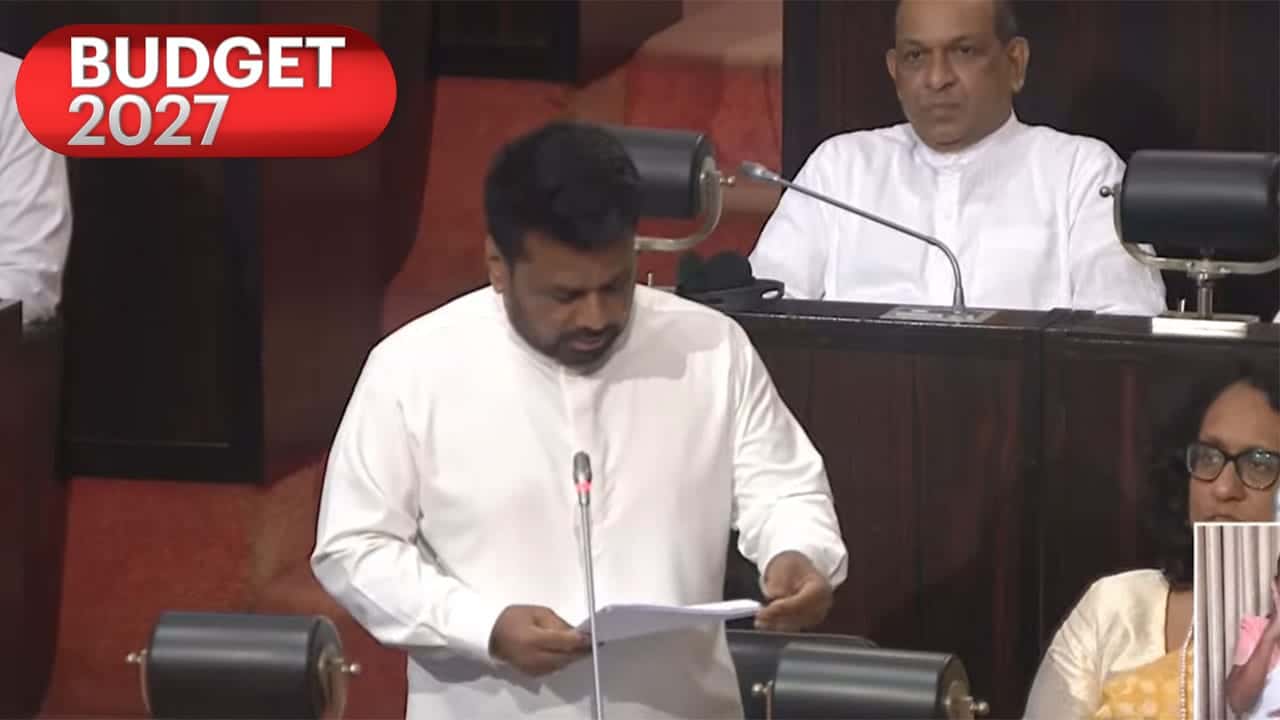






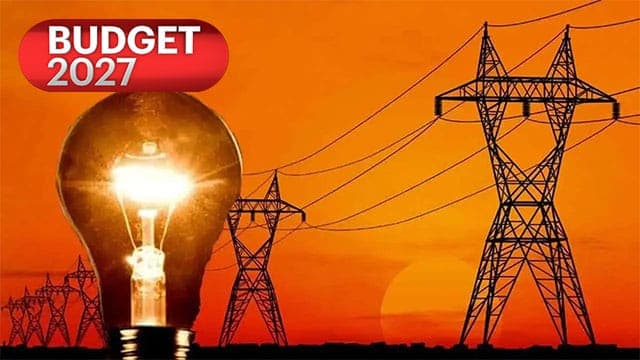


President Anura Kumara Dissanayake says energy security is imperative for Sri Lanka to move forward, announcing a series of major investments to strengthen the national electricity grid, improve fuel storage and distribution, and promote renewable energy.
Delivering the 2027 Budget speech in Parliament, the President said nationwide power outages experienced in February 2025 and October 2026 had highlighted vulnerabilities in the country's national electricity grid.
He said instability in the grid had contributed to both incidents, stressing the need to strengthen grid stability to prevent similar disruptions in the future.
Accordingly, the Government will invest Rs. 26.5 billion in upgrading and reinforcing the national electricity network to improve the security and reliability of electricity supply.
A new electricity transmission line connecting Kilinochchi and Habarana is also planned as part of efforts to strengthen the national power network.
As part of efforts to encourage battery storage among rooftop solar users, the President announced a Rs. 3.5 billion relief package to support the installation of battery storage systems.
Under the proposal, new domestic rooftop solar customers will receive a subsidy of Rs. 25,000 for every 1kW of battery storage capacity installed. The incentive will apply to systems of up to 10kW, allowing households to receive a maximum subsidy of Rs. 250,000.
The Government also plans to install a 30-megawatt battery storage system at the Norochcholai Power Plant.
Meanwhile, free smart electricity meters will be provided to 300,000 consumers who use more than 180 units of electricity per month. All Lanka Electricity Company (LECO) consumers using more than 120 units will also receive smart meters under the programme.
In a further measure to reduce the cost of renewable energy investments, the Government will remove the 10 per cent Port and Airport Development Levy (PAL) imposed on imported solar batteries.
President Dissanayake said the tax concession would provide additional savings for households, estimating that the removal of the levy would reduce the cost of a 1kW battery by approximately Rs. 4,000.
Fuel Infrastructure and Storage Investments
The President also announced several investments aimed at improving the country's fuel transportation, unloading and storage infrastructure.
The Government has called for bids for a Rs. 16.3 billion pipeline project connecting the Port of Colombo and Kolonnawa to improve fuel unloading efficiency.
The project aims to reduce the unloading time for a 90,000-metric-tonne fuel vessel from 96 hours to 48 hours, minimising costly delays.
According to the President, each day of delay results in approximately USD 30,000 in additional costs. The proposed project could therefore save up to USD 60,000 per shipment in demurrage charges.
The Government also plans to increase the country's fuel storage capacity to 45 days to strengthen energy security.
In addition, Rs. 22.34 billion has been allocated for a project to construct a jet fuel pipeline from Muthurajawela to Bandaranaike International Airport (BIA) and develop fuel storage facilities with a capacity of 92,000 metric tonnes.
The measures form part of the Government's broader efforts to strengthen energy security, improve electricity grid stability, enhance fuel distribution efficiency and encourage greater adoption of renewable energy.