





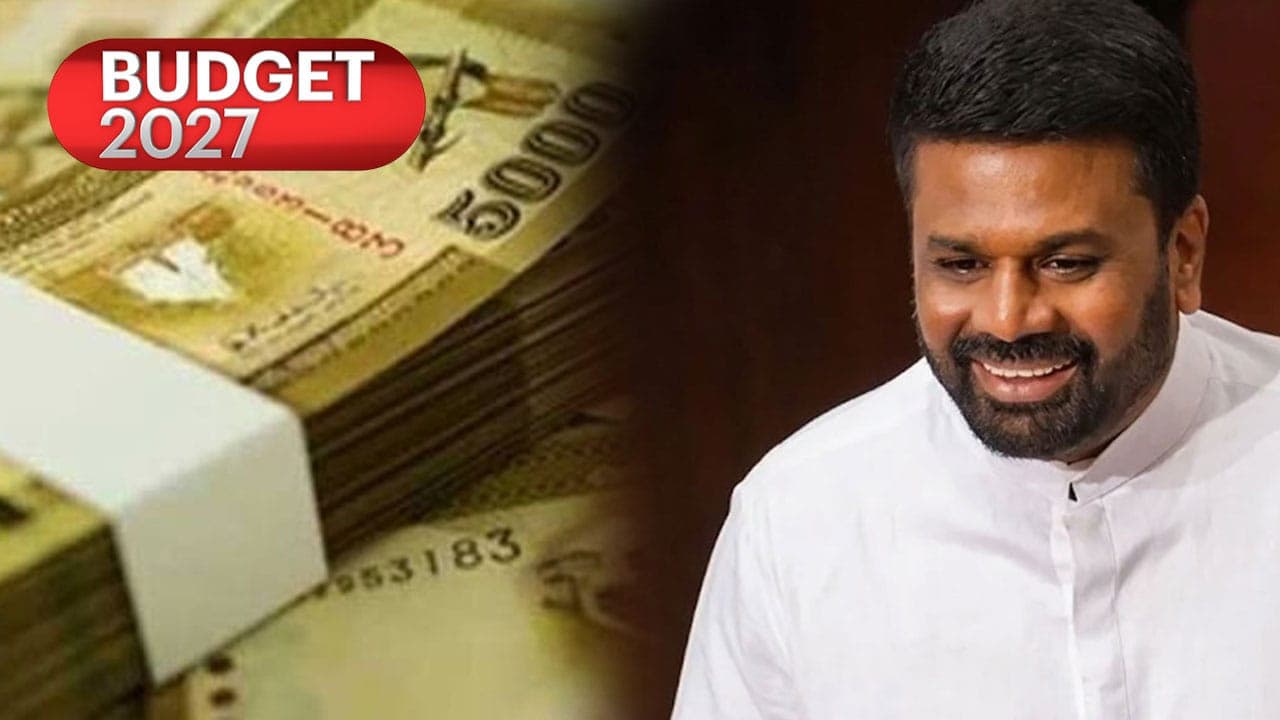


Sri Lanka’s budget deficit is projected to reach Rs. 1.753 trillion in 2027, equivalent to 4.5 percent of Gross Domestic Product (GDP), as total government expenditure is estimated at Rs. 7.933 trillion, according to the third Budget of the National People’s Power (NPP)-led Government, presented by President Anura Kumara Dissanayake.
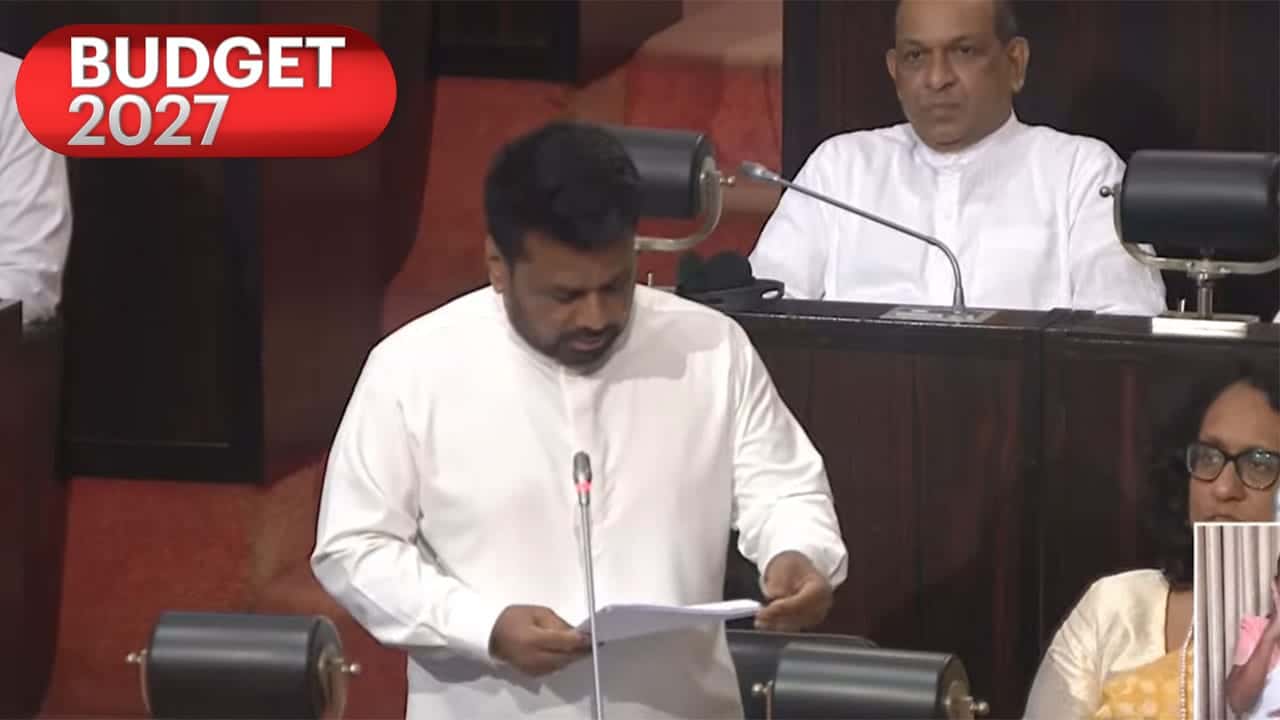
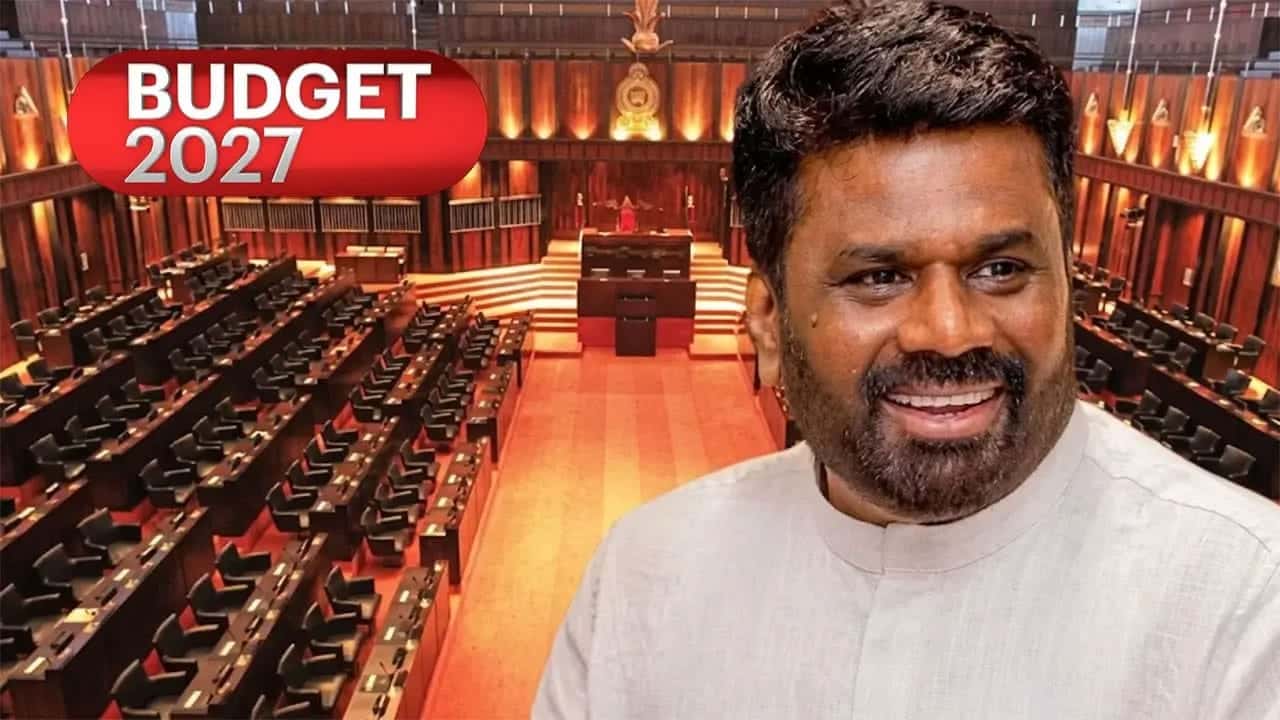
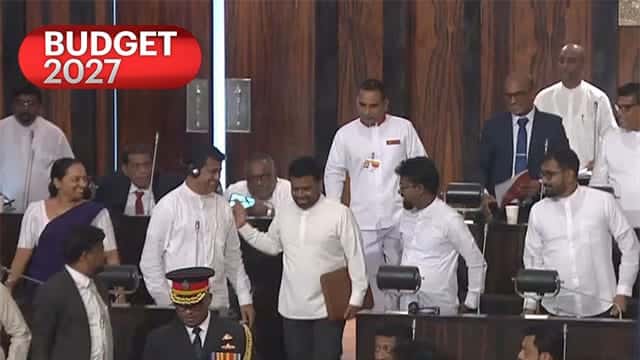
President Dissanayake commenced delivering the 2027 Budget speech in Parliament at 1.40 p.m. today (12), in his capacity as Minister of Finance, Planning and Economic Development.
This is the third Budget presented by the NPP Government and the 81st Budget of Sri Lanka.
In his opening remarks, the President said the Government was presenting its third Budget with the honest and genuine determination to turn into reality the long-cherished aspirations of generations to build a prosperous nation.
He identified eradicating poverty, building a just society, eliminating bribery and corruption, accelerating economic development, restoring public trust and providing every citizen with the opportunity to enjoy a decent standard of living as key objectives of the Government.
The 2027 Budget marks a shift in the Government's economic policy focus from stabilisation towards economic expansion and transformative development, with Rs. 2 trillion earmarked for capital expenditure.
According to the Budget Estimates, total government expenditure is projected at Rs. 7.933 trillion, compared to Rs. 7.309 trillion in the 2026 revised estimates.
Total government revenue and grants are estimated at Rs. 6.18 trillion in 2027, while total revenue is projected at Rs. 6.15 trillion.
Tax revenue is expected to generate Rs. 5.667 trillion, comprising Rs. 1.341 trillion from income tax, Rs. 3.592 trillion from taxes on goods and services and Rs. 754 billion from taxes on external trade.
Non-tax revenue is estimated at Rs. 463 billion, while grants are projected at Rs. 30 billion.
On the expenditure front, recurrent expenditure is projected at Rs. 5.944 trillion, while public investment is expected to increase to Rs. 2 trillion.
The allocation for salaries and wages stands at Rs. 1.41 trillion, while Rs. 2.643 trillion has been earmarked for interest payments. Subsidies and transfers are estimated at Rs. 1.482 trillion.
The projected budget deficit of Rs. 1.753 trillion represents an increase from the Rs. 1.328 trillion deficit recorded in the 2026 revised estimates, equivalent to 3.7 percent of GDP.
Meanwhile, the Government expects to maintain a primary surplus of Rs. 890 billion, equivalent to approximately 2.3 percent of GDP, while the revenue surplus is projected at Rs. 206 billion.
To finance the overall budget deficit, the Government expects to raise Rs. 1.643 trillion through domestic financing and Rs. 110 billion through foreign financing.
Public investment is projected to increase to 5.1 percent of GDP in 2027, compared to 4.1 percent in the 2026 revised estimates.
The Government's capital investment programme is expected to prioritise infrastructure development, including roads, railways, transport networks and logistics, alongside investments in economic and social development.
Ahead of the Budget presentation, the Presidential Secretariat stated that the Government intended to move beyond economic stabilisation towards economic expansion and transformative development, with capital allocations of Rs. 2 trillion.
The Budget is also being presented against the backdrop of the Government's ongoing economic reform programme and its commitments under the International Monetary Fund's Extended Fund Facility.
The IMF's seventh programme review reached staff-level agreement in November, with the Budget and continued progress on debt restructuring forming part of the programme's requirements.
The Budget debate is scheduled to continue until December 14.
The Second Reading debate will be held from November 13 to November 20, with the vote scheduled for 6.00 p.m. on November 20.
The Committee Stage debate will take place from November 21 to December 14, with the final vote on the Third Reading scheduled for December 14.
The 2027 Budget outlines the Government's fiscal priorities for the coming year, balancing public investment and economic development with revenue mobilisation and debt sustainability.