





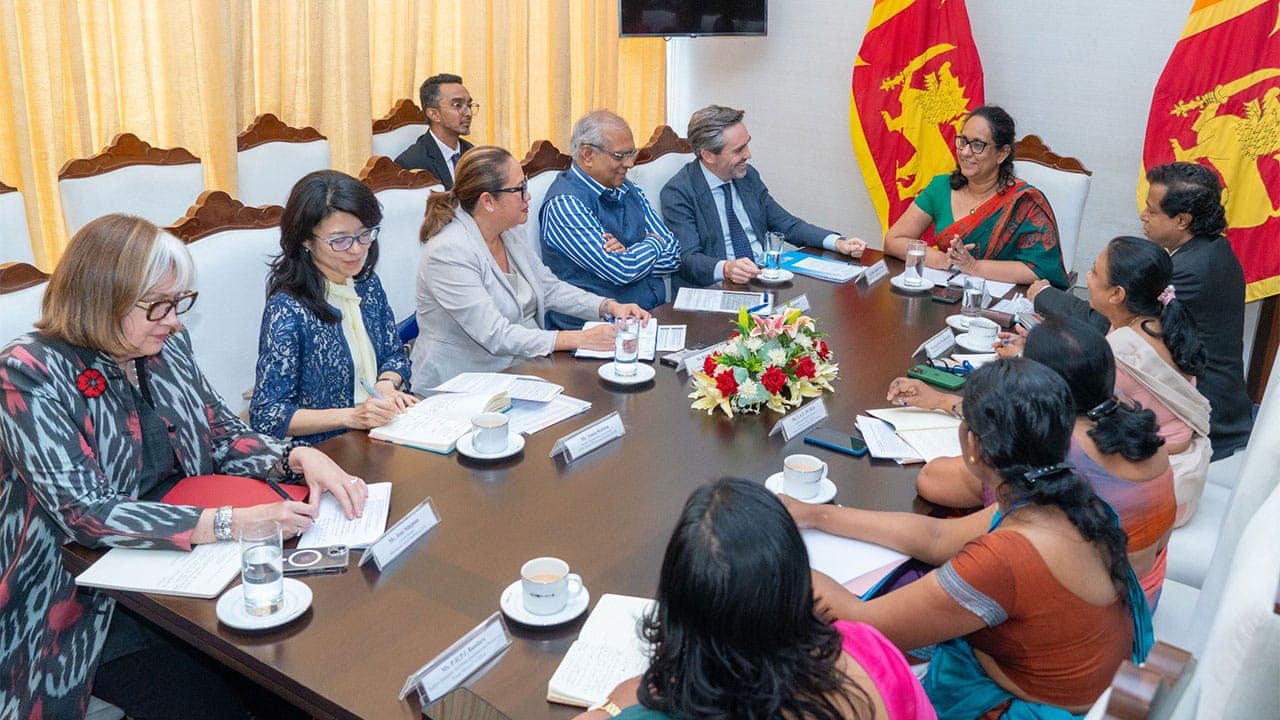


The United Nations Resident Coordinator in Sri Lanka, Marc-André Franche, and the accompanying delegation has met with Prime Minister Dr. Harini Amarasuriya at the Parliament to discuss the proposed United Nations Sustainable Development Cooperation Framework for Sri Lanka for the period 2028–2032.
During the meeting held yesterday (19), the UN Resident Coordinator briefed the Prime Minister on the joint efforts already planned for completion of the proposed framework and mentioned that the meeting with Prime Minister is considered as a key milestone in the process of identifying key priority areas and interventions to be incorporated in the Framework, in consultation with all stakeholders including ministries, departments, institutions, academia and the civil society, the PM’s Office said.
The Prime Minister and the delegation held a comprehensive discussion on the major development challenges currently facing Sri Lanka and the potential contribution of strengthened development cooperation in addressing them.
The Prime Minister emphasised that development cooperation should adopt a holistic yet targeted approach, ensuring that proposed programmes are aligned with Sri Lanka’s national development priorities and respond to its specific development needs and challenges, the statement said.
The discussion focused on potential areas of collaboration and the support the United Nations could extend to accelerate Sri Lanka’s development process through more focused and effective cooperation initiatives.
The Prime Minister identified lengthy procurement procedures and the shortage of human resources with the necessary technical expertise as two major constraints affecting the effective implementation of development projects at the ground level, it stated.
She also underscored the importance of strengthening multisectoral coordination and collaboration among relevant government institutions to ensure effective planning, implementation and monitoring of development initiatives. The importance of placing individuals with the appropriate skills and expertise in relevant positions to strengthen institutional capacity and improve project implementation was also highlighted.
The discussion further emphasised the need to engage civil society organisations and other relevant stakeholders in development planning and decision-making processes to ensure inclusive, participatory and responsive development outcomes, the statement added.