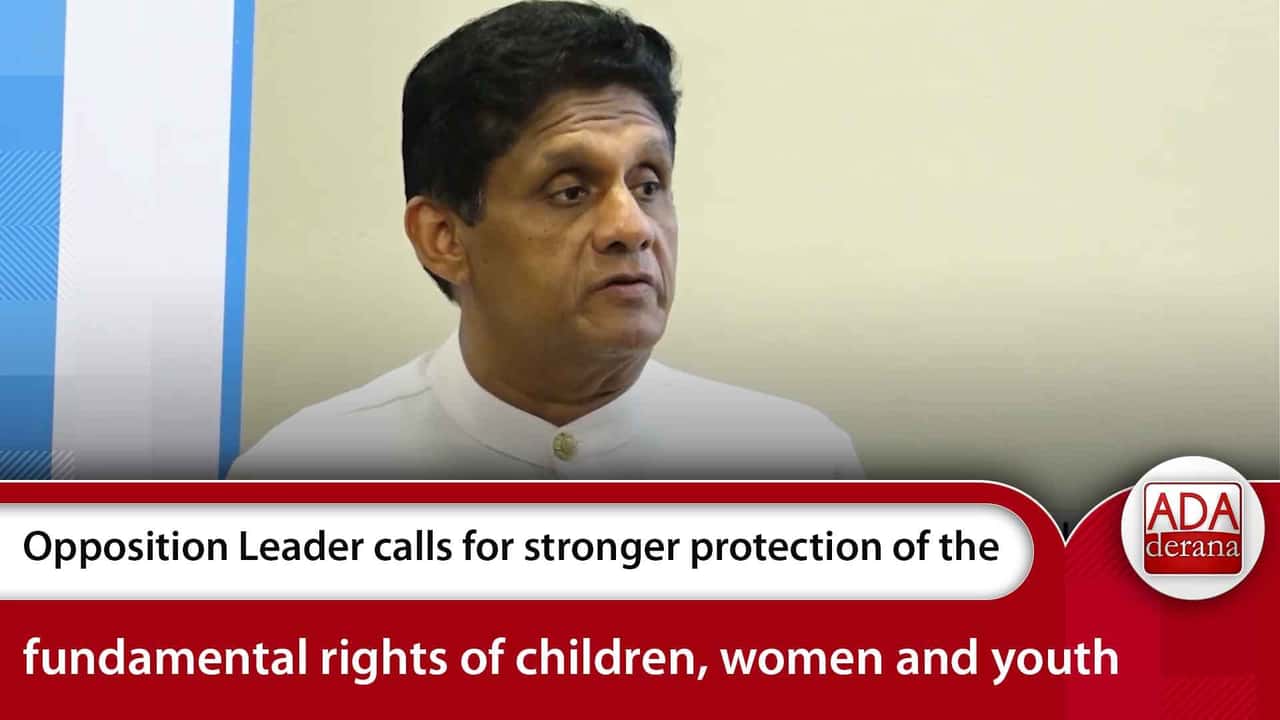






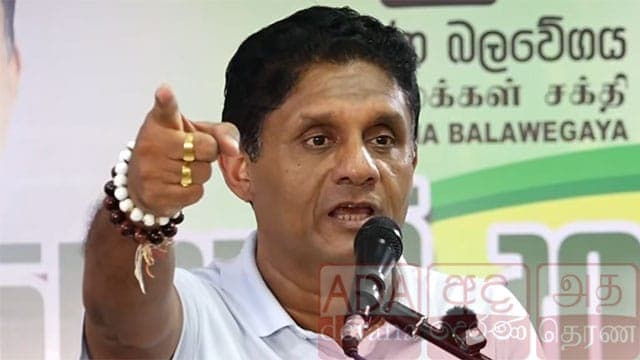


Leader of the Opposition Sajith Premadasa has criticised the government over rising living costs and higher interest rates, saying the 2027 Budget had created a "fantasy world" that was shattered by the Central Bank's decision to increase interest rates.
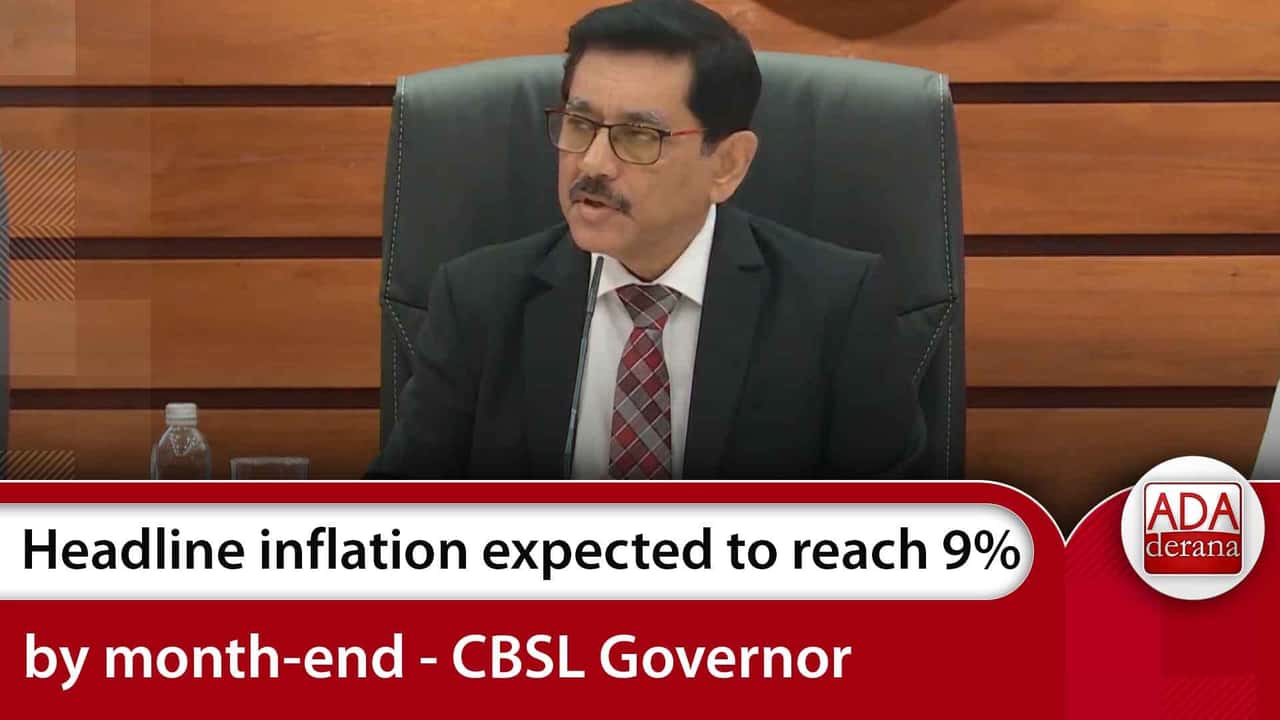
He said the Governor of the Central Bank had indicated that inflation could rise to 9% this year, while interest rates had also been increased to 9%.
Sajith Premadasa made these remarks while addressing a meeting held in the Ampara District to discuss issues faced by farmers.
Farmers Left in Desperate Situation Despite Government Promises
He said farmers, who had supported the government believing that a leader from a farming background would better understand their problems, were now facing severe difficulties.
Farmers were being forced to borrow money at high interest rates to continue cultivation, while facing shortages of quality seeds, fertiliser and other agricultural inputs. He also pointed out that fertiliser subsidies were not being provided on time and that the assistance received was insufficient to cover fertiliser costs.
In addition, farmers were struggling with the high cost of agricultural equipment, human-elephant conflict and other challenges. Despite overcoming these difficulties and producing harvests, they were receiving very low prices for their produce, he said.
Premadasa added that he and the Samagi Jana Balawegaya (SJB) had repeatedly raised these concerns in Parliament.
He further claimed that farmers were increasingly burdened by debt due to the lack of reasonable prices for their harvests, adding that gold pawning had reached particularly high levels under the current government.
The Opposition Leader also accused both the former Gotabaya Rajapaksa administration and the current government led by President Anura Kumara Dissanayake of misleading farmers.
He said government parliamentarians had previously promised to pay Rs. 150 per kilogram of paddy, while the Minister of Agriculture had stated that the production cost of a kilogram of paddy was Rs. 137.
However, the government's guaranteed purchasing price stands at only Rs. 120 per kilogram, resulting in a Rs. 17 loss per kilogram compared with the stated production cost, he pointed out.
Premadasa also criticised what he described as the government's changing attitude towards farmers, saying they had been hailed as heroes before the election but were being portrayed negatively after the government came to power.
Questions Government's Paddy Pricing and Profit Calculations
Opposition Leader Premadasa further challenged the government's claims about the profitability of paddy cultivation, saying farmers were struggling even to sell their produce at Rs. 120 per kilogram.
Citing figures attributed to the Agriculture Minister, he said the production costs per kilogram were Rs. 76 for red Nadu, Rs. 86 for white Nadu, Rs. 97 for Samba and Rs. 109 for Keeri Samba.
He also presented an example involving white Nadu cultivation, saying an acre producing 2,016 kilograms at Rs. 120 per kilogram would generate revenue of Rs. 241,920 against production costs of Rs. 175,392.
This would leave a net profit of Rs. 66,528, or approximately Rs. 11,088 per month, according to his calculation.
He described this level of income as unfair to farmers and accused the government of misleading the public.
Premadasa also accused the government of imposing taxes beyond the levels recommended by the International Monetary Fund (IMF).
He called for a national cultivation plan that would ensure fair prices for farmers while reducing the need for rice imports.
He claimed that Sri Lanka's annual rice requirement was approximately 2.5 million metric tonnes, while domestic production stood at around 3.4 million metric tonnes, creating a surplus of approximately 900,000 metric tonnes.
Despite this surplus, he alleged that 342,000 metric tonnes of rice had been imported.
He also recalled that members of the current government had previously accused other administrations of importing rice to earn commissions, questioning why the present government had also resorted to rice imports.
Premadasa said the country needed a government that protected and supported farmers rather than one that misled them.