





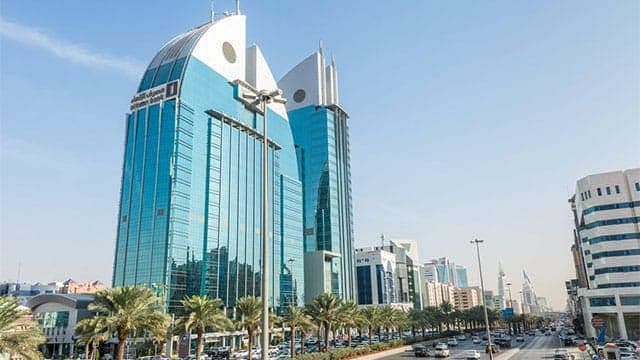


Most Gulf stock markets recorded losses during early trading on Sunday (November 22), as continuing military tensions and reported attacks in the Middle East weighed on investor sentiment.
Saudi Arabia's benchmark Tadawul All-Share Index (TASI) fell 1.7%, pressured by a 2% decline in Al Rajhi Bank and a 1.8% drop in Saudi National Bank, the country's largest lender by assets, Al Jazeera reported.
Qatar's stock market also declined by 1.5%, with almost all constituent shares trading in negative territory. Qatar Islamic Bank fell 1.3%, while Bahrain's market recorded a 0.4% decline.
The market downturn followed conflicting claims by Iran and the United States over an alleged Iranian air defence attack on an American F-16 fighter jet over the Persian Gulf.
Iran's state-owned Tasnim news agency reported that the country's air defence forces had targeted a US F-16 aircraft, potentially forcing it to abandon its mission and make an emergency landing.
According to Iran's Army Public Relations Office, the domestically developed air defence network detected and tracked the American fighter jet while it was flying over the Persian Gulf. Iranian military officials claimed that a missile was subsequently launched towards the aircraft and exploded nearby.
The United States military rejected the Iranian account, describing the claim as entirely false and stating that all American fighter aircraft operating across the Middle East were safe.
The reported incident comes amid escalating military tensions between Washington and Tehran.
Meanwhile, diplomatic efforts to end the conflict are continuing. A Qatari delegation held discussions in Tehran on Friday as regional and international efforts to secure an end to the war, which began following US and Israeli strikes on Iran in February, continued.
Iranian Foreign Minister Abbas Araghchi has said that Tehran remains hopeful that diplomacy could bring an end to the conflict.
However, US President Donald Trump said that although Iran wanted a deal, it was not an agreement he would be willing to accept.
The continuing military uncertainty and conflicting statements from the parties involved have added to concerns among investors across the Gulf region.
– with Agencies inputs --