





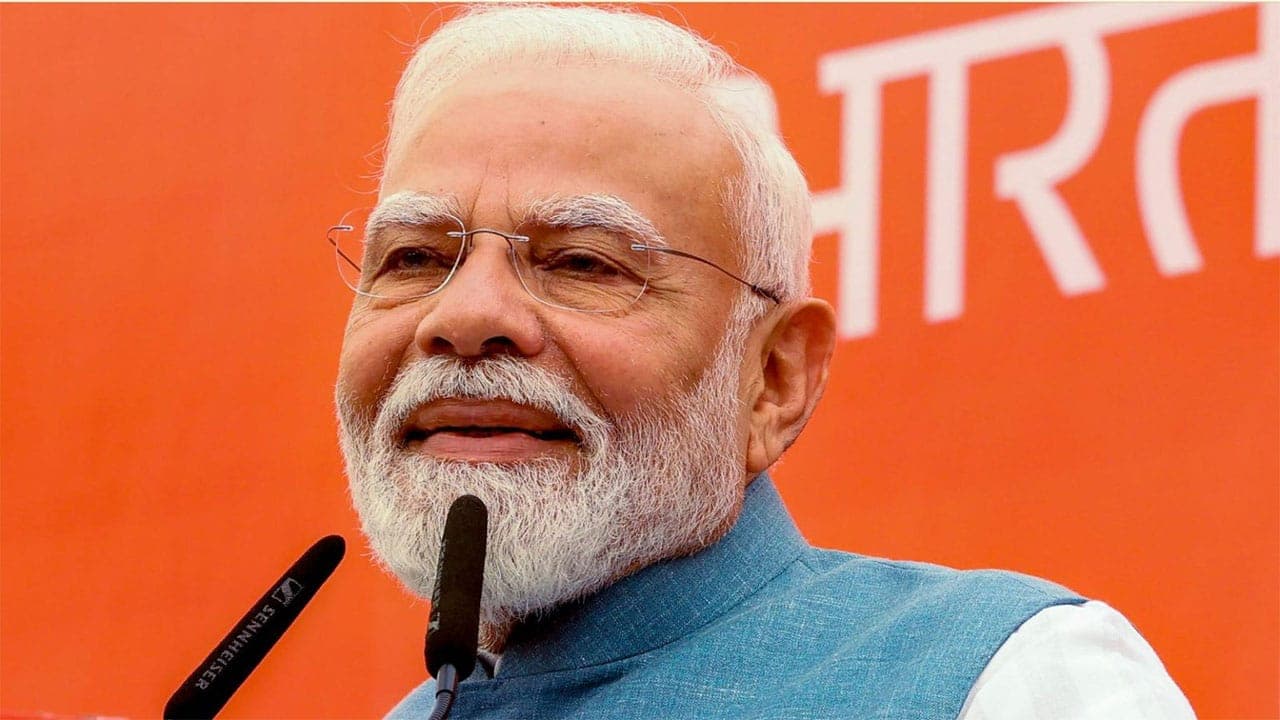


India has narrowed its "power yield", consolidating its position as Asia's third-most powerful country backed by a strong economic forecast, diplomatic influence and Prime Minister Narendra Modi's "effective" leadership, according to the Lowy Institute's Asia Power Index.
The report said PM Modi is now Asia's second-most effective regional leader, only behind Chinese President Xi Jinping.
Power yield is the gap between a country's expected power based on its resources and its actual comprehensive score.
India not only strengthened its position but also reached its narrowest point of power gap with China since the inception of the Asia Power Index in 2018. It added that though China's power remains 80 per cent higher than India's.
Across the eight criteria the Lowy Institute based its report on, India reported growth in five and a marginal fall in the remaining three. Despite a slight decrease, diplomatic influence remained India's strongest and steadiest measure; when most countries saw a decline, it added.
The report stated that India's defence networks and cultural influence have increased the country's influence in Asia. The defence engagement and BrahMos missile sales to Southeast Asia have lifted India to ninth place, it said.
"India's cultural influence rose to 43.8 points, driven by improvements across all three dimensions: cultural projection, information flows, and people exchanges," the Lowy Institute research noted.
Sharing his views on the findings, Dr Hunter Marston, Director of the Southeast Asia Program at the Lowy Institute and Project Lead for the Asia Power Index, said India had gained influence.
"India gains influence. India rose to 40.5, consolidating its place as a major power. The gap with China is the narrowest since 2018, and Modi is now rated the second-most effective regional leader behind Xi, despite a dip in economic capability," he said in a post on X.
The authors also flagged some negatives for India, including a weakening rupee, a change in how the International Monetary Fund (IMF) measures economies, and a nearly $20 billion drop in outbound investment.
On PM Modi, it said that perceptions around his leadership and strategic ambition have diminished, "reflecting India's lower diplomatic profile during the conflict in the Gulf".
However, it added that despite everything, the scale of opportunities for India is relatively greater than for other Asian countries.
The 2026 Asia Power Index evaluates 27 countries and territories across 131 indicators covering eight measures of power - economic and military capability, resilience, diplomatic influence, future resources, defence networks and economic relationships.
China Narrows Military Power Gap With US
US President Donald Trump's heavy engagement in the Middle East has diverted America's attention away from Asia, and Beijing has now come closest in terms of military power to Washington. And the gap continues to shrink.
The Power Index report shows the comprehensive power gap between the United States (78.9) and China (73.6) stands at 5.3 points.
The US has recorded significant losses in areas like economic capability, military capability, defence networks, and diplomatic influence, while China remained strong and stable in most of these.
Beyond modernising its military, China is continuing to expand its maritime strength. These growing capabilities are pushing China's territorial claims over the Philippines and Taiwan.
Despite Washington's strong dollar reserves, Beijing continues to grow economically, with its official reserves reaching three times those of the US.
Source: NDTV
--Agencies