






The political crisis in the Maldives has deepened after the island nation’s government said it would not obey a Supreme Court order to free a group of imprisoned opposition leaders.
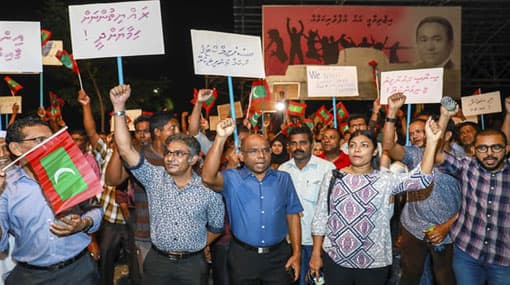
The surprise judicial ruling last week has led to an increasingly tense standoff between the supreme court and the government of President Yameen Abdul Gayoom, with protests spilling into the streets of the capital, Malé, and soldiers in riot gear deployed to the parliament building to prevent MPs from meeting.
On Monday the legal affairs minister, Azima Shakoor, said the government “does not believe that the supreme court ruling to release the political prisoners can be enforced”.
She said the court had not acted on a series of government letters and there were “numerous challenges” to implementing the order. On Sunday a supreme court statement said there were “no obstacles in implementing the ruling and releasing political prisoners and this has been informed to the prosecutor general’s office”.
The United Nations and several foreign governments including the United States have urged the Maldives to respect the court order.
There was no immediate comment from Yameen’s main rival, the exiled former president Mohamed Nasheed. He has been living in the UK since 2016 after being given asylum when he travelled there on medical leave from prison.
The supreme court ruled that guilty verdicts against the political leaders had been politically influenced. On Thursday and Friday there were clashes between police and opposition supporters urging the government to obey the order. Soldiers surrounded the parliament building over the weekend.
In addition to ordering the release of the political prisoners, the court also reinstated 12 MPs who had been ousted for switching allegiance to the opposition. When they return, Yameen’s Progressive Party of Maldives will lose its majority in the 85-member parliament, which could result in the legislative body functioning as a rival power to the president.
Known for its luxury tourist resorts, the Maldives became a multiparty democracy 10 years ago after decades of autocratic rule by the current president’s half brother, Maumoon Abdul Gayoom.
But the nation lost much of its democratic gains after Yameen, who has maintained a tight grip on power, was elected in 2013. He had been set to run for re-election this year virtually unopposed, with all of his opponents either jailed or exiled.
On Friday Nasheed said he would mount a fresh challenge for the presidency this year. Nasheed was sentenced to 13 years in prison after he was convicted under the Maldives’ anti-terror laws. The trial that was widely condemned by international rights groups.
- The Guardian
- Agencies