



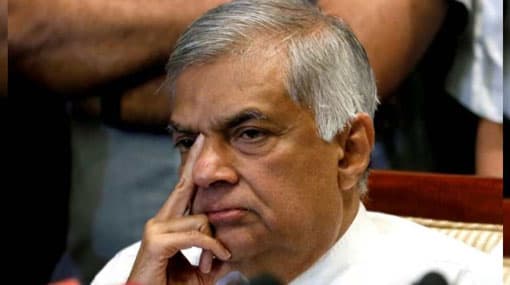



Ranil Wickremesinghe, who is at the centre of Sri Lanka’s political crisis, has told the BBC he has the support of parliament and will not leave the grand mansion reserved for the island nation’s prime minister.
Last week the president sacked PM Ranil Wickremesinghe and his cabinet and suspended parliament, appointing former leader Mahinda Rajapaksa as the new PM.
But Mr Wickremesinghe says the move is illegal and will not leave office.
The constitutional crisis has already sparked protests and deadly violence.
The situation is being closely watched by regional rivals India and China, who are vying for influence in Sri Lanka. Washington has called for parliament to be convened as soon as possible.
“I still remain the prime minister and I have the confidence of the majority of members of this house,” Mr Wickremesinghe told the BBC from his official residence, Temple Trees.
“The constitution states that the president must appoint as prime minister the person who commands the confidence of parliament and I am the person who has that. We have asked for the summoning of parliament so I can prove my majority in the house,” he said.
Mr Wickremesinghe’s party has demanded that the house be convened soon and Mr Rajapaksa has suggested this could happen at the start of next week. No date has yet been confirmed.
This is an extraordinary situation for a nation that saw decades of brutal civil war, re-emerged in recent years as a top tourist destination, and which now has two people claiming to run its government.
According to Nihal Jayawickrama, a legal expert, there’s no provision in the constitution that would enable the president to remove the prime minister.
“There was a time when he could do that. But very dramatic changes were made to the constitution in 2015 when 90 percent of the president’s executive powers were taken away. And one of the powers that was taken away was the one to remove the prime minister,” he said.
“Everyone is confused. President Sirisena was supposed to give leadership to the change [of government in Sri Lanka]. He did provide it. But for some reason, he backtracked.”
Mr Wickremesinghe was asked if he felt like he’d been backstabbed.
“That’s to be expected in politics,” he said with a smile. “If necessary there will be more protests. The general public opinion does not accept the actions of the president.
“This type of crisis really causes a big issue for the people, a lack of confidence. Look, you promised to restore democracy, you’ve done so many steps, and here in the main question, you disregard the powers of parliament.”
The episode sets a dangerous trend for a country that voted for change in 2015. There are many in Sri Lanka who support neither side, but simply want the democratic process to be followed.
Source: BBC
-Agencies