





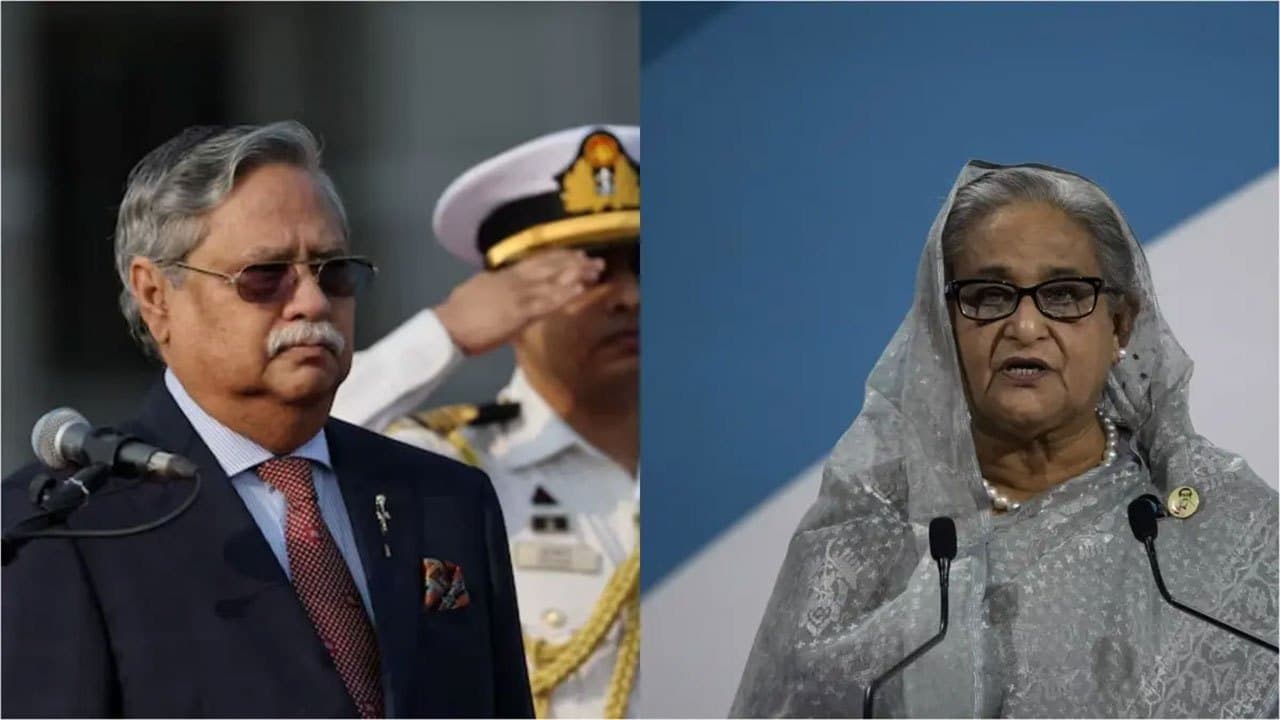



Bangladesh president Mohammed Shahabuddin is set to resign, as concerns grow that his former ally, ousted prime minister Sheikh Hasina, will return to the country.
Shahabuddin's resignation comes days after Hasina told Reuters that she would return to Bangladesh, where she faces the death penalty for crushing student-led protests in 2024 which led to the toppling of her government.
Since then, Shahabuddin has been under pressure to resign from leaders of the ruling Bangladesh Nationalist Party, sources tell BBC Bangla.
A senior official told BBC Bangla that Shahabuddin would tender his resignation to the parliament speaker, who returns to Bangladesh on Friday.
The speaker, Hafiz Uddin Ahmad, is cutting short his visit to Thailand, where he had gone for medical treatment, sources told BBC Bangla.
Sources also say that Shahabuddin may cite illness as the reason for resigning.
Shahabuddin's spokesperson also told Reuters the president, who been in his role since 2023, is expected to quit on Friday.
However, home minister Salahuddin Ahmed told reporters on Thursday that the government has not told the president anything, and that constitution allows the president to resign if he wishes.
Earlier this month, Hasina said in a Reuters interview that she and her allies would return from exile in India and face the court in Bangladesh.
Last year, the International Crimes Tribunal in Bangladesh found Hasina guilty of allowing lethal force to be used against protesters, 1,400 of whom died during the unrest that eventually saw her flee the country. The court sentenced her to death in absentia.
In the months following her departure, her party, the Awami League, has been banned from politics, and many of its leaders jailed.
"My party leaders and workers are being subjected to tremendous repression," she told Reuters during the interview earlier this month.
"If death comes, I want it to come on my own soil, where my parents are buried and where their blood was shed."
Along with the ousting of Hasina's government, top bureaucrats across her administration were removed from their posts.
President Shahabuddin, one of her only allies who remained in power, continued to carry out his presidential duties as an interim government, led by Nobel laureate Muhammad Yunus, took power.
But Shahabuddin, whose term is supposed to end in 2028, told Reuters last December that he was eager to leave his presidency. He said he had felt "humiliated" by the interim government, citing the sudden removal of his portraits from Bangladeshi consulates and embassies.
However, he added that he would continue his presidency until elections were held and let the next government decide on his position.
After the Bangladesh Nationalist Party secured a landslide victory in the general election in February, Shahabuddin stayed on as president.
Should Shahabuddin step down, elections for a new president must be held in 90 days.
Source: BBC
--Agencies