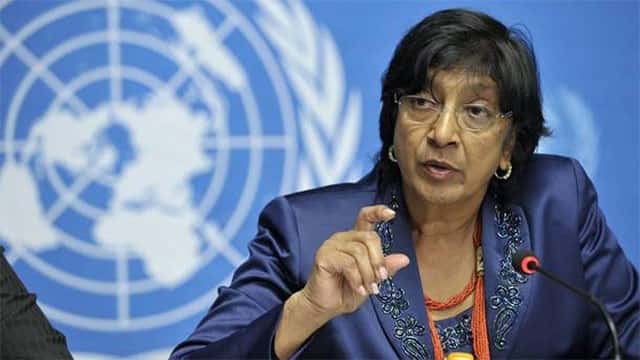











The 63rd session of the United Nations Human Rights Council opened in Geneva today (07), with Sri Lanka’s record on human rights, reconciliation and accountability facing renewed international scrutiny.
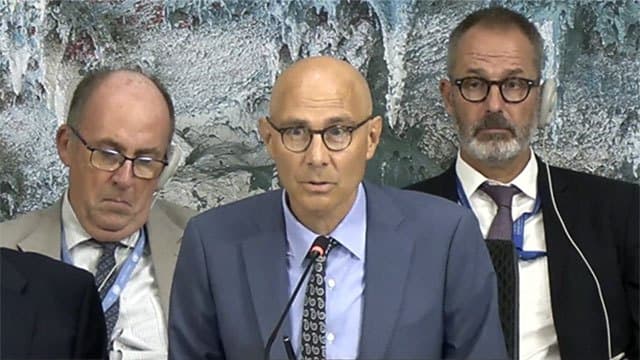
The four-and-a-half-week session, which runs from Sept. 7 to Oct. 7, opened with an address by UN High Commissioner for Human Rights Volker Türk. The latest report on Sri Lanka is among the issues receiving attention during the Council’s current session.
The annual report of the Office of the UN High Commissioner for Human Rights (OHCHR), released on Sept. 3, said Sri Lanka remains at a critical point in addressing the legacy of its civil war and decades of human-rights violations and impunity.
The report welcomed several steps taken by the government, including action on corruption and some cases involving alleged crimes committed during the post-war period. However, it said further measures were necessary to translate the government’s commitments to truth, justice, reconciliation and institutional reform into concrete action.
The High Commissioner urged the government to take confidence-building measures aimed at strengthening reconciliation and national unity, including the return of land allegedly occupied by the military in the north and east, preventing further land acquisitions and accelerating land-titling processes.
The report also called for action on long-term detainees held under the Prevention of Terrorism Act (PTA), while urging the government to address continuing concerns over torture, custodial violence and the use of repressive laws.
In his report, High Commissioner Volker Türk said the government still had an opportunity to reverse decades of alleged abuse of executive power, repressive laws, custodial violence and entrenched impunity.
While acknowledging measures taken by the authorities to address corruption and certain crimes linked to the post-war period, Türk said more needed to be done to end Sri Lanka’s longstanding culture of impunity.
The report also called for stronger progress on accountability for serious alleged human-rights violations committed during the conflict and for reforms aimed at strengthening independent institutions and the rule of law.
However, civil-society and human-rights groups have criticized the report for what they describe as insufficient emphasis on the OHCHR’s Sri Lanka Accountability Project (SLAP).
Established in 2021, SLAP was created to collect, analyze and preserve evidence relating to alleged human-rights violations and breaches of international humanitarian law in Sri Lanka.
The criticism comes as the Human Rights Council begins its latest session, placing renewed attention on Sri Lanka’s progress since the end of the civil war in 2009.
For the government, the session provides an opportunity to demonstrate progress on reconciliation, institutional reform and accountability.
The Council’s 63rd session will continue in Geneva through October, with human-rights situations in several countries and broader global human-rights concerns on its agenda.