



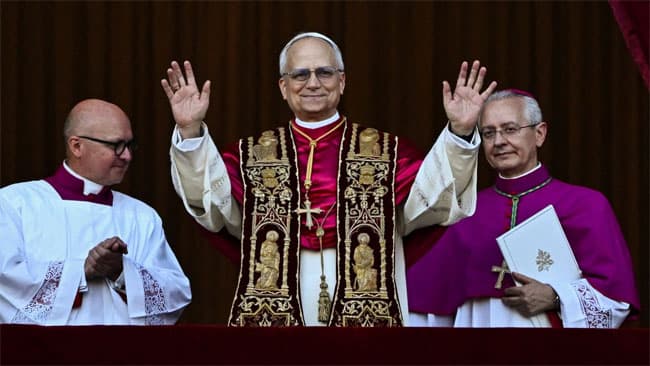



Cardinal Robert Prevost, a missionary who spent his career ministering in Peru and leads the Vatican’s powerful office of bishops, was elected the first American pope in the 2,000-year history of the Catholic Church.
Prevost, 69, took the name Leo XIV.
Cardinal Robert Prevost OSA has been elected the 267th Pope, taking the name Pope Leo XIV.
The American cardinal is considered a balanced moderate known for his solid judgement and his capacity to listen.
Prefect of the Dicastery of Bishops, he is aged 69. From his first appearance on the balcony, it was clear he had decided unlike Francis to wear the traditional papal robes, indicating he will balance reform with stability and will have the emphasis on unitu and evangelisation that emerged as what the cardinal electors were looking for in the general congregations that preceeded the conclave.
In his first apostolic blessing, Urbi et Orbi – to the city and to the world – delivered in Italian while the crowds cheered, he said the traditional “peace be with you”, the peace of Christ resurrected “which comes from God who loves all of us unconditionally”.
He continued: “God loves all of us and evil will not prevail. We are all in the hands of God.” Christ walks before us and the world needs his light, he said, urging everyone to help each other. “We must build bridges together with dialogue… become one simple people in peace.” He added: “We must be a missionary church together.”
He thanked the cardinals and also paid tribute his predecessor Pope Francis, who he was close to.
Cardinal Prevost served as a missionary bishop in Peru, where sources today told The Tablet they were delighted he had been elected. “He was very close to the faithful when he was in Peru,” a source said. At the end of his blessing, he spoke in Spanish, one of the many languages in which he is fluent, thanking all those from Peru who had travelled to Rome for the conclave.
He said he wanted to lead a missionary and a synodal church that is “close to the people who suffer”.
The white smoke appeared shortly after 5pm – 6:08pm Rome time – which was over half an hour beyond the time of 4:30pm when it was thought the fourth vote would have taken place.
His election and name was announced by the French prelate Cardinal Protodeacon Mamberti at the Loggia of Blessings to announce with the traditional formula: “Annuntio vobis gaudium magnum: Habemus Papam!” (“I announce to you a great joy: We have a Pope!”)
Before he proceeded to the Loggia, Pope Leo XIV stopped to pray before the Blessed Sacrament in the Pauline Chapel, where the newly-elected Pope Francis was said to have had a spiritual experience that transformed him from a priest known to be somewhat dour and determined, to the joyful shepherd with the “smell of the sheep” that the world came to know and love.
At the Dicastery for Bishops, Cardinal Prevost was charged with vetting candidates for the episcopacy, since he became its prefect in 2023.
Born in Chicago, he joined the Augustinians and after ordination in 1982 and further studies joined the order’s mission to Peru in 1985. He alternated between work with the mission and with the Augustinian province in Chicago until he was made the order’s prior general in 2001, holding the post until 2013. A year after that, Pope Francis made him Bishop of Chiclayo, in Peru.
Since succeeding Cardinal Marc Ouellet at the Dicastery of Bishops and becoming a cardinal shortly after, Prevost has led the search for candidates for the episcopate reflecting a more “pastoral” approach. He also faced a high-profile problem case soon after his appointment, directing the removal of the volatile Bishop Joseph Strickland from the Diocese of Tyler, Texas.
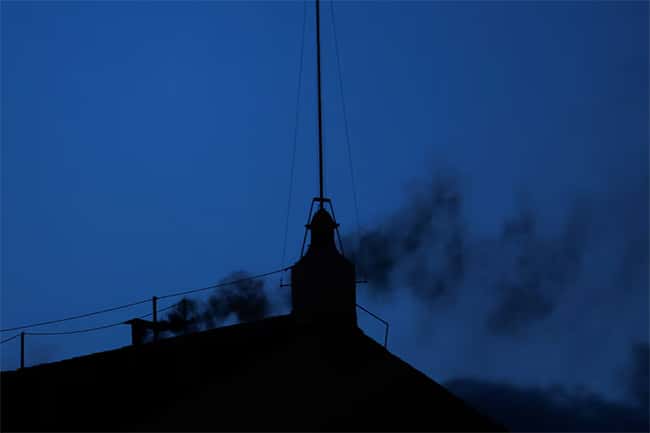
Earlier, white smoke poured from the chimney of the Sistine Chapel and the great bells of St. Peter’s Basilica tolled Thursday after cardinals elected the 267th pope to lead the Catholic Church on the second day of their conclave.
The crowd in St. Peter’s Square erupted in cheers, priests made the sign of the cross and nuns wept as the crowd shouted “Viva il papa!” after the white smoke wafted into the late afternoon sky at 6:07 p.m. Waving flags from around the world, tens of thousands of people waited to learn who had won.
The smoke signal means the winner secured at least 89 votes of the 133 cardinals participating in the conclave to elect a successor to Pope Francis.
As the crowd waited, the Swiss Guards marched out and a military band played, marching up the steps to the basilica.
The name was announced later, when a top cardinal utters the words “Habemus Papam!” — Latin for “We have a pope!” — from the loggia of the basilica. The cardinal then reads the winner’s birth name in Latin and reveals the name he has chosen to be called.
The new pope is then expected to make his first public appearance and impart a blessing from the same loggia.
Eyes on the chimney
Earlier Thursday, large school groups joined the mix of humanity awaiting the outcome in St. Peter’s Square. They blended in with people participating in preplanned Holy Year pilgrimages and journalists from around the world who have descended on Rome to document the election.
“The wait is marvelous!” said Priscilla Parlante, a Roman.
Pedro Deget, 22, a finance student from Argentina, said he and his family visited Rome during the Argentine pope’s pontificate and were hoping for a new pope in Francis’ image.
“Francis did well in opening the church to the outside world, but on other fronts maybe he didn’t do enough. We’ll see if the next one will be able to do more,” Deget said from the piazza.
The Rev. Jan Dominik Bogataj, a Slovene Franciscan friar, was more critical of Francis. He said if he were in the Sistine Chapel, he’d be voting for Cardinal Pierbattista Pizzaballa, the Latin Patriarch of Jerusalem who is on many papal contender lists.
“He has clear ideas, not much ideology. He’s a direct, intelligent and respectful man,” Bogataj said from the square. “Most of all, he’s agile.”
Some of the cardinals had said they expected a short conclave.
For much of the past century, the conclave has needed between three and 14 ballots to find a pope. John Paul I — the pope who reigned for 33 days in 1978 — was elected on the fourth ballot. His successor, John Paul II, needed eight. Francis was elected on the fifth in 2013.
Conjecture on contenders
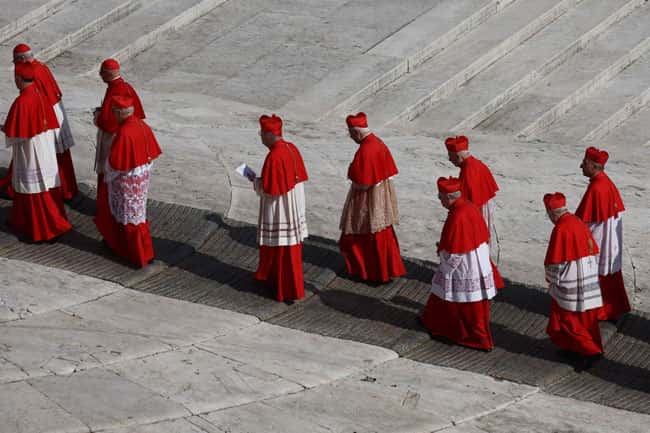
The cardinals opened the secretive, centuries-old ritual Wednesday afternoon, participating in a rite more theatrical than even Hollywood could create. Bright red cassocks, Swiss Guards standing at attention, ancient Latin chants and oaths preceded the slamming shut of the Sistine Chapel doors to seal the cardinals off from the outside world.
Cardinal Pietro Parolin, the 70-year-old secretary of state under Francis and a leading contender to succeed him as pope, assumed leadership of the proceedings as the most senior cardinal under age 80 eligible to participate.
Parolin seemed to have received the blessings from none other than Re, the respected elder among the cardinals. During the traditional exchange of peace during the pre-conclave Mass on Wednesday, Re was caught on a hot mic telling Parolin “auguri doppio” or “double best wishes.” Italians debated whether it was just a customary gesture acknowledging Parolin’s role running conclave, or if it might have been an informal endorsement or even a premature congratulations.
The voting process
The voting followed a strict choreography, dictated by church law.
Each cardinal writes his choice on a piece of paper inscribed with the words “Eligo in summen pontificem” — “I elect as supreme pontiff.” They approach the altar one by one and say: “I call as my witness, Christ the Lord who will be my judge, that my vote is given to the one who, before God, I think should be elected.”
The folded ballot is placed on a round plate and tipped into a silver and gold urn. Once cast, the ballots are opened one by one by three different “scrutineers,” cardinals selected at random who write down the names and read them aloud.
The scrutineers, whose work is checked by other cardinals called revisers, then add up the results of each round of balloting and write them on a separate sheet of paper, which is preserved in the papal archives.
As the scrutineer reads out each name, he pierces each ballot with a needle through the word “Eligo.” All the ballots are then bound together with thread, and the bundle is put aside and burned in the chapel stove along with a chemical to produce the smoke.
--Agencies