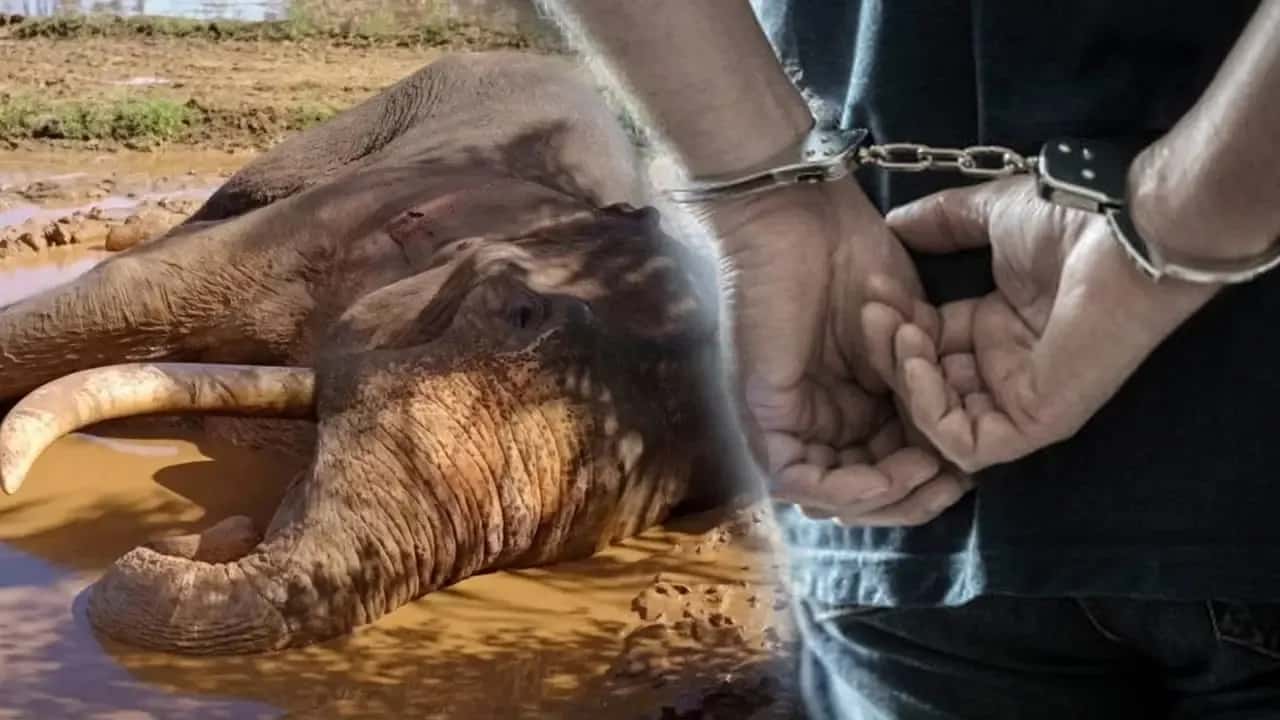







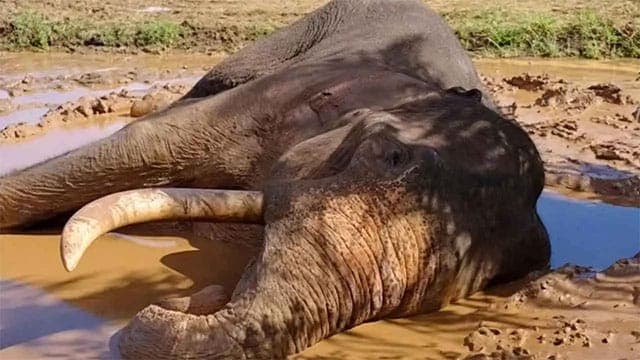


Five more suspects allegedly involved in the shooting of the ‘Kawanthissa’ tusker and related illegal activities have been arrested.
The Ministry of Environment stated that the suspects were arrested during a special search operation jointly conducted by the Department of Wildlife Conservation, the Panadura Walana Central Anti-Vice Strike Force, and the police in the relevant area.
According to the ministry, investigations have revealed that the main suspect initially arrested in connection with the incident was directly involved in the shooting of the ‘Kawanthissa’ tusker.
The ministry further stated that wildlife officers and the Galgamuwa Police are currently questioning the arrested suspects.
Investigations have also been expanded to locate the firearms used in the shooting and determine whether an organised syndicate targeting wild animals was operating in the area.
Meanwhile, a Skills Development Officer attached to the Ehetuwewa Divisional Secretariat, who is suspected of shooting the tusker ‘Kawanthissa’, was arrested yesterday by officers of the Walana Central Anti-Corruption Strike Force and the Department of Wildlife Conservation.
Police stated that the suspect was arrested along with two locally made firearms and 24 rounds of ammunition.
During a special joint operation, officers seized a 12-bore firearm, a muzzle-loading firearm known as a ‘cap gun’, and 24 rounds of ammunition from the suspect’s residence.
Police further stated that there were reports suggesting that the suspect had previously shot an elephant known as ‘Diana’.
Further investigations are underway, and the suspect is due to be produced before the court.
The Ministry of Environment stated that various agencies would continue to conduct joint operations to enforce the law strictly against illegal activities that threaten wildlife resources and the country’s natural heritage.
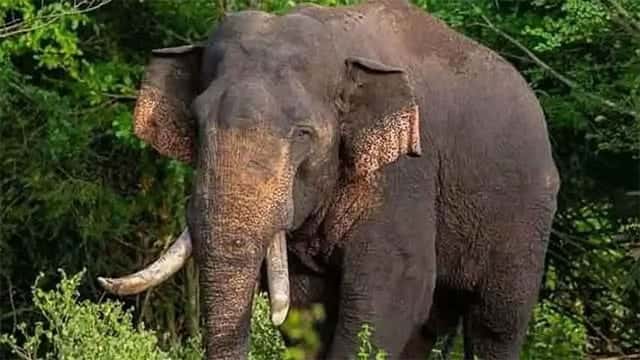
‘Kawanthissa’, regarded as Sri Lanka’s largest and tallest living tusker, was recently found with a gunshot wound to its right foreleg, prompting urgent veterinary treatment.
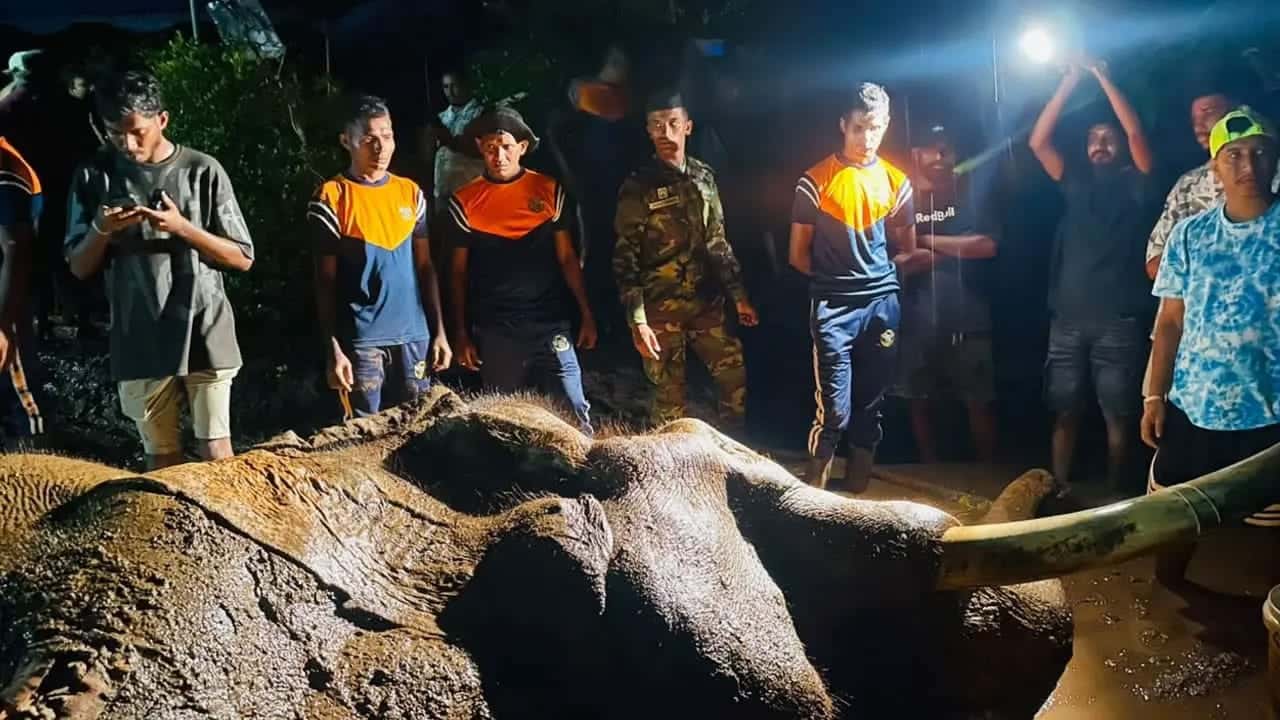
However, the tusker died on October 16 while receiving treatment for the gunshot wound in a paddy field in Galgamuwa.
Concerns about the health of the elephant, which inhabited the Galgamuwa region, had been raised for some time.
Veterinary treatment had recently commenced for a wound on its right front leg, believed to have been caused by a gunshot.
Although the wound had shown signs of healing, the elephant was observed exhibiting other symptoms of illness, including refusing to eat over the last few days.
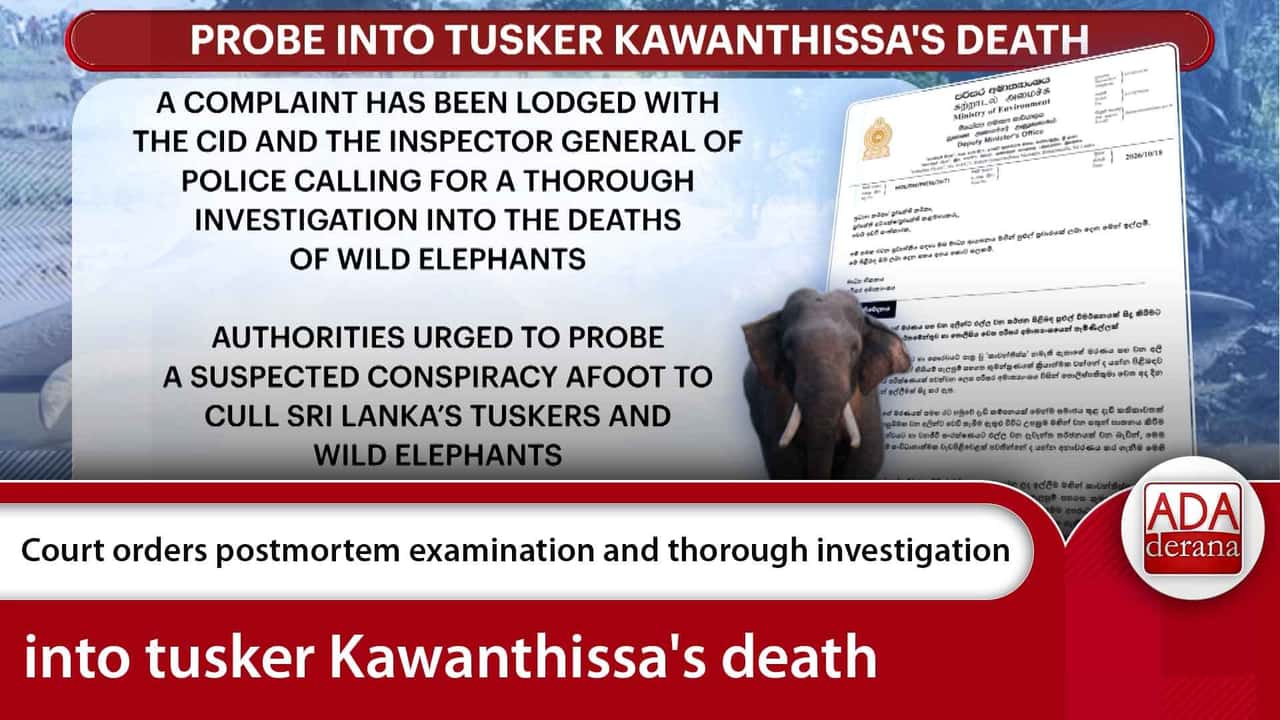
The death of the much-loved tusker has sparked widespread concern about the safety and protection of Sri Lanka’s wild tuskers and other elephants.