






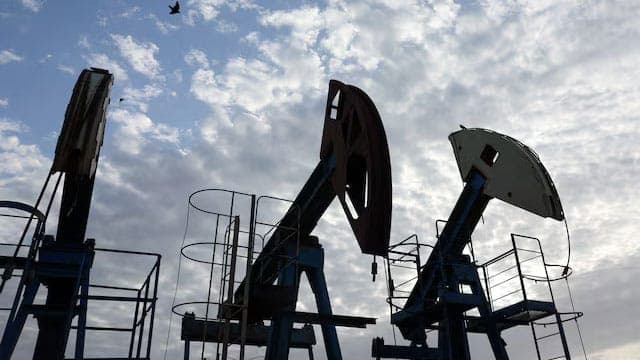


Brent prices rose to their highest since May on Thursday after more Houthi attacks in Saudi Arabia stoked concerns over a broader escalation of conflict and further disruptions to crude oil supplies from the world's key exporting region.
Brent crude futures climbed $3.35 or 3.08%, to $112.17 a barrel by 0818 GMT, the highest since May 18. They hit $112.55 a barrel earlier in the session.
US West Texas Intermediate crude gained $2.68, or 2.76%, to $99.83.
"Efforts to mitigate tensions, both in Ukraine and the Middle East, lack credibility ... reports of Middle East crude oil exports exceeding pre-conflict levels are more than countered by attacks on ships in the Strait of Hormuz and the Houthi strikes on Saudi Arabia and on its oil infrastructure," PVM Oil analyst Tamas Varga said.
"No de-escalation is anticipated until the US midterm elections, which should keep oil prices elevated."
Morgan Stanley analysts estimated in a note that Middle East crude oil exports were around 17 million barrels per day last week.
The US State Department has ordered some diplomats and family members to leave its missions in Saudi Arabia and plans to withdraw family members from a number of other US missions in the Middle East, US officials told Reuters.
Yemen's Iran-aligned Houthis struck several targets in Saudi Arabia on Wednesday with at least one person killed and eight more wounded at a civilian airport in Dammam, and two people killed in a drone attack on a Saudi oil field.
Explosions were also heard in Sirik in southern Iran, Iranian media reported on Wednesday, saying the nature and origin of the explosions were unknown.
Iran's Islamic Revolutionary Guard Corps Navy said on Thursday that four vessels involved in illegal oil transfers in the northern Gulf were simultaneously hit and caught fire after being tracked by its forces on Wednesday.
The IRGC added that three more vessels collided with mines west of the Strait of Hormuz, and warned the US military that continued provocations could lead to a wider response against its regional bases.
Supply disruption continued to affect global inventories. A valve on an oil pipeline running from Libya's Hamada and Tahara oilfields to Zawiya port has been shut, leading to a reduction in production at both fields, the head of the National Oil Corporation told Reuters.
Seeking to contain prices that have surged on diesel shortages due to the US-Israeli war with Iran and the Russian war in Ukraine, the Trump administration is offering to loan up to nearly a third of the 1-million-barrel US emergency heating oil reserve.
Meanwhile, Russian President Vladimir Putin hosted US Special Envoy Steve Witkoff in St Petersburg on Wednesday for talks on ending the war in Ukraine amid Washington's latest push to stop Europe's bloodiest conflict since World War Two.
The Kremlin said Putin had agreed to resume US-mediated peace talks with Ukraine as soon as next month. Ukrainian President Volodymyr Zelenskiy said he supported the talks and hoped they would start as soon as possible.
Source: Reuters
-Agencies