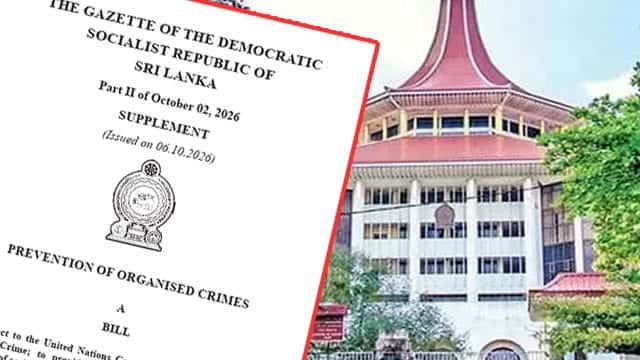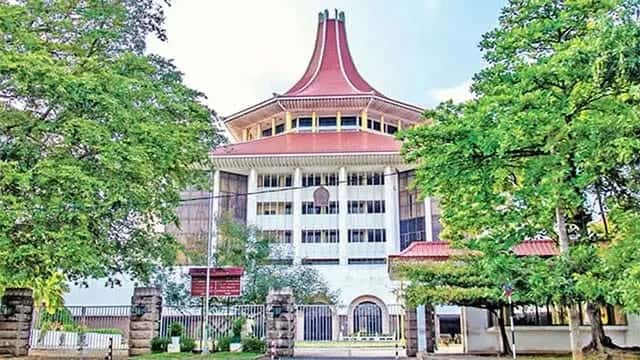






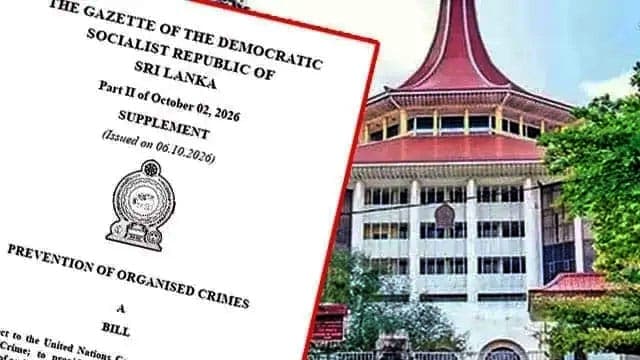


The Speaker’s Office has announced that the Supreme Court’s determination on the Prevention of Organised Crime Bill has been received by the Speaker of Parliament.
On November 9, the Supreme Court concluded its hearing on 26 petitions challenging the constitutionality of the Government’s proposed Prevention of Organised Crime Bill, after the Attorney General informed the court of several amendments proposed by the government in response to concerns raised over certain provisions of the legislation.
At the conclusion of the hearing, the Supreme Court announced that its confidential determination on the constitutionality of the Bill would be communicated to the Speaker of Parliament and the President.
The petitions were heard before a three-member Supreme Court bench comprising Chief Justice Preethi Padman Surasena and Justices Achala Wengappuli and Sampath Abeykoon.
During the proceedings, Solicitor General Viraj Dayaratne, appearing on behalf of the Attorney General, informed the Supreme Court that the Government had proposed several amendments to the Bill, which were expected to be introduced during the Committee Stage in Parliament.
A document outlining the proposed amendments was also submitted to the Supreme Court.
Among the key changes, the Attorney General informed the Court that the provision permitting a person to be detained for up to 72 hours would be amended to reduce the maximum detention period to 48 hours.
The Attorney General further indicated that provisions relating to tattoos and body marks, which were included in the proposed legislation, would be removed through amendments.
In addition, the Government has proposed removing all offences under the Excise Ordinance included in the Bill, as well as offences relating to copyright under intellectual property laws.
Another significant proposed amendment concerns a clause requiring prior court approval before information relating to cases involving serious crimes could be published. The Attorney General informed the Supreme Court that this provision would also be withdrawn.
The Court was also informed that amendments concerning the detention of arrested persons and the issuance of detention orders would be considered at a later stage.