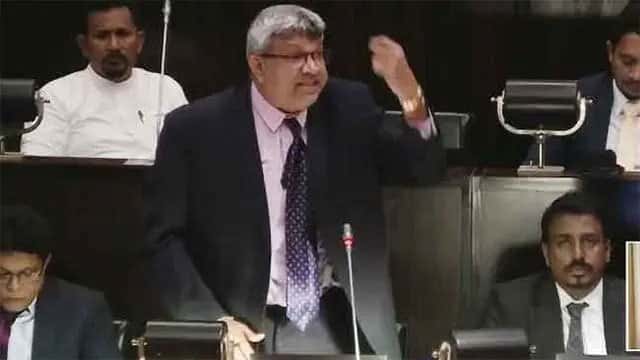




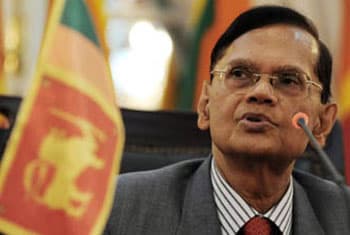



Sri Lanka has continued its proactive relationship with the UNHRC despite being the target of country-specific actions taken by the council at the behest of a few member states, External Affairs Minister Prof. G.L. Peiris stated while addressing the 25th UNHRC sessions being held in Geneva.
The Minister pointed out to the council that some countries were exploiting human rights for political purposes while highlighting the disproportionate efforts to implement country specific resolutions while conveniently ignoring other pressing issues.
“The disproportionate attention being paid to country specific action in the council selectively targets some countries while situations, human rights violations and restrictive practices in other parts of the world that warrant more urgent and immediate attention and action remain conveniently ignored as it exploits human rights for political purposes. Regrettably a similar pattern is evident in the case of continued action on Sri Lanka in this council”, he stated.
He also shared Sri Lanka’s deep concern for the lack of financial independence of the OHCHR which has lead to the erosion of the independence of its overall functioning while stressing the importance of the UNHRC remaining a credible and independent arbiter in dealing with global human rights situations.
Prof. Pieris said that economic, social and cultural rights need to gain the same level of emphasis and legitimacy as civil and political rights which are at the core of sustainable development.
He claimed that any objective observer would agree that Sri Lanka’s achievements would match or surpass that of any country coming out of a similar experience while briefing the council on several efforts by the government to address the many pressing issues concerning resettlement, demining and reconciliation.
He highlighted a Special Land Circular which aims to grant legal ownership of land to those being resettled while also informing the council of the government’s ten-year plan to achieve a trilingual Sri Lanka with bilingual programmes already being implemented for public servants.
The External Affairs Minister also spoke briefly of the visit of UN Human Rights High Commissioner, Navi Pillay and the Commonwealth Heads of Government Meeting (CHOGM) held in Sri Lanka last year.
Sri Lanka remains committed to the council and its mechanisms including special procedures while Sri Lanka continues to submit its periodic reports to its treaty bodies, he added.
He stressed that there was no acknowledgement of the very tangible progress made by Sri Lanka while country-specific action against the country showed a lack of sensitivity in dealing with delicate situations which expose the unfair and biased manner in which issues pertaining to Sri Lanka have been addressed.
The government of Sri Lanka categorically rejects the High Commissioner’s report and will share its observations on the substantive content of the report, he claimed. He described the recommendations contained in the report as being arbitrary, intrusive and of a political nature.
He also added that, references made within the council welcoming the High Commissioner’s report was regrettable as the report was based on baseless and questionable material including what had been processed outside the UN framework.
The report and those who exalt its virtues only seek to inflict harm on the reconciliation process by bringing about a polarization of Sri Lankan society, he stated in closing.