


Latest
Judge SL according to challenges it has faced, Aryasinha asks UN
Oct 09, 201412:44 PM

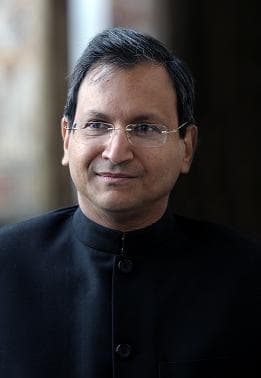



Sri Lanka’s Permanent Representative to the UN in Geneva and Leader of the Sri Lanka delegation to the Human Rights Committee Ambassador Ravinatha Aryasinha asked the Human Rights Committee to “judge Sri Lanka inproportion to the challenges Sri Lanka has continued to face as a country emerging from a 30 year terrorist conflict”.
The Ambassador made this observation responding to comments made during the consideration of Sri Lanka’s 5th Periodic Report under the International Covenant on Civil and Political Rights (ICCPR) by the Human Rights Committee, which was held on 7-8 October 2014 in Geneva. The Human Rights Committee comprises a body of independent experts from 18 countries that monitors implementation of the International Covenant on Civil and Political Rights by its State parties.
“The situation in Sri Lanka is no different to any other country that is traversing through a transition period following a protracted conflict. We have endeavoured with commitment and dedication to address issues related to civil and political rights in Sri Lanka. Given the challenges at hand what we request is an objective assessment of Sri Lanka and in that spirit, we are open to constructive criticism. We look forward to a fruitful dialogue with the distinguished members of the Committee and trust that your recommendations would assist the Government of Sri Lanka to carry forward the productive measures taken so far in the promotion and protection of civil and political rights,” he said.
Part of the statement: (Source: Government Information Department)
Mr. Chairman, distinguished members of the Committee,
1. It is an honour for my delegation to have this interaction with the Human Rights Committee to present Sri Lanka’s 5th Periodic Report under the International Covenant on Civil and Political Rights (ICCPR) and to continue the constructive engagement we have maintained with the processes of the Human Rights Council. We recognize that the Covenant on Civil and Political Rights together with the International Covenant on Economic, Social and Cultural Rights and the Universal Declaration on Human Rights, form the core pillars upon which the International Bill of Rights and the international human rights system has been constructed.
Post-Conflict Period
8. Sri Lanka firmly believes that equal enjoyment of human rights without discrimination is the best guarantee of non-repetition of conflict. To this end the Government is committed to the realization of all rights: civil and political, economic, social and cultural including the right to development, for its citizens which is recognized as important for the future wellbeing and collective progress of all.
9. Sri Lanka views the promotion and protection of human rights not as an end in itself but as an indispensable component of peace building and reconciliation following a three decade long conflict against separatist terrorism. In a country where no one was spared the horrors of terrorism, the government of Sri Lanka has succeeded in restoring to the entirety of Sri Lanka’s population the most important right, the right to life. We believe that the distinguished members of this Committee would look at the ensuing developments relating to civil and political rights in Sri Lanka in this context.
10. When the conflict ended on 19 May 2009, Sri Lanka faced unprecedented post-conflict challenges. The Government had to respond to the immediate humanitarian needs of the people and the restoration of socio-economic and civil and political rights of the people in the North and the East who had been deprived of their rights by the terrorist group.
The Government restored the democratic framework including the civil administration system in the Northern and Eastern Provinces making them fully functional. Local government and provincial council elections were held in both the Northern and Eastern Provinces. While Provincial Council elections in the Eastern Province were held after 1988, in the Northern Province, Provincial Council elections were held for the first time in September 2013.
Although Sri Lanka has enjoyed uninterrupted democracy since 1931, Provincial Council elections in the Northern Province were delayed by more than two decades because of the refusal of the terrorist group to politically empower the people in the North.
Today, the Tamil National Alliance is in control of provincial administration in the Northern Province. The Government has also taken measures to ensure sustainable peace and reconciliation and rapid development, in the country, as it is an important step to ensure the full enjoyment of civil and political rights by all. Action continues to be taken in de-mining, resettlement, rehabilitation, reconstruction, socio-economic development in the former theatre of conflict together with political empowerment, which my delegation will detail in the presentations to follow.
Meeting international obligations and engagement with the UN
11. In the period since presenting our last report, consistent with its international obligations, Sri Lanka has made progress in meeting its international obligations. In addition to the enactment of the ICCPR Act No. 56 of 2007, this includes the following:
• Enactment of Prevention of Domestic Violence Act of 2005
• Ratification of the Optional Protocol to the Convention on the Rights of the Child on the sale of children,
child prostitution and child pornography (OP-CRC-SC) in 2006
• Signing the Convention on the Rights of Persons with Disabilities (CRPD) in 2007
• Incorporating amendments to the Act No. 28 of 1996 on “Protection of the Rights of Persons with Disabilities” in order to bring it in line with the UN Convention on the Rights of Persons with Disabilities.
17. A three-member Presidential Commission of Inquiry on Missing Persons (COI) in the Northern and Eastern Provinces appointed in August 2013 has made progress, in executing their mandate. During 7 sittings already held in Killinochchi, Jaffna, Batticaloa, Mullaitivu and Mannar, the COI has received 19,471 complaints including over 5000 from the relatives of the security forces.
In order to better execute its obligations and responsibilities, the Chair of the COI requested from the Government, assistance of international experts in the fields of international human rights and humanitarian law. As requested, the President appointed a five-member Advisory Council which includes internationally recognised experts to advise the Commission on matters pertaining to their work.