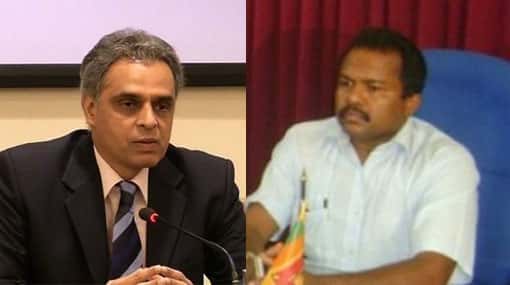








The former intelligence chief of the Indian Peace Keeping Force (IPKF) says that if Sri Lankan Deputy Minister Vinayagamurthi Muralitharan, who recently accused the IPKF of raping Tamil women, seriously wanted Sri Lanka’s human rights record set right he should have cooperated in an inquiry into the alleged killings and other crimes committed under his watch.
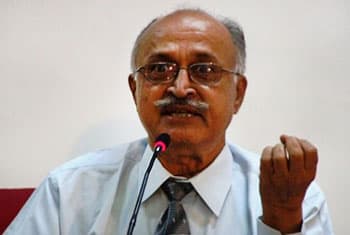
“Then his call for inquiry into the IPKF’s alleged human rights violations would carry conviction. But this has not happened,” said Col. R Hariharan, a retired military intelligence officer, who served as the head of intelligence of the IPKF (1987-90).
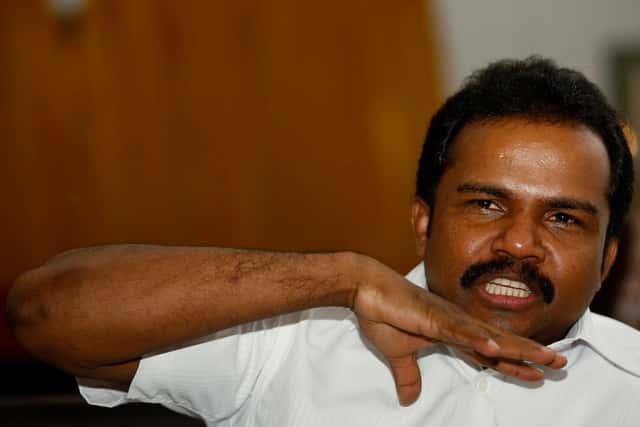
Vinayagamurthi Muralitharan, known as Karuna Amman during his role as LTTE commander of Batticaloa, accused the Indian Peace Keeping Force (IPKF) of rape and killings during its war against the LTTE in Sri Lanka between 1987 and 90.
“So why is Karuna raising this old issue now? Is he contemplating some serious follow up on it? No such thought seems to have crossed Karuna’s mind,” Hariharan wrote in an opinion article, as a response to Karuna’s allegations, published on South Asian Analysis Group website.
He charged that Karuna has been driven to political wilderness, marginalized by President Mahinda Rajapaksa and ignored by Tamils. “With little or no influence either personally or politically, his future looks bleak as he faces the parliamentary election next year.”
“He runs the risk of being totally sidelined in the run up to the elections unless President Rajapaksa lends a helping hand,” the ex-MI officer says.
Speaking in Parliament on November 4, Karuna said the IPKF had raped several Tamil women and also killed Tamils and “there is evidence for that.”
Col. R Hariharan stated that as a parliament member Karuna has every right to draw attention to human rights violations, “though it was made 26 years too late.”
The article further reads: “In a democracy, human rights violations committed by any person including the army, police or anyone including political parties is totally unacceptable and cannot be condoned. They have to be inquired into. Human rights watchdogs have been created for this purpose.”
“But I have a problem when Karuna talks about human rights violations and killings. When he took over as Special Commander of Batticaloa in 1990, LTTE cadres under his command perpetrated some of the heinous killing of innocent civilians including women and children. These included the massacre of 175 Muslims praying in Kattankudy mosque and many other Muslims (some estimates say up to 300) including women and children in Kattankudy and Eravur.”
“Human Rights Watch (HRW) report of March 28, 2013 lists his other “achievements” in this period as LTTE leader: “In June 1990, 400 to 600 police officers who had surrendered to LTTE forces, many of whom may have been under Karuna’s control, were bound, gagged, and beaten.”
“The LTTE then executed the Sinhalese and Muslim police officers among them. Karuna has admitted that the LTTE committed these killings in an interview with the BBC, but claims he was not at the scene.”
“Under the legal principle of command responsibility, though, Karuna could still be criminally liable for the massacre even if he was not physically present.”
“In another case, in July 1990, Karuna’s forces stopped a convoy of Muslims traveling in eastern Batticaloa district and executed about 75 people, including women and children. In August 1990 Karuna’s forces killed more than 200 civilians in two incidents in Batticaloa district,” it adds.
After Karuna broke off with the LTTE in 2004, he worked in support of Sri Lanka Army.
Col. R Hariharan further says that even Defence Secretary Gotabaya made a sly reference to IPKF’s alleged human rights violations when India voted against Sri Lanka in UN Human Rights Commission meeting. “But he never went beyond this.”