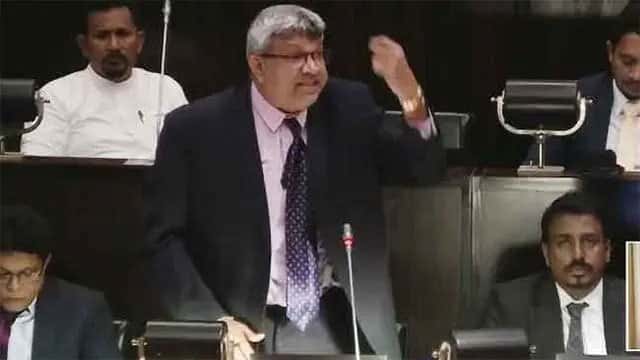








Chief Minister of the Northern Province, C.V. Wigneswaran, today urged the Sri Lankan government to use the new Constitution to do away with multiple power bases in the North and East of Sri Lanka and to delineate the powers of the Centre and the periphery strictly and clearly.
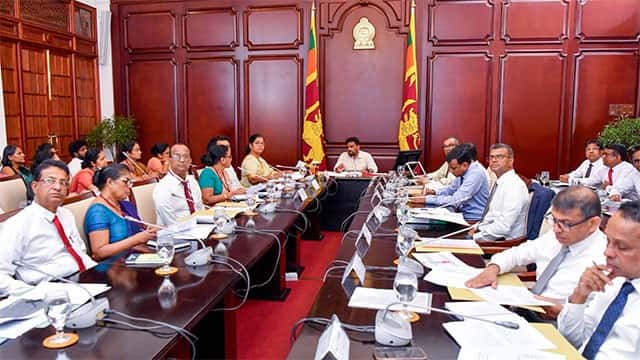
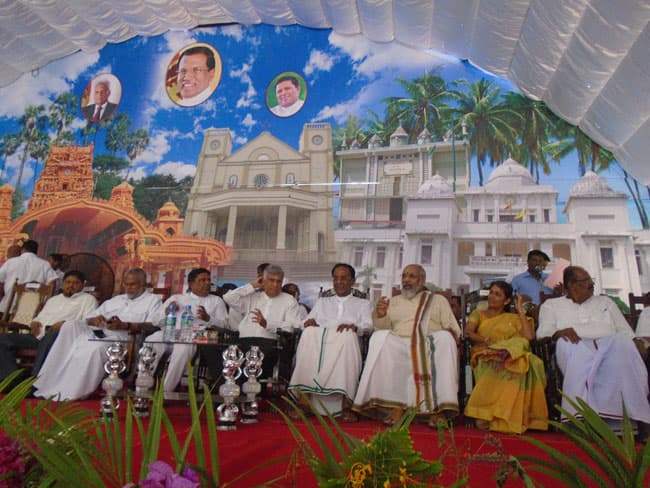
He was addressing a ceremony to declare open the new Administrative complex of the Jaffna District Secretariat, which was attended by Prime Minister Ranil Wickremesinghe, Minister of Home Affairs Vajira Abeywardena and Prison Reforms, Rehabilitation, Resettlement and Hindu Religious Affairs Minister D.M. Swaminathan.
The chief minister said that the country is at the threshold of bringing out a new constitution or at least an improved constitution soon and that Sri Lanka’s Tamil leaders have considerable expectations in that exercise.
He said that even though on paper the Provincial Council is said to represent the power of the people by virtue of their election by the people, its powers and authority are “limited or more correctly usurped” by others closer to the President and the Central Government.
It serves no purpose in conflicting with other power bases when the correction need to come from the top, the former Supreme Court Judge said. “It is the Law that needs changes.”
In order to make Democracy work in the Provinces, in order to ensure the healthy devolution of powers to the periphery we need to strengthen the authority of the Provincial Council adequately, he said.
“After all the right to self determination expressed by the political leaders of the North and East of Sri Lanka from the time of Independence, has not been controverted by any Government so far.”
By insisting on a Provincial Council system which was not in the shopping list of any of the other Provinces the need to grant adequate powers and authorities to the people of the North and East had been lost sight of or deliberately ignored, Wigneswaran charged.
“My first request is that the new Constitution should do away with multiple power bases in the North and East of Sri Lanka.”
He said the role of the Governor should be Ceremonial, the role of the Government Agent/District Secretary must be subservient to the will of the people of the two Provinces.
“They should not act as appendages of the Centre but become faithful proponents of the policies and priorities of the people. All constraining legal provisions presently intact must be done away with, in the new Constitution,” he said.
The chief minister says that it is surprising that a draft of the constitution envisaged has still not been shared with them. “The CPA head came over to find out our views. But the final working draft is still to be seen by us.”
The need to do away with the Concurrent list in the Thirteenth Amendment cannot be gainsaid. Often Concurrent Lists have only strengthened the Centre rather than empowered the periphery, he added.
Invariably we find the Centre using its Concurrent power unilaterally rather than after discussion and debate, he alleged.
“Thus my second request is to delineate the powers of the Centre and the periphery strictly and clearly so that each could look after their areas of influence without undue interference from the other.”
He said that the new constitution should ensure that a group of people who have certain identities and individuality of their own over a long period of time should be able to govern themselves within their areas of governance without undue interference and intrusion.
“While closer collaboration between the Centre and the periphery is no doubt our expectation we like to have such collaboration between equals and not between a person fallen into a well and one standing outside on terra firma.
“I am sure our Prime Minister who has always been conscious of human rights’ considerations and our Home Minister who has always stood for humanism in human affairs will ensure that a proper consultative process among equals would be ensured with the promulgation of the new Constitution.
“While it is necessary to ensure infrastructure development the need to politically, socially and in many other ways strengthen and empower our people remains the need of the hour.”