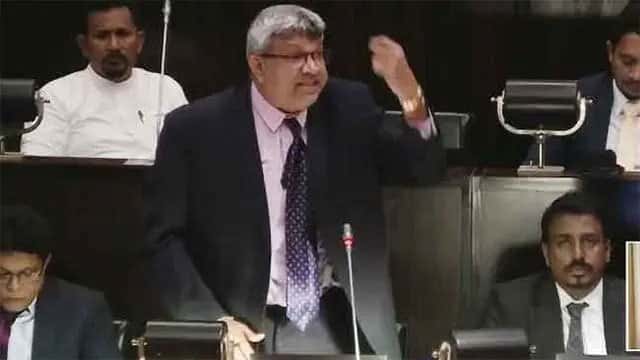








Sri Lanka’s foreign minister says that despite the divergence of opinions within the government regarding the participation of foreign judges, there is a “clear consensus across the board” on the need of an independent and credible domestic mechanism as promised by the President.
“We are convinced and we recognize clearly, that societies that avoid looking at the past, fail to build sustainable peace,’ Mangala Samaraweera said, delivering a speech at the Royal Institute of International Affairs, London.
Speaking on ‘The Reconciliation Process in Sri Lanka’ on Wednesday, he said that Sri Lanka has suffered conflict several times both in the South and in the North.
There is hardly anyone in Sri Lanka who can claim to have not been affected by conflict, he pointed out. “We know that traumatic memories don’t simply vanish and we have learned, through experience since Independence that grievances that are left unaddressed, can go on for generations, becoming entrenched, and holding the risk of descending into cycles of violence.”
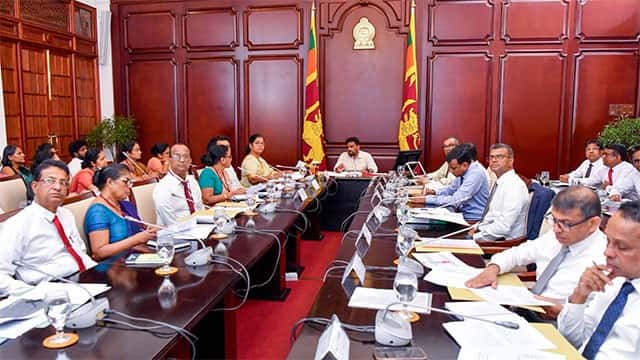
Samaraweewa said that there are divergent views even within the government in respect of the participation of foreign judges in the proposed judicial mechanism.
“However, despite this divergence of opinions, there is a clear consensus across the board on the need of an independent and credible domestic mechanism as promised by the manifesto of President Maithripala Sirisena.”
“As a democratic and sovereign government, we will work out the architecture of such a mechanism in consultation with all the stake holders,” he said.
“The lessons and the choices of our history are clear to us today. We have a choice between impunity, conflict, corruption, extremism and poverty, or the rule of law, accountability, equality, multiculturalism, openness and trade.”
“We have a choice between conflict and poverty, versus peace and prosperity,” he said.
Samaraweera said that the decision by the European Commission on granting the GSP+ concession to Sri Lanka is yet another indicator of Sri Lanka moving along the right track.
He said that two years since the 8th of January in 2015, the National Unity Government remains steadfast in its determination to achieve the objectives it set out to achieve for the country.
“We have succeeded against far greater odds and more powerful foes. The challenges that we have before us are not easy ones. But determination and unity, and courage and moral fortitude drives us to embrace tough choices and endure hardship to break the cycle of missed opportunities and disappointments to achieve for our people, especially our future generations, the prosperous and peaceful land that they so deserve. We are determined to ensure our success.”
“That is why I say to the cynics again that there will be no U-Turn despite some detours from time to time,” the foreign minister added.
“Breaking from the past, we will confine those who spin webs from the threads of ignorance to the dust-bin of history; finally put prejudice, ignorance, mediocrity and opportunism behind us once and for all, and build a truly united, democratic, multi-cultural and prosperous Sri Lanka where peace, justice, equality, dignity and freedom for all, prevail.”