




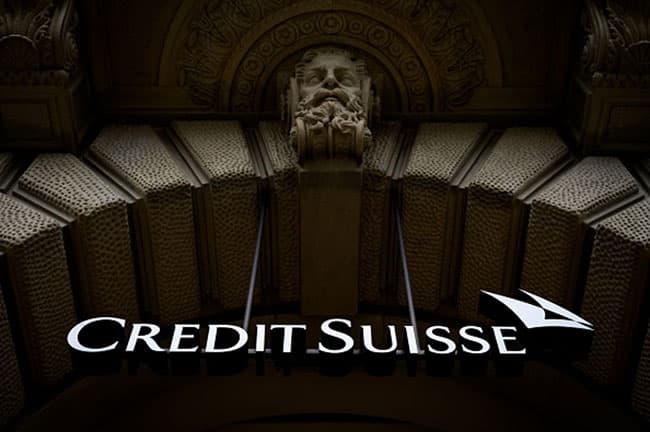



A massive leak from one of the world’s biggest private banks, Credit Suisse, has exposed the hidden wealth of clients involved in torture, drug trafficking, money laundering, corruption and other serious crimes, The Guardian reports.
Details of accounts linked to 30,000 Credit Suisse clients all over the world are contained in the leak, which unmasks the beneficiaries of more than 100 billion Swiss francs (£80 billion)* held in one of Switzerland’s best-known financial institutions, according to the report.
Details of accounts linked to 30,000 Credit Suisse clients all over the world are contained in the leak, which unmasks the beneficiaries of more than 100 billion Swiss francs (£80 billion)* held in one of Switzerland’s best-known financial institutions, according to the report.
The clients that Credit Suisse repeatedly either opened or maintained bank accounts for a panoramic array of high-risk clients across the world include a human trafficker in the Philippines, a Hong Kong stock exchange boss jailed for bribery, a billionaire who ordered the murder of his Lebanese pop star girlfriend and executives who looted Venezuela’s state oil company, as well as corrupt politicians from Egypt to Ukraine, according to the report.
One Vatican-owned account in the data was used to spend €350m (£290m) in an allegedly fraudulent investment in London property that is at the centre of an ongoing criminal trial of several defendants, including a cardinal, The Guardian says.
The huge trove of banking data was leaked by an anonymous whistleblower to the German newspaper Süddeutsche Zeitung. “I believe that Swiss banking secrecy laws are immoral,” the whistleblower source was quoted to have said in a statement. “The pretext of protecting financial privacy is merely a fig leaf covering the shameful role of Swiss banks as collaborators of tax evaders.”
Credit Suisse was cited as saying that Switzerland’s strict banking secrecy laws prevented it from commenting on claims relating to individual clients.
“Credit Suisse strongly rejects the allegations and inferences about the bank’s purported business practices,” the bank was quoted to have said in a statement, arguing that the matters uncovered by reporters are based on “selective information taken out of context, resulting in tendentious interpretations of the bank’s business conduct.”
The bank was also cited as saying the allegations were largely historical, in some instances dating back to a time when “laws, practices and expectations of financial institutions were very different from where they are now”.
While some accounts in the data were open as far back as the 1940s, more than two-thirds were opened since 2000. Many of those were still open well into the last decade, and a portion remain open today, according to the report.
The timing of the leak could hardly be worse for Credit Suisse, which has recently been beset by major scandals. Last month, it lost its chairman, António Horta-Osório, after he twice broke Covid-19 regulations, according to the report
That capped an unprecedented year of controversies in which the bank became embroiled in the collapse of the supply chain finance firm Greensill Capital and the US hedge fund Archegos Capital, and was fined £350m over its role in a loan scandal in Mozambique, the British daily adds.
This month, Credit Suisse became the first major Swiss bank in the country’s history to face criminal charges – which it denies – relating to allegation it helped launder money from the cocaine trade on behalf of the Bulgarian mafia, according to the Guardian report.
However, the report observes, the repercussions of the leak could be much broader than one bank, threatening a crisis for Switzerland, which retains one of the world’s most secretive banking laws. Swiss financial institutions manage about 7.9tn CHF (£6.3tn) in assets, nearly half of which belongs to foreign clients.
The Suisse secrets project sheds a rare light on one of the world’s largest financial centres, which has grown used to operating in the shadows. It identifies the convicts and money launderers who were able to open bank accounts, or keep them open for years after their crimes emerged. And it reveals how Switzerland’s famed banking secrecy laws helped facilitate the looting of countries in the developing world, according to the British newspaper report.
Over the past three decades, Credit Suisse has faced at least a dozen penalties and sanctions for offences involving tax evasion, money laundering, the deliberate violation of US sanctions and frauds carried out against its own customers that span multiple decades and jurisdictions. In total, it has racked up more than $4.2bn in fines or settlements, according to the report.
That includes the $2.6bn the Swiss bank agreed to pay US authorities after pleading guilty to conspiring to aid tax evasion in 2014; the $536m it was fined by the US five years before for deliberately circumventing US sanctions against countries including Iran and Sudan in 2009, and other payouts to Germany and Italy over tax evasion allegations, The Guardian says.
Against this backdrop, the British newspaper adds, the Suisse secrets revelations may fuel questions over whether Credit Suisse’s challenges are indicative of a deep malaise at the bank.
Jeff Neiman, a Florida-based attorney who represents a number of Credit Suisse whistleblowers, reportedly believes the sheer number of scandals involving the bank indicates a deeper problem.
“The bank likes to say it’s just rogue bankers. But how many rogue bankers do you need to have before you start having a rogue bank?” he was quoted as saying. Neiman reportedly alleges there has been a culture at the bank “which encourages its bankers probably from the top down to hear no evil, see no evil, speak no evil, bury their heads in the sand on a good day, and on many days, actively assist folks to skirt whatever the law may be in order to best protect assets under management”.
Such allegations are strongly rejected by Credit Suisse. “In line with financial reforms across the sector and in Switzerland, Credit Suisse has taken a series of significant additional measures over the last decade, including considerable further investments in combating financial crime,” the bank was quoted to have said in its statement, adding that it upheld “the highest standards of conduct”.
Its lawyers were cited as saying it had fully cooperated with many of the investigations cited by the Guardian and that any past individual failings by the bank did not reflect its current business policies, practices or culture. In November, it announced it would put “risk management at the very core of the bank”.
The clients that Credit Suisse repeatedly either opened or maintained bank accounts for a panoramic array of high-risk clients across the world include a human trafficker in the Philippines, a Hong Kong stock exchange boss jailed for bribery, a billionaire who ordered the murder of his Lebanese pop star girlfriend and executives who looted Venezuela’s state oil company, as well as corrupt politicians from Egypt to Ukraine, according to the report.
One Vatican-owned account in the data was used to spend €350m (£290m) in an allegedly fraudulent investment in London property that is at the centre of an ongoing criminal trial of several defendants, including a cardinal, The Guardian says.
The huge trove of banking data was leaked by an anonymous whistleblower to the German newspaper Süddeutsche Zeitung. “I believe that Swiss banking secrecy laws are immoral,” the whistleblower source was quoted to have said in a statement. “The pretext of protecting financial privacy is merely a fig leaf covering the shameful role of Swiss banks as collaborators of tax evaders.”
Credit Suisse was cited as saying that Switzerland’s strict banking secrecy laws prevented it from commenting on claims relating to individual clients.
“Credit Suisse strongly rejects the allegations and inferences about the bank’s purported business practices,” the bank was quoted to have said in a statement, arguing that the matters uncovered by reporters are based on “selective information taken out of context, resulting in tendentious interpretations of the bank’s business conduct.”
The bank was also cited as saying the allegations were largely historical, in some instances dating back to a time when “laws, practices and expectations of financial institutions were very different from where they are now”.
While some accounts in the data were open as far back as the 1940s, more than two-thirds were opened since 2000. Many of those were still open well into the last decade, and a portion remain open today, according to the report.
The timing of the leak could hardly be worse for Credit Suisse, which has recently been beset by major scandals. Last month, it lost its chairman, António Horta-Osório, after he twice broke Covid-19 regulations, according to the report
That capped an unprecedented year of controversies in which the bank became embroiled in the collapse of the supply chain finance firm Greensill Capital and the US hedge fund Archegos Capital, and was fined £350m over its role in a loan scandal in Mozambique, the British daily adds.
This month, Credit Suisse became the first major Swiss bank in the country’s history to face criminal charges – which it denies – relating to allegation it helped launder money from the cocaine trade on behalf of the Bulgarian mafia, according to the Guardian report.
However, the report observes, the repercussions of the leak could be much broader than one bank, threatening a crisis for Switzerland, which retains one of the world’s most secretive banking laws. Swiss financial institutions manage about 7.9tn CHF (£6.3tn) in assets, nearly half of which belongs to foreign clients.
The Suisse secrets project sheds a rare light on one of the world’s largest financial centres, which has grown used to operating in the shadows. It identifies the convicts and money launderers who were able to open bank accounts, or keep them open for years after their crimes emerged. And it reveals how Switzerland’s famed banking secrecy laws helped facilitate the looting of countries in the developing world, according to the British newspaper report.
Over the past three decades, Credit Suisse has faced at least a dozen penalties and sanctions for offences involving tax evasion, money laundering, the deliberate violation of US sanctions and frauds carried out against its own customers that span multiple decades and jurisdictions. In total, it has racked up more than $4.2bn in fines or settlements, according to the report.
That includes the $2.6bn the Swiss bank agreed to pay US authorities after pleading guilty to conspiring to aid tax evasion in 2014; the $536m it was fined by the US five years before for deliberately circumventing US sanctions against countries including Iran and Sudan in 2009, and other payouts to Germany and Italy over tax evasion allegations, The Guardian says.
Against this backdrop, the British newspaper adds, the Suisse secrets revelations may fuel questions over whether Credit Suisse’s challenges are indicative of a deep malaise at the bank.
Jeff Neiman, a Florida-based attorney who represents a number of Credit Suisse whistleblowers, reportedly believes the sheer number of scandals involving the bank indicates a deeper problem.
“The bank likes to say it’s just rogue bankers. But how many rogue bankers do you need to have before you start having a rogue bank?” he was quoted as saying. Neiman reportedly alleges there has been a culture at the bank “which encourages its bankers probably from the top down to hear no evil, see no evil, speak no evil, bury their heads in the sand on a good day, and on many days, actively assist folks to skirt whatever the law may be in order to best protect assets under management”.”
Such allegations are strongly rejected by Credit Suisse. “In line with financial reforms across the sector and in Switzerland, Credit Suisse has taken a series of significant additional measures over the last decade, including considerable further investments in combating financial crime,” the bank was quoted to have said in its statement, adding that it upheld “the highest standards of conduct”.
Its lawyers were cited as saying it had fully cooperated with many of the investigations cited by the Guardian and that any past individual failings by the bank did not reflect its current business policies, practices or culture. In November, it announced it would put “risk management at the very core of the bank”.
The latest leaks follow the so-called Panama Papers in 2016, the Paradise Papers in 2017 and the Pandora Papers of last year. A self-described whistle-blower leaked data on more than 18,000 bank accounts, collectively holding more than $100 billion, to the German newspaper Suddeutsche Zeitung.
Further revelations are expected in the upcoming days, as more information about the leak becomes public.
Source: The Guardian
--Agencies