






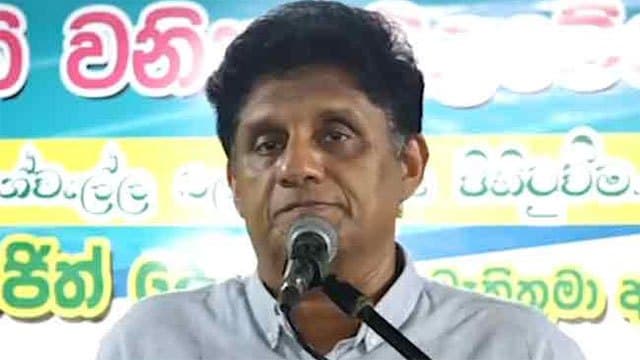



The leader of the Opposition, Sajith Premadasa has warned that increasing the retirement age of judges could be a step towards establishing one-party rule in Sri Lanka, alleging that the move could undermine democracy and the independence of the judiciary.
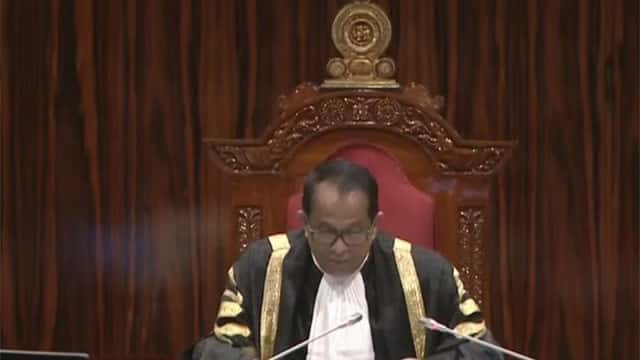
Premadasa said the proposal to extend the retirement age of judges would require a constitutional amendment and questioned why it had become a national priority when the country is facing more pressing issues.
He argued that the government should instead focus on matters such as fertiliser subsidies, irrigation rehabilitation and problems in the prison system.
Speaking at an event held today (09) to establish the Ruwanwella branch of the Samagi Vanitha Balawegaya, Premadasa alleged that extending judges’ retirement age would not solve issues such as poverty, unemployment or the economic difficulties faced by the general public.
Instead, he claimed that the move could contribute to a system in which a single political party gains greater control over the state, weakening democratic institutions and undermining judicial independence.
Opposition Leader Premadasa further alleged that the government is already exerting pressure on the judiciary as part of what he described as a broader project to weaken democracy and establish political dominance.
He also claimed that appointments to youth societies and civil security committees had previously been influenced by decisions taken at a political party office in Pelawatte.
The Opposition Leader said the government could have introduced constitutional reforms to strengthen the rights of women, children, senior citizens and other vulnerable groups, but had failed to do so.
He said the Samagi Jana Balawegaya is prepared to work towards making the rights of these groups constitutionally protected fundamental rights.
Premadasa stressed that the government received a mandate from the people to build a prosperous country and improve their quality of life, not to extend the retirement age of judges.
He also accused the government of failing to address the country’s economic and social problems, claiming that a significant proportion of the population is living in poverty and that shortages of medicines in state hospitals are forcing patients to purchase them from private pharmacies.
Against this backdrop, Premadasa accused the government of attempting to consolidate political control while failing to address the issues affecting the public.