








Sri Lankan skywatchers are set for a rare celestial spectacle tomorrow (12), with six planets expected to appear across the morning sky as the Perseid meteor shower reaches its annual peak, the Astronomy Division of the Arthur C. Clarke Institute for Modern Technologies stated.
Mercury, Mars, Jupiter, Saturn, Uranus and Neptune will form a broad arc across the eastern and southern sky before sunrise tomorrow.
According to the Astronomy Division of the Arthur C. Clarke Institute for Modern Technologies, Moratuwa, the best time to observe the planetary alignment from Colombo will be between 4.30 a.m. and 5.15 a.m., approximately 60 to 90 minutes before sunrise.
Mars and Saturn are expected to be among the easiest planets to spot. Mercury and Jupiter, however, will appear very close to the horizon and may be difficult to observe. Uranus will require binoculars, while Neptune will require a telescope.
Skywatchers are advised to find a location with a clear, unobstructed view towards the eastern and southeastern horizons.
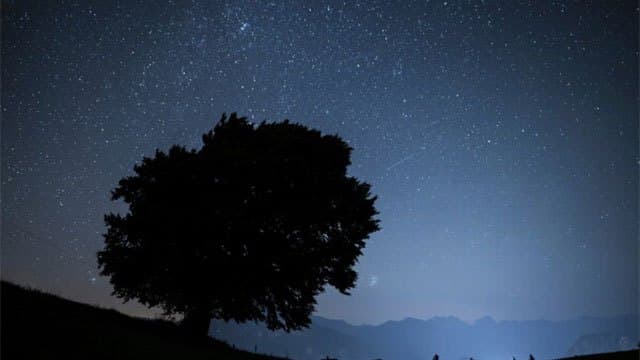
The Perseid meteor shower, which is active from July 17 to August 24, will also peak tomorrow, the Arthur C. Clarke Institute stated. The shower is expected to peak overnight and into the early hours of tomorrow.
The Perseids are caused by debris left behind by Comet 109P/Swift-Tuttle, which completes an orbit around the Sun approximately every 133 years. The meteors appear to originate from the constellation Perseus.
This year's peak coincides with a new moon, providing darker skies that could offer favourable conditions for meteor watching. Under clear skies, observers may see up to 100 meteors per hour.
For the best view of the Perseids, observers should look towards the northeastern sky after midnight and allow their eyes 20 to 30 minutes to adjust to the darkness.
The combination of the planetary alignment before dawn and the meteor shower overnight is expected to provide Sri Lankan observers with a rare double celestial display on August 12–13, the Astronomy Division of the Arthur C. Clarke Institute for Modern Technologies noted.