






Sri Lanka has called for deeper cooperation with India in pharmaceutical manufacturing, healthcare technology, investment and resilient supply chains, as Colombo seeks to expand domestic production and attract greater international investment in the sector.
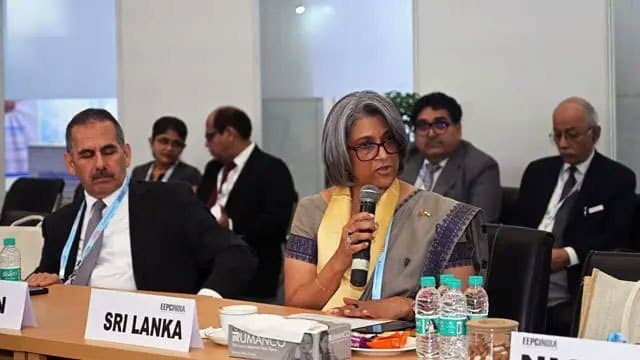
Sri Lanka’s High Commissioner to India, Mahishini Colonne outlined the opportunities during an Ambassadors’ Conference on Healthcare Technologies and Pharmaceutical Manufacturing held in New Delhi as part of the Pharma MachTech Expo & LabNext Expo 2026.
Organised by the Engineering Export Promotion Council of India (EEPC India), the conference brought together diplomatic representatives from 15 countries, senior Indian policymakers and industry representatives to discuss investment and trade opportunities, emerging pharmaceutical technologies and prospects for international partnerships.
High Commissioner Colonne said India and Sri Lanka already maintain a strong pharmaceutical trading relationship but stressed that there was considerable scope to expand cooperation through manufacturing, investment and technology partnerships.
She identified opportunities across the pharmaceutical value chain, including active pharmaceutical ingredients, medical devices, laboratory and diagnostic technologies and quality-control systems.
Sri Lanka currently relies heavily on imports to meet its pharmaceutical requirements, with domestic manufacturers accounting for only a modest share of demand. According to the High Commissioner, this dependence presents significant opportunities for investment and manufacturing partnerships.
Pharmaceutical manufacturing has also been identified by Sri Lanka as a priority investment sector. Qualifying projects are eligible for extended tax incentives and expedited regulatory approvals through the National Medicines Regulatory Authority.
High Commissioner Colonne further highlighted the dedicated pharmaceutical manufacturing zone in Hambantota, which has been established to support companies seeking to develop manufacturing and technology capabilities in the country.
The existing Free Trade Agreement between India and Sri Lanka was also cited as an advantage for potential investors. More than 50 categories of pharmaceutical products and medical devices currently receive duty-free access to the Indian market under the agreement, according to the High Commission.
The High Commissioner said strengthening manufacturing capacity closer to markets has become increasingly important for health security and supply-chain resilience, in addition to its commercial benefits.
She identified technology transfer, skills development, research collaboration and regulatory cooperation as areas where India and Sri Lanka could further deepen their partnership.
Sri Lanka’s geographical proximity to India, longstanding institutional ties and growing openness to investment across the pharmaceutical value chain were highlighted as key foundations for expanded bilateral cooperation.
High Commissioner Colonne also invited Indian industry representatives to participate in Sri Lanka Expo 2027, the country’s flagship trade and investment exhibition, which will be held in Colombo from January 14 to 17, 2027.
The three-day Pharma MachTech Expo & LabNext Expo 2026 was held in New Delhi from September 7 to 9.