






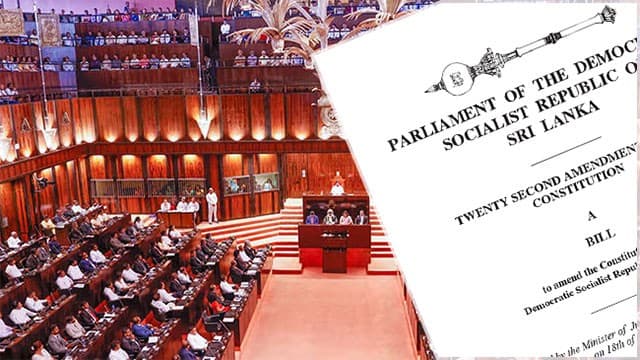


The proposed 22nd Amendment to the Constitution is scheduled to be taken up for debate in Parliament on September 24, following a decision by the Committee on Parliamentary Business.
The Committee, which met today (10) at the Parliamentary Complex, decided to allocate parliamentary time during the next Parliamentary week to debate the 22nd Amendment to the Constitution Bill and the Judicature (Amendment) Bill.
Accordingly, the 22nd Amendment Bill will be taken up for debate on September 24, while the Judicature (Amendment) Bill will be considered at the Second Reading stage on September 25.
Members of Parliament are slated to debate the proposed changes to Sri Lanka’s judicial framework, particularly provisions relating to the tenure and retirement age of judges.
Proposed changes to judges’ retirement age
The proposed 22nd Amendment seeks to make significant changes to the constitutional provisions governing the judiciary.
A key provision is the proposal to increase the mandatory retirement age of Supreme Court judges from 65 to 67. The retirement age of Court of Appeal judges is also proposed to be increased from 63 to 65.
The Amendment further proposes that the Chief Justice retire upon reaching 67 years of age or completing six years in office, whichever comes first.
The Government presented the proposed changes as part of a broader effort to strengthen the judicial system and address delays and the growing backlog of cases.
Judicature Amendment Bill also on Parliament's agenda
The Judicature (Amendment) Bill, which is scheduled for its Second Reading on September 25, seeks to amend provisions relating to judges serving in the lower courts.
The proposed legislation includes an increase in the retirement age of judges serving in the High Courts, District Courts and Magistrates’ Courts to 62.
Opposition and legal concerns
However, the proposed reforms have also triggered strong concerns among sections of the legal profession and the political opposition.
Critics have questioned whether extending the tenure of serving judges could affect judicial independence, while concerns have also been raised over the broader constitutional implications of the proposed changes.
The Bar Association of Sri Lanka (BASL) raised objections to the proposed extension of judges’ retirement ages and challenged the constitutionality of the 22nd Amendment before the Supreme Court.
The Samagi Jana Balawegaya also challenged the proposed amendment before the Supreme Court.
The Supreme Court then considered petitions challenging the constitutionality of the Bill. The Supreme is now scheduled to convey its determination to the Speaker of House. The Speaker, once received will deliver the determination to Parliament.
A key constitutional debate ahead
The government maintains that the proposed reforms are aimed at improving the efficiency of the justice system and tackling delays in the courts.
Opponents, however, argue that any changes affecting the tenure of judges must be carefully examined to ensure that the independence and integrity of the judiciary are protected.