





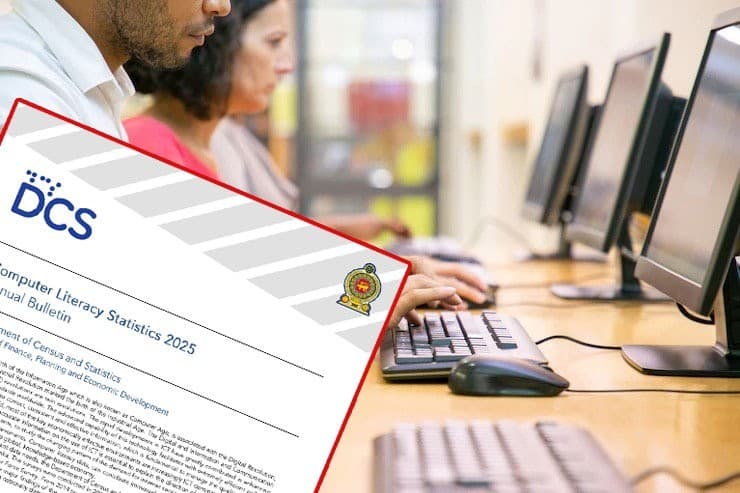


Sri Lanka’s internet use and digital skills rose sharply in 2025, but low computer ownership and widening gaps between urban and rural communities continue to expose a deep digital divide.
According to the Computer Literacy Statistics 2025 bulletin issued by the Department of Census and Statistics (DCS), internet use among people aged 5 to 69 increased to 62.4% in 2025, from 54.6% in 2024 and 51.2% in 2023.
Computer literacy also improved, while digital literacy reached 72%. However, only 21.3% of households owned a desktop or laptop computer, highlighting the gap between digital skills and access to personal computing devices, the Department of Census and Statistics noted.
Computer ownership was highest in urban areas at 37.8%, compared with 18.6% in rural areas and just 5.2% in the estate sector. Western Province recorded the highest ownership rate at 34%, while Northern Province had the lowest at 10.1%.
Age remained a major barrier to digital participation. Internet use reached 91.6% among those aged 20–24, but fell to just 24.2% among people aged 60–69. Computer literacy showed a similar pattern, dropping to 8.7% among the 60–69 age group.
Significant differences were also recorded by occupation, with computer literacy highest among clerical workers and professionals, while agricultural and elementary workers recorded much lower rates.
Men continued to have a slight advantage, with 64.3% using the internet compared with 60.7% of women.
According to Department of Census and Statistics figures, Sri Lanka is becoming increasingly connected, but access to devices, skills and digital opportunities remains highly unequal.