





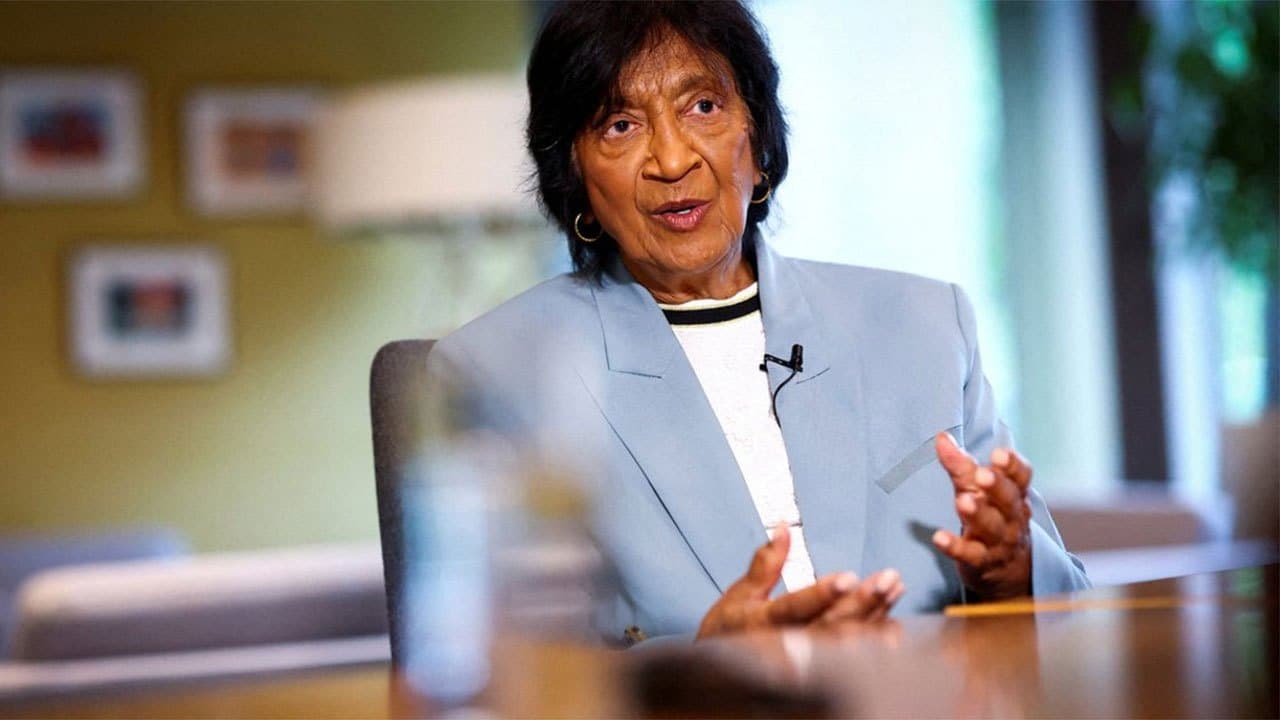



This year's Nobel Peace Prize laureate Navanethem Pillay on Tuesday condemned the recent U.S. sanctions on the International Criminal Court as "unlawful, unacceptable interference in the independence of the judiciary."
Speaking in an interview in The Hague, Pillay, a former U.N. high commissioner for human rights and a former ICC judge, called on state parties of the tribunal including Japan to express stronger support for it.
The 85-year-old South African jurist spoke to Kyodo News at the International Court of Justice, where she serves as an ad hoc judge in a genocide case brought against Myanmar.
U.S. President Donald Trump's administration has repeatedly accused the ICC of encroaching on state sovereignty, including through its investigations into alleged war crimes committed by U.S. military personnel.
It announced sanctions against the ICC just hours after the Norwegian Nobel Committee named Pillay the winner of the prestigious award on Friday.
ICC President Tomoko Akane, the first Japanese national to head the Hague-based court, is among its judges and prosecutors targeted by earlier U.S. sanctions, including asset freezes and travel bans.
In the interview, Pillay criticized the United States as "prioritizing" its political and regional interests while pursuing a policy of "making America wealthy again at the expense of other countries."
She stressed the importance of the work carried out by the ICC, saying its judges are given a mandate to fulfill the court's statutory goal of ensuring that there is no impunity for people who perpetrate serious crimes.
Pillay called on Japan and other countries that are party to the Rome Statute, the treaty that established the court, to be "vocal" in their support for the institution.
She said the reason she visited the ICC on Monday was to show "solidarity," noting that much of the hard work and research is carried out by "colleagues" working at the ICC whom she described as "so dedicated."
Asked about how international tribunals can enhance their influence among member- and nonmember states, Pillay said, "I think the only way is, all of us should press strongly, raise voices immediately," and call "for compliance."
Pillay, who chaired the U.N. Independent International Commission of Inquiry on the Occupied Palestinian Territory and oversaw its September 2025 report that found Israel responsible for genocide in Gaza, reiterated in the interview that the "root cause of the conflict" in Israel and Palestine "is the unlawful occupation."
She also said that "we need to remind states of the obligations they undertook" and "use the powers that they have" to prevent genocide.
"Civil society doesn't have much access to those decision-making bodies, but other states do," Pillay said. "They can be much more active in delivering on their promise that they support no impunity for these serious crimes anywhere."
Trump alleged in February 2025 the ICC had engaged in "illegitimate and baseless actions" against the United States and its close ally Israel, both non-members of the court, after it issued arrest warrants the previous year for Israeli Prime Minister Benjamin Netanyahu and former Defense Minister Yoav Gallant over alleged war crimes and crimes against humanity in the Gaza Strip.
In naming Pillay, the Nobel committee cited her role as "a driving force in the development of an international system of law and order." It also underlined the importance of the international rule of law in resolving conflicts peacefully.
"A rule-based society is the best form in which society can respect everybody's rights and protect everybody's rights," Pillay said.
The International Court of Justice, a U.N. body, is headed by another Japanese national, Yuji Iwasawa.
Source: Kyodo News
-Agencies