









Sri Lanka is to host the inaugural BIMSTEC Health Ministers’ Meeting and the BIMSTEC Health Secretaries’ Meeting in November, to advance cooperation on pandemic preparedness and the One Health approach, according to Acting Foreign Minister Arun Hemachandra.
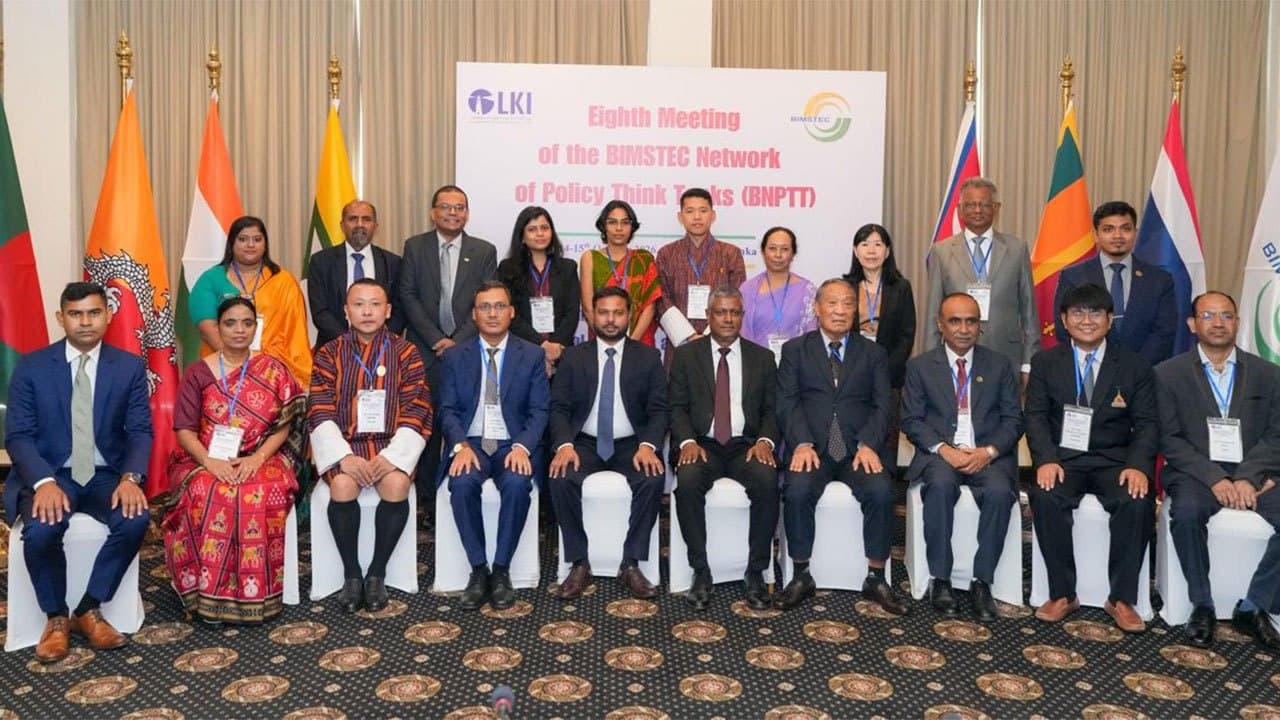
The Acting Minister of Foreign Affairs, Foreign Employment and Tourism highlighted plans for this while delivering the keynote address at the Eighth Meeting of the BIMSTEC Network of Policy Think Tanks in Colombo, hosted by the LKIIRSS in Colombo from 14-15 October 2026.
The Meeting brings together delegates from the National Focal Points of BIMSTEC and the BIMSTEC Network of Policy Think Tanks, representatives of the BIMSTEC Secretariat, members of the LKIIRSS Board of Management and officials of the Ministry of Foreign Affairs, Foreign Employment and Tourism.
In his address during the opening session inaugurating the meeting, the Acting Foreign Minister said regional cooperation must deliver tangible benefits for people, such as better opportunities for young people, stronger public services, more secure livelihoods and greater preparedness in times of crisis.
The Acting Minister encouraged the Network to strengthen the link between its research and the implementation of BIMSTEC priorities, noting that a useful recommendation should identify a clear problem, propose a workable response and explain how it can be taken forward.
Speaking on Sri Lanka’s role as Lead Member State for the Science, Technology and Innovation Sector, which covers science and technology, health and human resource development, he also highlighted the September 2026 signing of the Host Country Agreement for the BIMSTEC Technology Transfer Facility in Sri Lanka, which can support innovation partnerships and the commercialisation of relevant technologies, the BIMSTEC Plan of Implementation on Human Resource Development for 2025-2029, and the need to link skills development with decent employment, fair recruitment and the protection of workers.
Hemachandra gave particular attention to climate change and regional resilience. He encouraged the Network to take up the subject as a dedicated area of joint research and policy dialogue, focusing on early warning and preparedness, climate-resilient livelihoods, and climate risk assessment in public planning. He also expressed solidarity with communities affected by recent disasters across the region.
The Acting Minister called on the Network to identify a small number of joint priorities, connect them with the relevant BIMSTEC sectoral mechanisms, and share concise policy briefs with the institutions responsible for implementation.
Concluding his address, he emphasized: “The strength of regional cooperation lies in turning the knowledge we share into progress our people can feel.”