






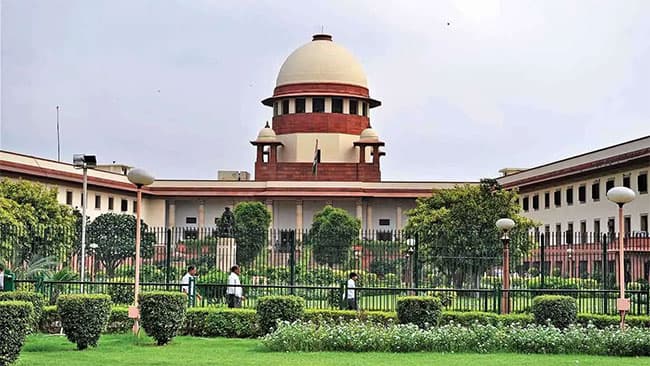


In a landmark ruling, the Supreme Court has permitted passive euthanasia for 32-year-old Harish Rana from Ghaziabad, who has been in a coma for the past 13 years after suffering severe brain injuries in a fall. The verdict marks the first instance in India where a court has explicitly allowed the withdrawal of life-sustaining medical support in such circumstances.
The decision was delivered by a bench of Justices JB Pardiwala and KV Viswanathan, who described the case as emotionally challenging while emphasizing the need to uphold dignity and compassion in medical care for patients with irreversible conditions.
Case That Reached the Highest Court
Harish Rana had remained in a vegetative state since a tragic accident left him with critical brain damage. Medical experts consistently maintained that his condition was irreversible and that there was no possibility of recovery.
For years, Rana’s life had been sustained through feeding tubes at a hospital.
With no improvement in his condition and the prolonged suffering involved, his parents approached the courts seeking permission to withdraw medical treatment and allow him to pass away peacefully.
After the matter reached the Supreme Court, the bench allowed the withdrawal of medical support in a hospital setting, effectively permitting Rana to die with dignity.
Clarifying the 2018 Passive Euthanasia Guidelines
The ruling also expands on the Supreme Court’s 2018 judgment that recognized passive euthanasia and the “right to die with dignity” under certain conditions.
While the 2018 guidelines allowed the withdrawal of life support such as ventilators for patients in irreversible states, they did not clearly address situations where a patient’s survival depended primarily on artificial feeding through medical tubes.
The court observed that this gap had created procedural difficulties for hospitals in implementing passive euthanasia in Rana’s case. By addressing this issue, the latest judgment clarifies that such forms of medical sustenance may also be withdrawn under appropriate legal and medical supervision.
How Passive Euthanasia Works in India
Under Indian law, passive euthanasia follows a strict review mechanism to ensure safeguards against misuse.
First, a primary medical board of three doctors evaluates the patient’s medical condition and determines whether it is irreversible. If the board recommends withholding or withdrawing treatment, the case is referred to a secondary medical board for an independent review.
Only after both boards agree can life-sustaining treatment be withdrawn, typically with judicial oversight to ensure transparency and ethical compliance.
A Step Forward in End-of-Life Rights
Legal experts say the Harish Rana case could become a reference point for future end-of-life decisions in India. By clarifying the scope of the 2018 ruling, the Supreme Court has addressed a critical grey area in the country’s legal framework on passive euthanasia.
For Rana’s family, the judgment brings closure after more than a decade of legal and emotional struggle, while for the legal and medical communities it sets a precedent in interpreting the right to die with dignity under the Indian Constitution.
- Agencies