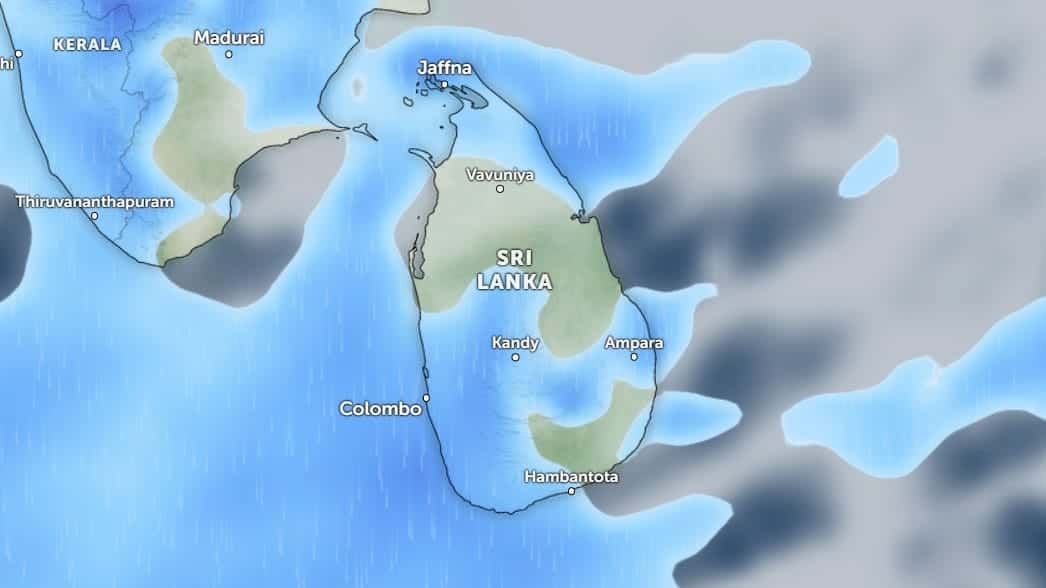









The Department of Meteorology says that Sri Lanka could experience reduced rainfall and possible drought conditions special during the July-August period, as the warming El Nino climate phenomenon is likely to develop.
According to the World Meteorological Organization (WMO), the UN weather agency, there is an 80 per cent chance that El Niño conditions will emerge between June and August and a 90 per cent probability of this happening thereafter.
Sri Lanka’s Met. Department warned that if an El Nino develops, rainfall is expected to decrease significantly, particularly during the aforementioned months, increasing the risk of drought conditions across the country while El Nino’s impact on Sri Lanka could last until February next year.
The Acting Director General of the Department of Meteorology, Ajith Wijemanna further noted that El Nino typically lasts between 9 - 12 months. As a result, if an El Nino develops this year, its effects could persist in Sri Lanka until February next year, he told Ada Derana.
He also stated that the possibility of the phenomenon strengthening into a strong El Nino by November, December, and January is also higher, with forecasts indicating a probability of nearly 40%.
“However, if an El Nino occurs, we need to manage the health sector, energy sector, as well as irrigation, agriculture, water resource management, and so on,” Wijemanna said.
Meanwhile, the United Nations weather agency has forecast a moderate or possibly strong El Nino that could contribute to higher global temperatures and increase the risk of extreme weather conditions over the coming months.
The World Meteorological Organization (WMO) stated that warm ocean waters are driving the development of El Nino and predicted above-average temperatures across much of the world from June to August. The agency also indicated that El Nino is likely to persist until November.
According to the WMO, it could trigger drought conditions in regions including Australia, Central America, Indonesia, and parts of southern Asia, while also contributing to hurricane formation in the central and eastern Pacific Ocean.
Several national weather agencies have also warned that the world could experience its strongest El Nino event in a decade, raising concerns over hotter and drier conditions across Asia during the second half of 2026, that is likely to damage crops and food supplies as farmers already struggle with fertiliser shortages and costly fuel caused by the Iran war.
--With Agencies Inputs