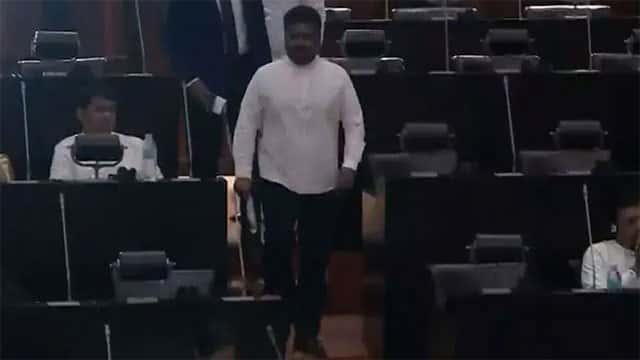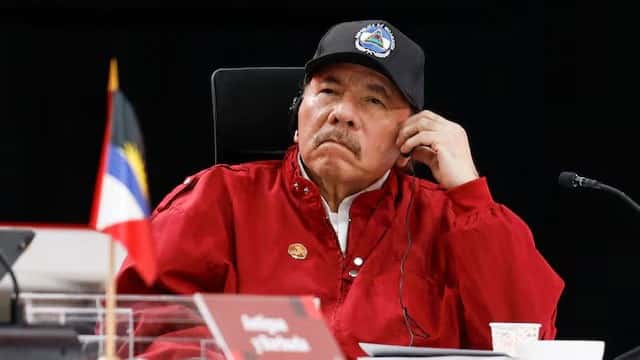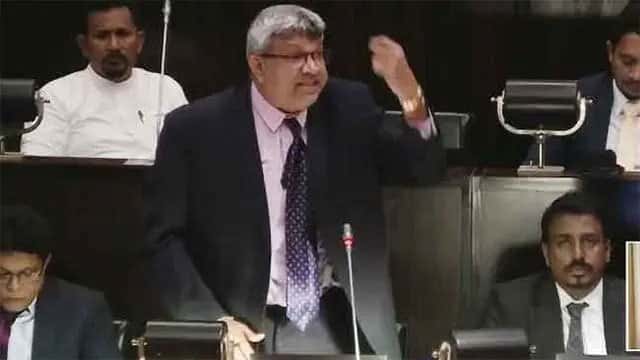





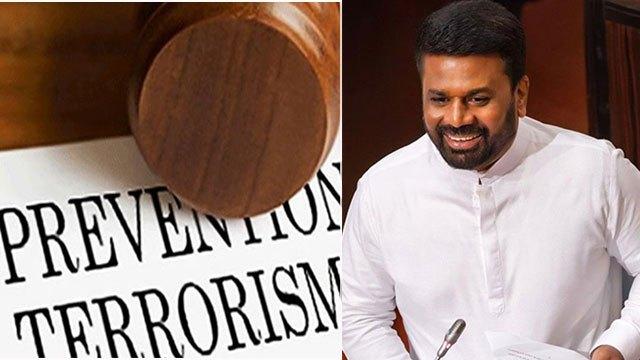



The Prevention of Terrorism (Temporary Provisions) Act (PTA) will be repealed within this year, President Anura Kumara Dissanayake stated in Parliament today (25).
The President said the law, introduced in 1979 as a temporary measure for one year, had remained active for approximately 46 years despite longstanding demands for its abolition.
President Dissanayake noted that successive campaigns had been conducted calling for the removal of the act, citing concerns over civil liberties and its continued use over an extended period.
The President said therefore the government will repeal the PTA within the year.
President Dissanayake made this assertion while joining the adjournment debate on combating the drug menace, which was moved by the government.
The President said corruption, organized criminal networks, drug trafficking and the links between crime and politics must be decisively addressed.
President Dissanayake noted that the country already possesses the necessary legal framework and state institutions to combat such activities, and alleged that the opposition has become a principal obstacle to these efforts.
The President highlighted the work of the Director of the Criminal Investigation Department (CID) Deputy Inspector General Shani Abeysekara, describing him as a key figure in efforts to combat crime.
President Dissanayake claimed that DIG Abeysekara has become a target of criticism from opposition forces.
He also referred to several public officials, including the Director General of the Commission to Investigate Allegations of Bribery or Corruption, Ranga Dissanayake, the Minister of Public Security Ananda Wijepala, officials of the Attorney General’s Department and the judiciary, stating that they too have faced opposition for carrying out their responsibilities.
During his speech, the President said that exposing crimes allegedly committed with state backing should not be viewed as an act of betrayal, but rather as part of a broader effort to establish a more accountable and civilized state. He emphasized the government's commitment to strengthening the rule of law and democratic governance.
The President also expressed support for the armed forces and intelligence services, praising their contributions to national security. However, he maintained that individuals within those institutions who may have misused their positions for political purposes should be held accountable under the law.
Referring to several high-profile cases, including the murder of rugby player Wasim Thajudeen and the 2019 Easter Sunday Bombings, the President alleged that elements within the state apparatus had been involved and argued that the truth behind such incidents must be fully revealed.
He further stated that the government would continue to support law enforcement and investigative officers carrying out criminal investigations and warned against attempts to intimidate or threaten officials engaged in such work. The President also called on the public to support efforts aimed at combating organized crime and ensuring accountability.
Addressing Parliament, President Dissanayake also said that relevant red notices would be issued to facilitate the extradition of individuals involved in fraudulent and criminal activities who are currently residing overseas.
The President claimed that laws would be amended to enable overseas witnesses who fear appearing in Sri Lanka to testify remotely.
Furthermore, President Dissanayake said under the present administration, a total of 3,390kg of heroin, 304kg of cocaine, 5,543kg of Crystal Methamphetamine (‘Ice’), 1,521kg of Kush cannabis, 5,110,735 narcotic pills and 2,454,267 drug capsules were seized.
Around 58 organised crime suspects have also been arrested abroad and extradited, according to the President.