











Health authorities have raised concerns over the rapid spread of dengue in the Southern Province, warning that the disease has reached an alarming level after nearly 8,000 cases and five deaths were reported during the first half of the year.
The Director of Health Services of the Southern Province, Dr. M.G.S. Panditharathna said 7,969 dengue cases have been recorded across the province since January.
Health officials have also identified more than 50 Grama Niladhari divisions as high-risk dengue zones following field inspections, which found that approximately 20 percent of households inspected contained mosquito breeding sites.
The outbreak has been particularly severe in areas located within 10 kilometres of the coastal belt, where dengue transmission has increased significantly.
Dr. Panditharathna attributed the worsening situation primarily to high population density and the improper disposal of waste, which creates ideal breeding conditions for dengue-carrying mosquitoes.
Meanwhile, Matara District has emerged as the worst-affected area, reporting 3,573 dengue cases. Of these, 909 cases were recorded within the Matara Municipal Council area, while the Weligama and Dondra Medical Officer of Health (MOH) divisions reported 430 and 410 cases, respectively.
Galle District recorded 2,925 dengue cases, including 373 cases within the Galle Municipal Council area and 314 cases in the Bope-Poddala MOH division.
Meanwhile, Hambantota District has reported 1,471 infections, with the Tangalle MOH division accounting for the highest number of cases at 334, followed by the Katuwana MOH division with 206 cases.
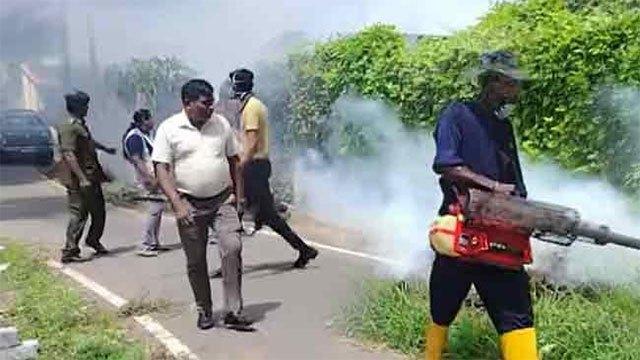
Health authorities have intensified dengue control programmes across the Southern Province in an effort to contain the outbreak, the Director noted. However, Dr. Panditharathna stressed that the percentage of homes with mosquito breeding sites must be reduced from the current 20 percent to below five percent if the spread of the disease is to be effectively controlled.