






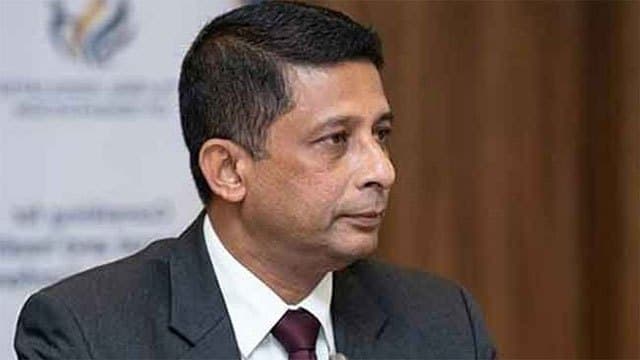


The Court of Appeal was informed today (21) that although former Director of the State Intelligence Service (SIS) Major General (Retired) Suresh Sallay had made extensive presentations to the Security Council in 2016 on the growing threat of Islamic extremism and ISIS ideology in Sri Lanka, a senior member of the council had objected to those submissions.
The claim was made during the hearing of a writ petition filed by Major General Suresh Sallay challenging his arrest and detention under the Prevention of Terrorism Act (PTA) in connection with investigations into the 2019 Easter Sunday terror attacks.
Submissions from the petitioner’s side, which continued for seven days, were concluded today before a bench comprising Court of Appeal President Justice Rohantha Abeysooriya and Justice Priyantha Fernando.
Appearing for Major General Suresh Sallay, President’s Counsel Sanjeewa Jayawardena told court that his client, while serving as Director of the Army Intelligence Directorate in 2016, had alerted the Security Council about the spread of ISIS ideology in Sri Lanka and had proposed measures to counter Islamic extremism.
The counsel said the Army Intelligence Directorate had investigated a Sri Lankan national linked to ISIS who was killed in an air strike in Syria. Following that investigation, Major General Suresh Sallay had prepared a “concept paper” outlining measures to combat Islamic extremism and had proposed establishing a task force to address the issue.
According to the submissions, these recommendations had been presented to then Secretary to the Ministry of Defence K. Hettiarachchi. However, a senior individual on the Security Council had expressed dissatisfaction with Sallay’s warnings regarding Islamic extremism.
The counsel further stated that the matter had been referred to in evidence given before the Janak de Silva Commission by former Army Commander General Crishanthe de Silva, who had indicated that the response within the Security Council had affected the progress of measures proposed by Major General Suresh Sallay.
He also claimed that Major General Suresh Sallay was removed from the Army Intelligence Directorate and appointed to a diplomatic posting in Malaysia about two months later due to political reasons.
Questioning the allegations against his client, President’s Counsel Jayawardena told court that an individual who had raised concerns about Islamic extremism could not be described as the mastermind behind the Easter Sunday attacks.
He further questioned how the threat of extremism could be addressed if intelligence officers involved in investigating such activities were themselves being remanded.
The counsel also criticised the manner in which the Criminal Investigation Department (CID) obtained a statement from the Azad Maulana, claiming that CID officers had travelled to France and recorded his statement at the Sri Lankan Embassy premises.
He alleged that Maulana, who is seeking political asylum, had made statements critical of the Sri Lankan judiciary and questioned how a statement from such a person could be relied upon in the investigation.
The counsel also rejected Maulana’s allegation that Suresh Sallay met a group linked to Zahran Hashim in Wanathawilluwa in February 2018, stating that Sallay was not in Sri Lanka at the time.
Referring to evidence submitted before the Supreme Court, Jayawardena said former State Intelligence Service Director Nilantha Jayawardena had stated in an affidavit that he had sent a WhatsApp message regarding the planned Easter Sunday attacks to then Senior Deputy Inspector General of Police Ravi Seneviratne on the evening before the attacks.
He also claimed that Ravi Seneviratne had informed the Janak de Silva Commission that the CID was aware of the extremist activities of Zahran Hashim and his followers, and questioned why preventive action was not taken.
The President’s Counsel further argued that Major General Suresh Sallay’s personal background contradicted allegations that he was involved in attacks against Christian places of worship.
He told court that Major General Suresh Sallay’s mother was a Christian, that she had attended a church in Nugegoda on the day of the Easter Sunday attacks, and that Sallay himself regularly attended St. Anthony’s Church with his mother.
Following the conclusion of the petitioner’s submissions, Deputy Solicitor General Suharshi Herath, appearing for the Attorney General, informed court that preliminary objections would be raised against the petition.
The Court of Appeal directed that those objections be submitted on July 27.