




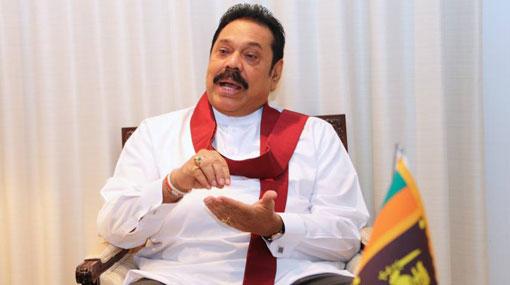



Former President Mahinda Rajapaksa attributes his defeat at the 2015 election to resentment against him from Muslims, Sri Lankan and Indian Tamils, and to the Sinhalese harboring unrealistic expectations who took what he delivered for granted.
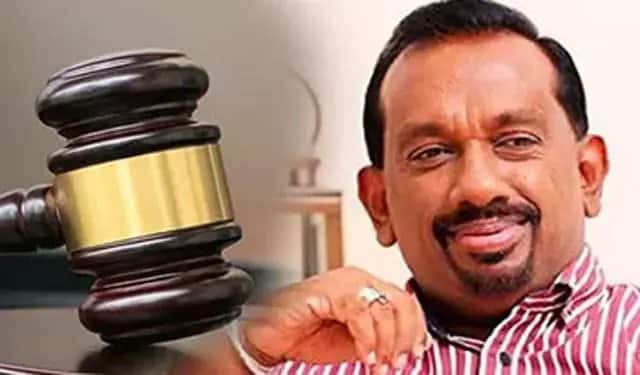
The Kurunegala District MP also says that he will cut his own throat if evidence is found implicating him of stealing even one dollar.
“They say I have stolen $18 billion, but if they find evidence of even $1, I will cut my throat,” he said in an interview with Jeff Kingston for the Japan Times.
Rajapaksa is currently on a visit to Japan with several former Ministers, MPs and aids.
Excerpts of the article published on Japan Times have been reproduced below:
The U.N. estimates that at least 40,000 Tamil civilians died in the final months of the war as the Sri Lankan military unleashed indiscriminate attacks on the Tigers’ last redoubts. The Tigers stand accused of using the civilians as human shields, preventing their departure to safety, while the military is accused of shelling these civilian refugee camps, even in areas designated as safety zones.
Former Sri Lankan President Mahinda Rajapaksa, who was commander-in-chief during this brutal finale, is unapologetic about the consequences. He recently told me that it was war and thus victory was essential, an outcome that he says was widely desired and welcomed by the public. Asked how he reconciled being a devout Buddhist and commander-in-chief, he argued that his goal was peace.
In his view, Tiger leader Prabhakaran misjudged the situation, hoping that international pressure in response to the carnage would force the state to back off. Prabhakaran, in Rajapaksa’s view, was “too full of himself,” failing to understand that this time the state had no intention of allowing the Tigers to regroup.
Although Rajapaksa eradicated terrorism and raised living standards, he lost the 2015 elections. He attributes his defeat to resentment against him from Muslims (9.7 percent of the population, according to a 2012 census) and Sri Lankan and Indian Tamils (15.2 percent), and to the Sinhalese harboring unrealistic expectations who took what he delivered for granted.
Asked if he had any regrets, Rajapaksa says he trusted people too much. Regarding the scars of war in this traumatized nation, he says that he has promoted reconciliation by returning land to the Tamils and investing heavily in infrastructure and development projects in the northeast, helping them to begin restoring their lives after three decades of war. Asked why the Sri Lankan Navy is operating luxury resorts on unreturned land, he says it is important to give them something to do.
It is easy to understand why Rajapaksa is described as the “affable authoritarian,” exuding bonhomie and a steely will. He artfully parries awkward questions about the need for justice and accountability for war crimes. In his view, there is no need for an international tribunal because Sri Lanka has the judicial expertise to conduct its own reckoning. When I pointed out that President Maithripala Sirisena has yet to follow through on his pledge to establish a truth and reconciliation commission, Rajapaksa says that starting this process was his idea, having sent a mission to learn lessons from South Africa’s experience, but the international community opposed this initiative. Pressed to explain what he would do to promote future reconciliation, Rajapaksa offered no vision for healing the wounds other than stressing that the priority should be on promoting economic development and raising living standards.
Regarding Asian leaders, he admires authoritarians such as Singapore’s founding prime minister, Lee Kuan Yew, and former Malaysian Prime Minister Mahathir Mohamad, who both boosted the economies of their nations. But he is more skeptical about Myanmar State Counselor Aung San Suu Kyi, another devout Buddhist leader presiding over a country troubled by endemic inter-ethnic conflict and religious tensions. I drew attention to her desire to attain freedom from fear, and how Sri Lanka’s lingering culture of war makes this goal elusive. He agreed it made sense in theory, but expressed uncertainty about how to proceed, adding that now she faces the burden of delivering on her promises.
He stopped short of condemning Sri Lanka’s militant monks and extremist Buddhist organizations for advocating and engaging in violence targeting Muslims, but did say that it is not consistent with public sentiments.
Asked about continued abductions and the silencing of critics by state forces, Rajapaksa maintained that this is no longer the case. A January 2016 report by the International Truth & Justice Project Sri Lanka — “Silenced: Survivors of Torture and Sexual Violence in 2015″ — provides compelling evidence to the contrary.
Has press freedom improved under his successor? Rajapaksa doesn’t think so, saying the media is controlled by the government and is subject to various threats. He also brushes aside accusations about the murder and disappearance of journalists on his watch. When asked about a journalist whose posthumous final column implicated Rajapaksa in his anticipated murder, he points out that in parliament Prime Minister Ranil Wickremesinghe, his political rival, accused a prominent ex-general of ordering the hit.
“Twelve thousand Tigers were released from detention without trial,” says Rajapaksa, adding that there are no more political prisoners in Sri Lanka except for him and his family, who are subject to harassment by the media and government. He bitterly complained about his son’s arrest, and that he has not been allocated an official bungalow — a privilege extended to other ex-presidents.
And corruption allegations? “They say I have stolen $18 billion, but if they find evidence of even $1, I will cut my throat,” he says, claiming that evidence has come out implicating the current president.
Asked about future plans, Rajapaksa pointed out that now he is barred from seeking a third term as president, but, flashing his signature smile, did not rule out running for prime minister. “Politicians never retire,” he says.
-Agencies