




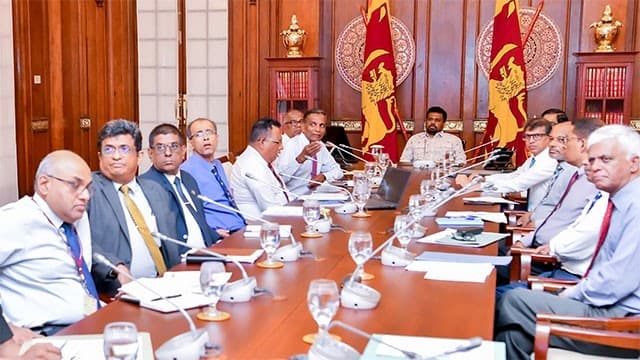



President Anura Kumara Dissanayake attended a meeting held at the Presidential Secretariat this morning (11) to review the potential impacts of the anticipated El Niño phenomenon and the preparedness plans of relevant institutions to address its effects.
During the meeting, extensive attention has been given to the possible impact of El Niño on the country's food security, drinking water supply and energy sector, as well as the immediate measures required to effectively manage these areas, the President’s Media Division (PMD) said.
Accordingly, instructions have been given to officials to prepare and submit the necessary plans to mitigate any adverse effects and ensure the continued stability of these critical sectors, the statement said.
President Dissanayake emphasized that Sri Lanka successfully managed the challenges arising from Cyclone Ditwah and the conflict situation in the Middle East, and that the country possesses the capacity to effectively address this global challenge as well.
He also highlighted that through proper planning and timely implementation, Sri Lanka would be well prepared to respond to any situation that may arise, it added.
Furthermore, particular attention was given to current water levels of reservoirs and the measures required managing potential pressures on agriculture, drinking water supply and energy generation.
Officials also briefed the President on the preparedness plans already in place to mitigate any adverse effects, the PMD said.
Officials noted that the expected El Niño conditions are likely to resemble those experienced during
2016–2017. They further stated that water management plans have been formulated accordingly and
that steps have already been taken to commence the 2026 Yala season approximately one and a half
months earlier than usual.
According to the PMD, special attention was also focused on ensuring an uninterrupted electricity supply over the upcoming months, maintaining agricultural activities and safeguarding food security.
The President further instructed relevant officials to prepare and submit detailed plans to ensure adequate electricity generation, the provision of water required for the forthcoming cultivation season and the protection of drinking water resources.