





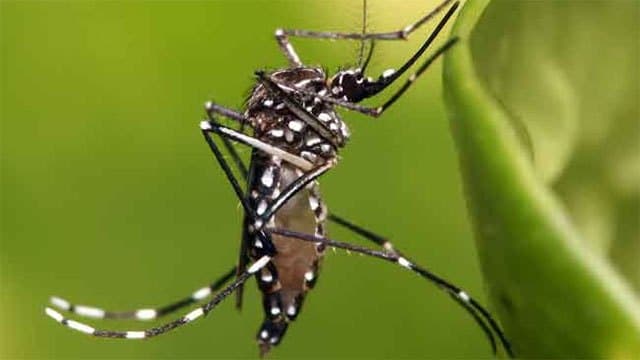


The National Dengue Control Unit has identified Aedes aegypti as the principal mosquito species responsible for dengue transmission in Sri Lanka, warning that its unique feeding behavior significantly increases the risk of disease spread.
Speaking to media, Entomologist Sakunthala Janaki stated that dengue is transmitted in the country only by two mosquito species — Aedes aegypti and Aedes albopictus. Of the two, Aedes aegypti has been recognized as the main vector, with increases in its population consistently observed prior to major dengue outbreaks.
According to the Entomologist, Aedes aegypti exhibits a distinctive feeding pattern known as multiple feeding. Unlike most female mosquitoes, which typically obtain a blood meal from a single individual to complete their reproductive cycle, Aedes aegypti often feeds on several people within a short period.
This behavior is particularly evident in areas where small groups of people gather, enabling the mosquito to obtain the blood required for its life cycle from multiple hosts.
Health experts also note that this characteristic enhances the mosquito’s ability to transmit the dengue virus rapidly. An infected Aedes aegypti mosquito can potentially spread the virus to several individuals within a short timeframe.
Therefore, authorities have emphasized the need for continuous monitoring and control of Aedes aegypti populations as part of ongoing efforts to curb dengue transmission and prevent future outbreaks.