





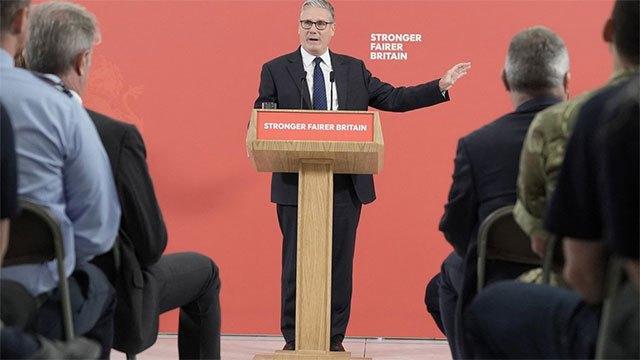



The British government’s new defence investment plan (DIP) has been announced with Prime Minister Sir Keir Starmer promising to “make the British people safer” with an additional £15bn in funding allocated to defence.
The plan sets out a ten-year strategy to modernise the armed forces in response to evolving global threats, particularly the increasing use of autonomous systems and the changing nature of warfare demonstrated in Ukraine.
The Prime Minister stated that defence spending plans will enhance the economy, by creating “almost 60,000 jobs”, adding that this will bring start-ups into the defence supply chain, which “pays off in every region and every community”.
“The fact is defence jobs are different. They are high skilled, well paid. They offer career paths, training and a greater sense of meaning,” Starmer commented. He announced that the government will be creating a new “£50bn defence export facility”, which Starmer describes as a “once in a generation boost.”
This £50bn of new support is on top of the UK Export Finance (UKEF), the government’s export credit agency’s existing £80bn limit, the largest expansion to UKEF’s financial support in its 100-year history. It will be used to support large-scale UK defence exports and strengthen Britain’s competitiveness in a rapidly growing global market.
This allocation will support British defence companies of all sizes, those that already export or are looking to expand internationally. This support will provide them with what they need to compete for major contracts on the world stage, while allowing the UK’s allies to benefit from a powerful package that combines the UK’s world-leading defence sector with a competitive, government-backed finance offering.
This support will come through UKEF guaranteeing bank loans for British defence exporters fulfilling contracts, or financing provided to other countries purchasing British defence products.
Tim Reid, CEO of UKEF, said: “Security is a strategic priority for governments worldwide, and the UK’s defence sector offers pioneering capabilities that allies are actively seeking. With billions of pounds available in new export financing, we are strengthening the sector’s global competitiveness while backing skilled British jobs and supporting long term economic growth.”
Also included in the new Defence Investment Plan is £5bn to increase the armed forces’ use of drones and autonomous weapons, plus plans for the Royal Navy to become a “hybrid navy”, using self-controlled vessels and AI alongside warships and aircraft and funding for six new warships. In addition, The Royal Air Force is set to invest in autonomous aircraft designed to operate alongside crewed fighters.
Alongside these technological upgrades, the government also aims to strengthen the UK defence industry, support domestic shipbuilding, improve munitions production and create skilled jobs across the country.
Despite stating that some road and energy projects may be scrapped in order to fund the new defence plan, the investment announced is still short of the £28bn the Ministry of Defence had asked for and one of the main reasons behind former Defence Secretary, John Healy’s recent resignation.
Responding to the announcement, The Conservatives have stated that the plan is “too little, too late”, with leader Kemi Badenoch criticising the defence investment plan as being insufficient and “barely half what the armed forces say is needed”. The Liberal Democrats say it “dangerously short-changed our armed forces”.
Source: The Manufacturer
--Agencies