





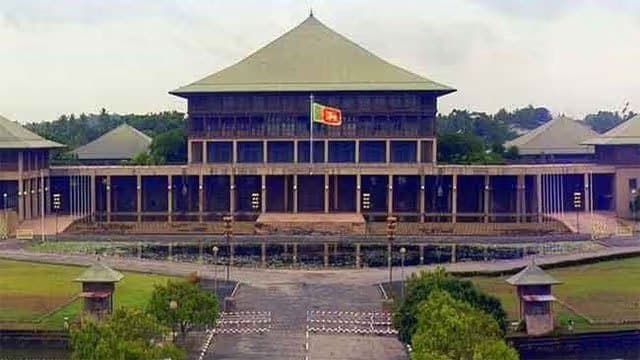



A special audit report on eighth and ninth sessions of the Parliament has revealed several irregularities concerning fuel allowances, vehicle use and other expenses related to the Speaker, Deputy Speaker and other officials.
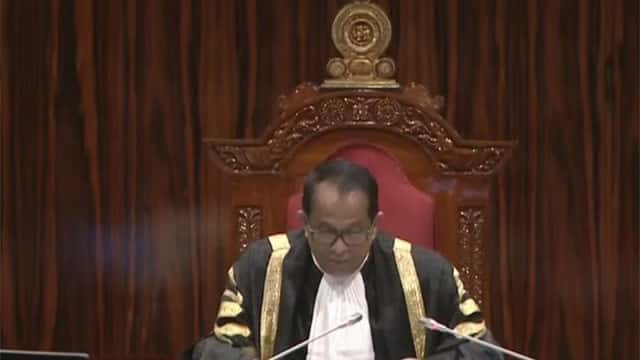
According to the report, no restrictions had been imposed on the Speaker’s fuel usage, allowing unlimited fuel consumption.
During the final two years of the ninth Parliament, the Speaker had used an average of 3,994 liters of fuel from monthly allowance in 2023 and 6,122 liters per month in 2024. The audit observed increases of 66% and 155%, respectively, compared to the year 2022.
Annual expenditure on fuel for the Speaker amounted to Rs. 19.37 million in 2023 and Rs. 26.05 million in 2024, marking a significant increase compared to previous years.
The report also revealed that even if the approval had been granted to treat the post of Deputy Speaker on par with a Non-Cabinet Minister and to recognize the post of Deputy Chairperson of Committees as subordinate to the Deputy Speaker, fuel had been issued for these posts without restrictions.
During 2023 and 2024, an additional 21,299 liters of fuel, worth Rs. 8.55 million, had been provided for a private vehicle used by the Deputy Speaker, in addition to the three official vehicles allocated to the post.
The audit further found that fuel allocations for the three official vehicles had exceeded prescribed limits by 6,980 liters in 2023 and by 1,515 liters for two vehicles in 2024.
It was also revealed that three official vehicles had been allocated to the Chairman of Committees, with unlimited fuel provided, despite no specific fuel or vehicle limits having been formally determined for the position.
The audit report has also revealed that the Secretary-General of Parliament had used two official vehicles simultaneously during 2022 and 2023.
The report further observed that no restrictions had been imposed on fuel usage by the Secretary-General. Between 2022 and 2024, the Secretary-General had used 15,063 liters of fuel worth Rs. 6.07 million, averaging 5,031 liters per year.
According to the audit, this was around 2,300 liters higher than the allocation applicable to a secretary to a ministry, who is among the public officials entitled to a comparatively high fuel allowance.
The report also highlighted special fuel privileges granted to officials holding positions equivalent to Deputy Secretary-General and Assistant Secretary-General.
These officials had been allowed unlimited fuel for official travel, while being permitted to travel up to 1,200 kilometers per month for private purposes. Other departmental heads were generally limited to 960 kilometers per month for private travel.
The audit observed that such benefits were not available to officials of equivalent rank in the wider public service and that Parliament had not taken adequate steps to bring these privileges in line with Public Administration Ministry circulars or establish an appropriate control mechanism.
The report further found that the charge of Rs. 8 per kilometer imposed for private vehicle use exceeding the permitted limit up to June 2022 was inadequate when compared with prevailing market fuel prices.
As a result, the government had lost an estimated Rs. 2.71 million in recoverable revenue between September 2015 and June 2022 due to the failure to charge the applicable market-based fuel cost.
However, the audit noted that from July 2022 onwards, the cost of excess private vehicle use had been adjusted according to prevailing market fuel prices, resulting in a significant reduction in instances of vehicle use exceeding the prescribed limits.