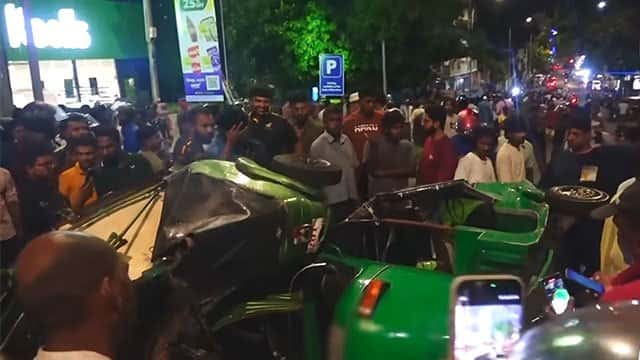







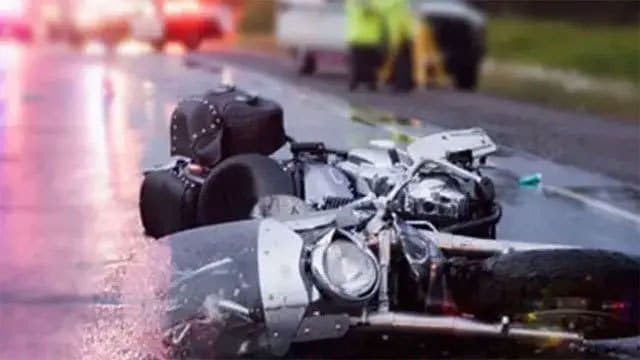



Road accidents in Sri Lanka are costing the economy billions of dollars every year, but a new analysis suggests that artificial intelligence (AI) could play a major role in reducing crashes, saving lives, and recovering a significant share of these losses.
A recent report estimates that road crashes cost Sri Lanka approximately USD 2.5 billion in 2024, equal to around 3.2% of the country’s gross domestic product (GDP).
The analysis, prepared by Prof. Nalinda Somasiri, Associate Dean at York St John University, UK, highlights how generative AI-powered systems could transform road safety management through better accident prediction, faster emergency response, improved enforcement, and data-driven decision-making.
Road Accidents Create a Major Economic Burden for Sri Lanka
Sri Lanka records around 3,200 road deaths and tens of thousands of serious injuries every year, creating significant social and economic consequences.
The cost of road crashes extends beyond medical treatment and loss of life. The economic impact includes:
Loss of workforce productivity
Healthcare and rehabilitation expenses
Vehicle repair costs
Traffic congestion losses
Legal and administrative expenses
Wider impacts on tourism and investment
According to the report, productivity losses account for the largest portion of economic damage, estimated at around USD 850 million annually.
Healthcare and rehabilitation costs contribute approximately USD 420 million, while vehicle damage, congestion and administrative expenses add hundreds of millions more.
“Road accidents are not only a public safety issue; they are also a major economic challenge,” the report states, noting that reducing preventable crashes could significantly improve national productivity.
Proposed AI-Based Road Safety System for Sri Lanka
The report proposes the creation of a national AI-powered road safety platform that would combine information from multiple sources, including:
Traffic monitoring systems
Hospital and emergency records
Weather data
Vehicle movement information
Police enforcement systems
The proposed platform would include several key functions.
1. AI Crash Risk Prediction
Artificial intelligence could analyse historical accident data, road conditions, weather patterns and traffic density to identify dangerous locations before crashes occur.
Authorities could use these predictions to introduce targeted safety measures, improve road design and increase monitoring in high-risk areas.
2. Smarter Traffic Management
AI models could process GPS and transport data to forecast congestion patterns and support more efficient traffic signal management.
This could help reduce delays, improve traffic flow and lower accident risks caused by overcrowded roads.
3. Automated Traffic Law Enforcement
Computer vision technology could analyse CCTV footage to detect:
Speeding violations
Illegal lane changes
Failure to wear helmets
Seatbelt offences
AI-supported enforcement could help improve compliance and reduce dangerous driving behaviour.
4. Faster Emergency Response
AI-assisted ambulance systems could use real-time traffic information, hospital availability and injury severity data to optimise emergency routes.
Reducing response times could improve survival rates for accident victims.
5. AI-Powered Road Safety Awareness Campaigns
Generative AI tools could create targeted road safety messages in Sri Lanka’s three main languages:
Sinhala
Tamil
English
These campaigns could be personalised for different regions and road user groups.
6. AI-Based Insurance Analytics
Vehicle telematics and AI analysis could encourage safer driving through risk-based insurance incentives while helping insurers identify fraudulent claims.
AI Investment Could Deliver Significant Economic Benefits
The report presents three possible scenarios for implementing AI-based road safety systems in Sri Lanka.
Conservative Scenario
Limited adoption of AI technology could recover around 0.48% of GDP by 2035, equivalent to approximately USD 370 million annually.
Moderate Scenario
A nationwide AI rollout by 2028 could recover around 0.85% of GDP, or approximately USD 660 million per year, while reducing injuries and preventing deaths.
Accelerated Scenario
A faster implementation strategy involving stronger public-private partnerships and wider use of vehicle data could generate an estimated USD 940 million in annual economic benefits by 2035.
Estimated Investment for National AI Road Safety Programme
The proposed AI-based road safety initiative would require an estimated investment of USD 85 million to USD 120 million over five years.
The funding would support:
Digital infrastructure development
Data integration systems
AI technology deployment
Staff training
Institutional implementation
The report suggests that the economic returns could exceed the initial investment several times, provided that Sri Lanka introduces the necessary regulatory and institutional reforms.
Policy Recommendations for AI-Based Road Safety in Sri Lanka
The report recommends several measures to support successful implementation:
Establish a national road safety data platform connecting police, hospitals, insurers and transport authorities
Develop responsible AI governance standards
Expand digital traffic enforcement systems
Improve emergency response technology
Monitor progress against global road safety targets
Technology Alone Cannot Solve Road Safety Problems
While AI could provide powerful tools for preventing crashes and improving decision-making, experts warn that technology alone will not solve Sri Lanka’s road safety challenges.
Long-term improvements will also require:
Stronger law enforcement
Safer road infrastructure
Better driver education
Improved coordination among government institutions
The report concludes that with proper investment, regulation and safeguards, artificial intelligence could become a valuable component of Sri Lanka’s national road safety strategy, helping save lives while reducing billions of dollars in economic losses.