






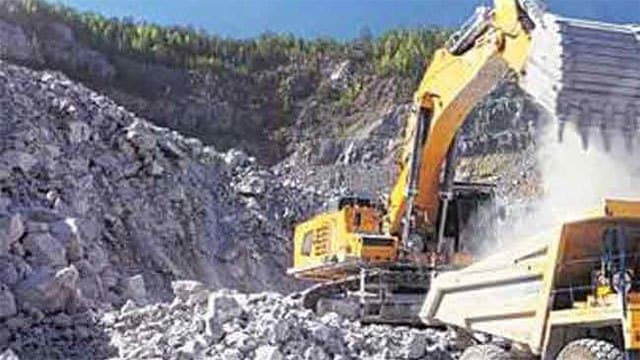


Sri Lanka's updated National Mineral Policy has officially come into effect after 27 years, introducing a ban on the export of the country's mineral resources in raw form without value addition.
Under the new policy, mineral resources can no longer be exported as unprocessed raw materials. The framework will regulate the entire mineral value chain, including exploration, mining, processing, and value addition.
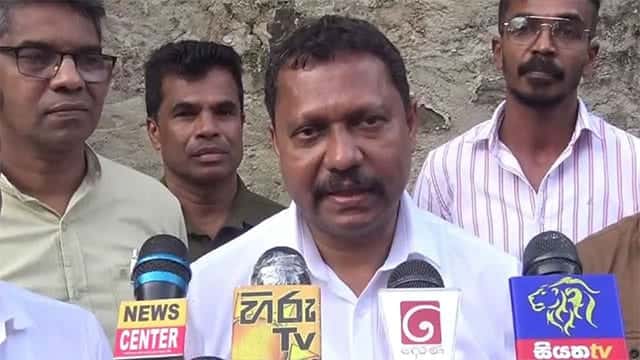
The announcement was made during a media briefing held yesterday (11) regarding the implementation of the revised policy.
Speaking at the event, Minister of Industry and Entrepreneurship Development, Sunil Handunneththi, emphasized that many of Sri Lanka’s mineral resources have historically been exported as raw materials, depriving the country of significant economic benefits and foreign exchange earnings.
The Minister noted that the true value of these resources has not been fully captured by the national economy.
“We have been exporting almost all of our mineral resources as raw materials. As a result, the real dollar value that could have been generated from these resources has not been added to the national economy. For example, while a ton of a particular mineral may be exported for around USD 2,000, value-added processing could increase its worth substantially. Minerals such as zircon, garnet, silica, quartz, and titanium have long been exported without maximizing their economic potential,” he said.
He further stated that outdated policies, which had not been revised for decades, often limited activities to exploration permits alone. The new policy aims to comprehensively regulate exploration, mining, processing, and value addition to ensure greater economic returns from the country’s mineral wealth.
According to Minister Handunneththi, the policy has already received Cabinet approval and has been presented to Parliament.
Accordingly, the new National Mineral Policy officially came into force on June 11, 2026.